
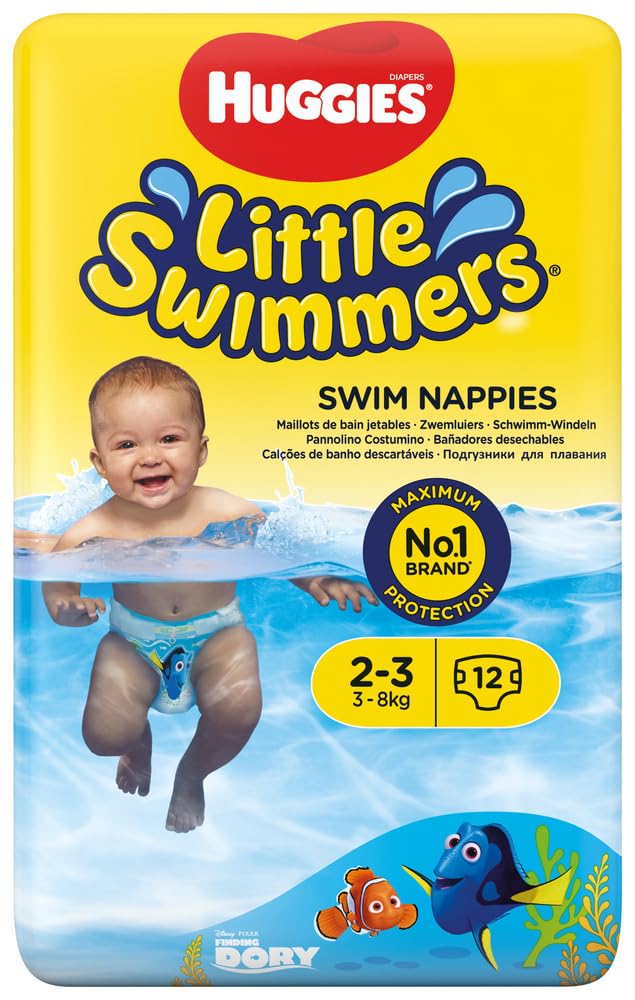
Swim diapers occupy a strange niche in baby care: they are essential for a specific activity but used far less often than regular diapers. Huggies Little Swimmers are one of the better-known options, and the X-Small size (7–18 lb.) is aimed at the youngest swimmers. This review looks at how they perform in real-world use, where they fall short, and who should consider them.
First, a quick note on what swim diapers are and aren’t. They are not designed to absorb urine like a regular diaper; that’s why they don’t swell up in the water. Instead, they are meant to contain solid waste. The Little Swimmers have a snug fit around the legs and waist to help prevent leaks, and they use a stretchy, breathable material that holds up in chlorinated pools. The absorbent layer is minimal—just enough to handle a small amount of liquid before the child gets in the water—so they won’t balloon and drag the baby down.
In practice, these diapers are typically used during swimming lessons, trips to the pool or beach, or even water play at home. The X-Small size fits babies from about 7 to 18 pounds, which generally corresponds to roughly 2–6 months of age, though that varies widely. The 12-count pack is a reasonable starter supply; if you swim regularly, you’ll go through them quickly. Each diaper is disposable, so you toss it after use (or after a bowel movement), which is convenient but generates more waste than reusable swim diapers.
One of the standout features is the tear-away sides. When a diaper is wet and clingy, trying to pull it down over a squirming baby’s legs is a hassle; the tear-away sides let you remove it without the struggle. That’s a small but genuinely useful design touch. The diapers also have a wetness indicator? No, that’s regular diapers. These don’t have one, which makes sense since they’re not meant to absorb much. The outer cover is soft and doesn’t feel plasticky, and the leg cuffs are gentle but effective at containing messes.
How do they hold up in the water? In our observation, they do their job for solid waste as long as they fit properly. A loose fit around the legs is the main cause of leaks, so getting the size right is crucial. The X-Small is genuinely small—if your baby is near the upper weight limit, consider sizing up to avoid gaps. Also, these diapers are not designed for extended wear; they’re for the duration of a swim session. Putting one on before you leave for the pool is fine, but don’t expect it to handle a full nap or a long car ride.
One limitation that parents often mention is that swim diapers, including these, don’t prevent urine from leaking into the pool. That’s a universal truth for all swim diapers, but it’s worth stating clearly: if your baby pees in the pool, it’s going into the water. The Little Swimmers have a small absorbent pad that catches a bit, but it’s not a seal. So they’re not a solution for keeping pool water sterile—they’re a tool for containing solids. That’s an important expectation to set.
Compared to reusable swim diapers (like those from AppleCheeks or Charlie Banana), disposables are more convenient for travel and for days when you don’t want to deal with washing. Reusables are more cost-effective over time and generate less waste, but they require rinsing and laundering, which isn’t always practical at a public pool. Cloth swim diapers also tend to be bulkier. On the other hand, disposables like Little Swimmers are thinner and less absorbent, so they don’t weigh down a baby who’s just getting used to the water. If you swim frequently, a hybrid approach—reusable for regular visits, disposable for vacations—can make sense.
Who are these for? They’re a good fit for parents of infants who are starting swim classes or taking a occasional dip, especially if convenience is a priority. They’re also handy for vacations where laundry access is limited. The 12-count pack is enough for a few outings, but if you swim multiple times a week, you’ll want a larger box. Who are they not for? Parents looking for a eco-friendly option might prefer reusables. Also, if your baby is at the higher end of the weight range or has chunky thighs, the X-Small might be too tight or leave marks; in that case, consider the next size up (Small, 16–26 lb.) even if your baby is under 18 lb., as fit matters more than the weight range suggests. And if you’re expecting these to contain urine, you’ll be disappointed—no swim diaper does that effectively.
In terms of performance, Little Swimmers are reliable for what they’re designed to do, but they’re not magic. They can leak if not fitted well, and they don’t eliminate the need for frequent checks. The tear-away sides are a genuine convenience, and the materials feel comfortable against a baby’s skin. The main trade-offs are cost per use and environmental impact. At roughly $0.50–$0.75 per diaper, they add up if you swim often. But for occasional use, they’re a practical solution that saves you from laundering a reusable diaper after every trip.
Overall, Huggies Little Swimmers X-Small are a sensible choice for parents of small infants who want a low-fuss swim diaper for occasional water play. They’re not the most economical or eco-friendly option, but they work as intended, provided you get the fit right. Just keep your expectations realistic: they contain solids, not liquids, and they’re not meant for long wear. If you understand that, they’ll serve you well.