
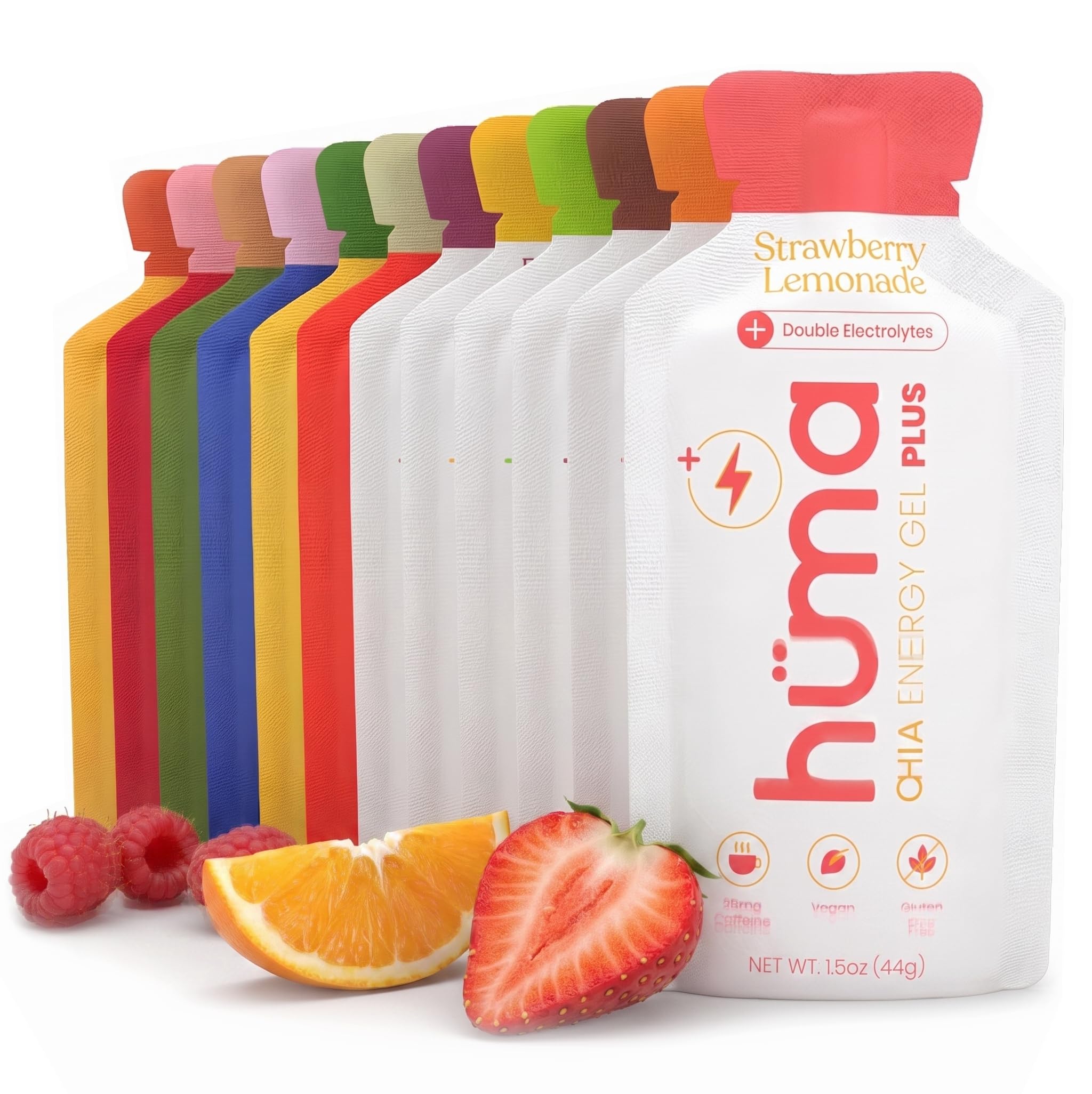
Huma’s chia-based gels have carved out a following among runners and cyclists who find conventional energy gels hard on the stomach. This 12-count variety pack combines the Original line with the Plus line, which adds electrolytes and a slightly different carbohydrate profile. The appeal is fairly specific: these are real-food-adjacent gels built around chia seeds rather than the maltodextrin-heavy formulas that dominate the category. Whether that matters to you depends on how your gut handles traditional gels and how much you care about texture.
In practice, these get used the way most gels do — tucked into a shorts pocket or jersey, taken every 30 to 45 minutes during longer efforts, and washed down with water. The chia base means they behave a little differently from a typical gel. The consistency is thicker and more textured, closer to a fruit puree than a smooth syrup, and the chia seeds are visible and palpable. Some people find that pleasant; others find it distracting mid-run when breathing is already labored. It is not a gel you can quietly choke down without noticing.
The variety pack is the sensible entry point if you have not tried the brand. It lets you test both the Original flavors and the Plus versions, which include added sodium and potassium. That matters for athletes sweating heavily or going long enough that electrolyte replacement becomes relevant. The Original gels are simpler, with a thinner flavor profile and less sodium, and they work fine for shorter sessions or cooler conditions. The Plus gels are the more useful option for hot-weather training and events beyond the two-hour mark, though the added electrolytes are modest compared with a dedicated electrolyte drink or salt capsule.
- Base: Chia seeds and fruit, with brown rice syrup and other carbohydrate sources depending on flavor
- Plus line: Adds sodium and potassium for electrolyte support
- Format: Single-serve pouches, roughly 100 calories each depending on variety
- Texture: Thick, seed-speckled, and more textured than standard gels
- Packaging: Tear-top pouches that generally open cleanly but can be fiddly with cold or wet hands
Performance expectations should be realistic. These deliver carbohydrate at a rate comparable to other gels, and the chia and fruit components do not magically improve endurance. The main practical difference is digestibility for people who struggle with concentrated maltodextrin. Many users report less stomach upset, but that is individual, and chia itself is fiber-rich, which for some people means gastrointestinal discomfort rather than relief. Anyone sensitive to fiber during hard efforts should test these in training, not on race day.
The clearest trade-off is texture and water dependency. These gels are dense and benefit from being chased with fluid, more so than a thin syrup gel. On a run where water is scarce or aid stations are spaced out, that is a genuine inconvenience. The chia texture also clings to the mouth a bit, and the pouches are slightly bulkier than the smallest conventional gels, which matters if pocket space is tight. Flavor is another consideration: the fruit-forward profiles are pleasant enough but lean sweet, and the texture amplifies the sweetness in a way that can wear on you over a long event.
Compared with a standard maltodextrin gel, Huma Plus sits at the more expensive, more textured end of the spectrum. A conventional gel is cheaper per serving, smoother, and easier to take without water, but it offers less in the way of real-food ingredients and, for some athletes, less digestive comfort. Compared with solid foods like chews or bars, these are easier to consume at pace but still require more chewing and swallowing effort than a thin gel. They occupy a middle ground between engineered sports nutrition and whole-food fueling, and they are priced accordingly.
These suit runners, cyclists, and triathletes who have had trouble with conventional gels, who prefer a more textured, food-like product, and who reliably have water on hand during efforts. The variety pack is a reasonable way to find a favorite flavor before committing to a larger box. They are less suitable for athletes who want the smoothest, most compact fuel possible, who train without easy access to water, or who are sensitive to fiber during intense exercise. Anyone on a tight nutrition budget will also find them harder to justify than basic gels. For the right user, the chia base is a meaningful difference; for others, it is an expensive texture experiment.