
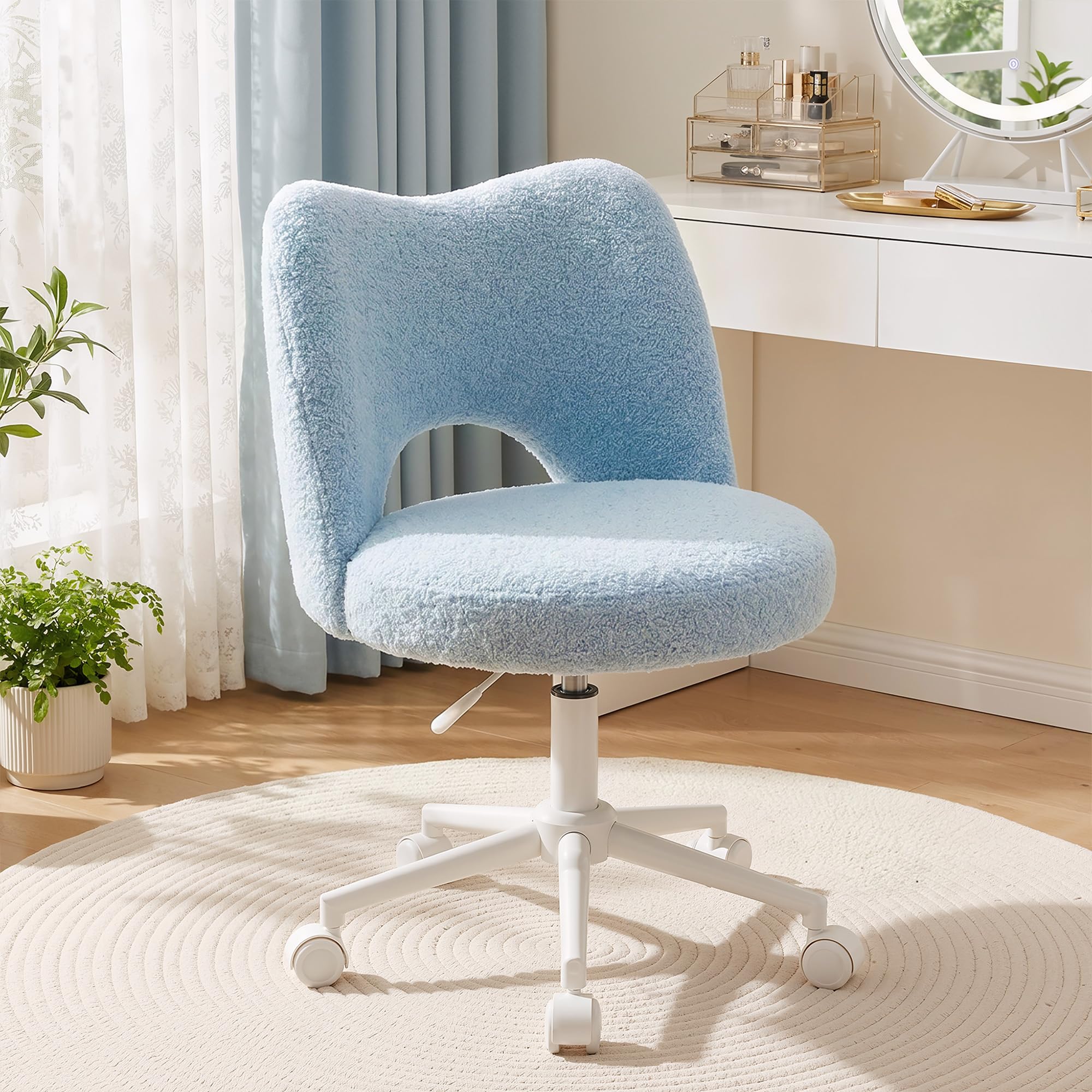
The DurayLoly vanity chair sits in a crowded category: the rolling, armless seat sold for makeup tables, small home offices, and dorm rooms. On paper it covers the basics well. It has a 300-pound weight rating, a breathable mesh back, no arms, and casters. Those specs matter more than they might seem, because most chairs in this price band are built for light use and a narrower range of bodies. Whether it makes sense for you depends on where it will live and how long you plan to sit in it.
In practice, this chair is usually bought for a bedroom vanity or a compact desk wedged into a corner. The armless design is the key detail. It lets you pull the seat close to a table without the arms catching on the drawer fronts, which is a common annoyance with standard office chairs at a makeup station. The wheels make it easy to slide between a mirror and a closet or dresser. If you have ever dragged a stool across a bedroom floor, the appeal is obvious.
The breathable back is a mesh panel rather than upholstery. In a warm room or during a longer sitting session, that makes a difference, especially compared with the padded-back vanity stools that trap heat. The mesh here is functional rather than premium. It flexes and provides some give, but it does not have the tension adjustment or lumbar shaping of a proper task chair.
The 300-pound rating is worth taking seriously as a design signal. Chairs rated that high usually use a wider base and a sturdier gas lift or post than budget seats rated at 250 pounds. That tends to translate into less wobble and a more planted feel. The trade-off is weight. A sturdier frame and base generally mean the chair is heavier to move around, and the casters may not glide as freely on thick carpet as they do on hard floors. On a plush rug, expect to push a bit harder or consider a chair mat.
Adjustability is where this category typically cuts corners, and this chair is no exception. The seat height adjusts, which covers the range needed for most vanities and desks, but there is no armrest adjustment because there are no arms, and the backrest does not offer independent recline or lumbar tuning. That is fine for the intended use, which is short sessions of getting ready or brief desk work. It is not a chair built for eight-hour workdays, and buyers should not expect it to behave like one.
- Armless profile: slides under tables and vanities where armed chairs cannot go.
- Breathable mesh back: reduces heat buildup compared with padded fabric backs.
- 300-pound weight rating: suggests a sturdier base and lift than lighter-duty budget chairs.
- Casters: convenient on hard floors, less so on deep carpet.
- Height adjustment: covers typical vanity and desk heights, but without fine-tuning beyond that.
Compared with a standard task chair, the DurayLoly gives up ergonomic depth. A task chair offers adjustable arms, lumbar support, and often a synchro-tilt mechanism, all of which matter if you sit for long stretches. Compared with a fixed vanity stool, this chair adds mobility and height adjustment, which is the main reason to choose it. It sits in the middle: more flexible than a stool, less supportive than a real office chair. Buyers who mostly need a seat for ten to twenty minutes at a time will find that balance reasonable. Buyers who plan to work full days at a desk should look at an ergonomic task chair instead.
Build quality is consistent with the price tier. Expect a functional chair rather than a furniture-grade piece. The upholstery and mesh are serviceable, and the frame feels solid for the rating, but the finish and detailing are not the kind you would show off. Assembly is typical for this category: a handful of components, bolts, and casters, usually manageable in under half an hour with the included tools. Long-term durability is the open question with any budget rolling chair, particularly the casters and the gas lift, which are the parts most likely to wear first.
This chair suits a specific buyer: someone with a vanity or compact desk, a hard floor or low-pile carpet, and a need to tuck the seat away when not in use. It also works for a teenager’s room or a rental where furniture gets moved often. It is less suitable for heavier daily use, for anyone who needs lumbar support or armrests, and for rooms with thick carpet where the casters will struggle. It is also not a good fit for buyers who want a chair that doubles as a statement piece, since the design is plain and utilitarian.
The honest summary is that the DurayLoly vanity chair does a narrow job competently. It rolls, it tucks in, it breathes, and it holds more weight than most of its peers. It does not pretend to be an ergonomic workstation chair, and buyers who keep their expectations in that range are likely to be satisfied. Those who need all-day support should spend more on a task chair and accept the arms and bulk that come with it.