
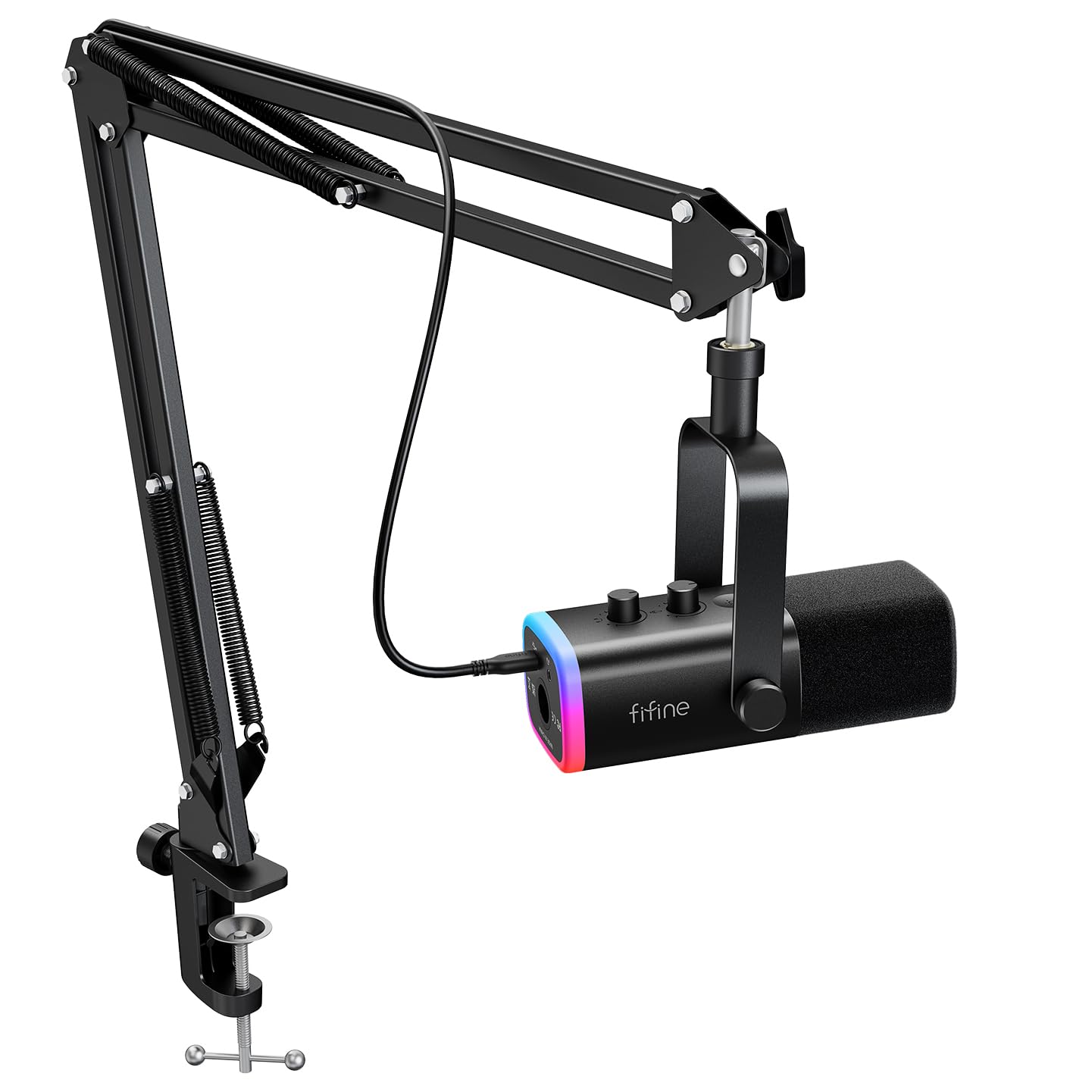
The FIFINE AmpliGame AM8T is a dynamic microphone that sits in an interesting spot. It offers both USB and XLR outputs, which immediately sets it apart from many entry-level podcasting mics that only give you USB. The idea is that you can start with a simple plug-and-play setup and later move to an audio interface or mixer without swapping microphones. That’s a practical feature for someone who is still figuring out their home studio setup and doesn’t want to buy the same thing twice.
In practice, the dual connectivity works as advertised. Plugging it into a computer via USB is straightforward, and the mic is recognized without any driver hassle. The XLR output, on the other hand, requires phantom power, but that’s standard for most condenser mics—though this is actually a dynamic mic, which is worth noting. Dynamic mics are generally less sensitive than condensers, which can be a good thing if your room isn’t acoustically treated. You’ll pick up less background noise like keyboard clatter or the hum of a fridge, and the AM8T follows that trend. It doesn’t have the crisp, detailed top end of a good condenser, but it delivers a warm, focused sound that works well for spoken word.
The built-in DSP effects are a mixed bag. There’s a knob that lets you cycle through EQ presets, and a button for what FIFINE calls a ‘voice changer.’ Honestly, the presets are subtle enough that you might not notice much difference, and the voice changer is more of a gimmick than a serious tool. If you’re buying this for those features, you’ll likely be underwhelmed. But if you ignore them and just use the mic flat, it performs competently. The cardioid pickup pattern does a decent job of rejecting sound from the sides and rear, which is helpful in a busy room.
Build quality is better than what you’d expect at this price point. The metal body feels sturdy, and the included shock mount is functional, though not the most elegant design. The boom arm that comes in the set is a nice addition—it’s not the most heavy-duty arm on the market, but it holds the mic in place and allows for reasonable positioning. The pop filter is adequate, but you’ll still want to watch your plosives if you’re close to the mic. One thing to note: the mic is on the heavier side, so if you’re using a cheap third-party arm, you might run into sagging issues. The included arm handles it fine.
Where the AM8T falls short is in its software and overall polish. The USB mode relies on a control panel app that is functional but feels dated and not particularly intuitive. It gets the job done, but it’s not something you’ll enjoy using. Also, the gain staging can be a bit finicky. If you push the gain too high on the USB path, you’ll introduce noise, and the onboard gain knob doesn’t have a lot of fine control. You’ll need to experiment to find the sweet spot. Over XLR, this is less of an issue since you have an interface to manage levels, but it’s something to be aware of if you plan to use USB exclusively.
Compared to a dedicated USB mic like the popular Blue Yeti, the AM8T is a different beast. The Yeti is a condenser with multiple pickup patterns, which is more versatile for capturing different sources. The AM8T is a dynamic, so it’s more focused and less forgiving of poor technique. If you want a mic that you can just set and forget, the Yeti might be easier. But if you’re planning to upgrade to a professional setup eventually, the AM8T’s XLR option gives it a clear advantage. It’s also worth comparing to other budget dynamics like the Shure MV7, which is more expensive but offers better software and a more refined sound. The AM8T doesn’t beat the MV7, but it doesn’t try to—it’s a budget-friendly alternative that covers the basics.
Who is the AM8T for? It’s a solid choice for a beginner streamer or podcaster who wants to learn with a dynamic mic and has a modest budget. The dual connectivity means you won’t outgrow it as quickly as a pure USB mic. It’s also suitable for someone who has a noisy environment and needs a mic that rejects background sound. However, it’s not for you if you need pristine audio quality for professional voice-over work, or if you want a mic that offers deep software integration and flexible tone shaping. The voice changer and presets are not worth paying extra for, and the USB software is a weak point.
In the end, the FIFINE AmpliGame AM8T is a pragmatic tool. It doesn’t excel at any one thing, but it covers a lot of ground for the price. The dual XLR/USB output is genuinely useful, and the dynamic capsule performs admirably in less-than-ideal rooms. Just don’t expect it to be a magic bullet. With a little patience and some tweaking, it can become a reliable part of your streaming or podcasting setup—just don’t rely on the bells and whistles to carry you.