
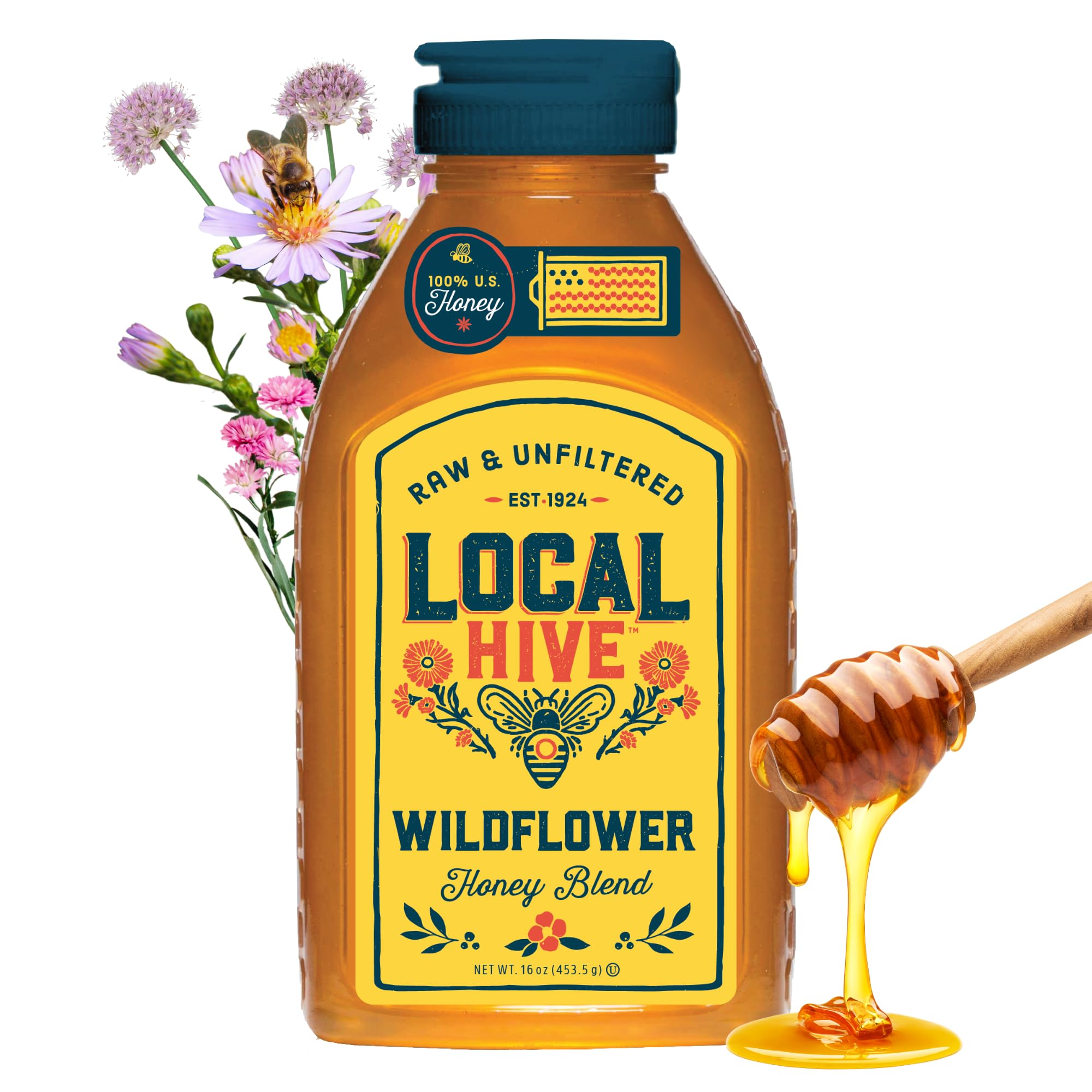
There’s a certain romance to raw honey—the idea that it’s as close to the hive as you can get, unprocessed and unadulterated. Local Hive’s Wildflower Raw & Unfiltered Honey leans hard into that narrative, and for the most part, it delivers. The 16-ounce squeeze bottle is practical, the honey is thick and opaque, and the flavor has that earthy, slightly floral complexity you’d expect from a wildflower blend. But does it live up to the “local” promise when it’s sold nationwide? That’s where things get a bit nuanced.
In practice, this honey is a workhorse. I’ve used it in tea, drizzled over Greek yogurt, and even as a sweetener in a vinaigrette. It dissolves reasonably well in hot liquids, though it’s thick enough that you’ll want to give it a moment. The flavor is distinctly honey-forward—not overly sweet, with a hint of molasses-like depth and a slightly grassy finish. It’s not as delicate as a single-origin varietal like orange blossom or acacia, but it’s more interesting than the generic clover honey you’ll find in most supermarkets.
One of the standout features is the sourcing. Local Hive sources from U.S. beekeepers, and they’re transparent about the regions—this particular bottle was a blend from several states. That’s a double-edged sword. On one hand, you get consistency and a true “American” product. On the other, it’s not truly local in the sense of being from your specific area. If you’re buying this at a big-box store in Ohio, the honey likely comes from a mix of hives across the Midwest and beyond. That’s fine, but it’s not the same as buying from a farmers market where you can shake the beekeeper’s hand.
The raw and unfiltered aspect is genuine. The honey is minimally processed, which means it retains pollen and other fine particles—you can see them if you hold the bottle to light. This also means it will crystallize over time, especially if stored in a cool pantry. That’s a natural process, but it can be a minor annoyance if you’re used to perfectly liquid honey. A warm water bath fixes it, but it’s worth noting if you prefer a no-fuss pour.
Compared to mass-market honey like Sue Bee or Great Value, this is a clear step up in flavor and texture. It’s also pricier—expect to pay a premium for the raw label and U.S. sourcing. But compared to a truly artisanal honey from a single apiary, it’s less distinctive. The flavor is pleasant but not extraordinary; it won’t blow your mind if you’re a honey connoisseur. It’s more of a reliable, everyday raw honey that’s better than average but not exceptional.
Who is this for? If you’re someone who wants a raw, unfiltered honey that’s responsibly sourced and tastes good without breaking the bank, this is a solid choice. It’s also a good entry point for people curious about raw honey but not ready to commit to a $20 jar from a specialty shop. On the flip side, if you’re a purist who wants a single-origin honey with a terroir-specific profile, or if you need a honey that stays liquid for months, this might not be the best fit.
Another limitation is the squeeze bottle. While convenient, it can get messy as the honey thickens or crystallizes—the nozzle can clog, and you might end up with a sticky mess. A jar with a wider mouth would be easier for spooning out honey for baking or spreading. It’s a minor gripe, but for a product that emphasizes naturalness, a more practical container would be welcome.
In terms of performance, it’s reliable. The honey is consistent from bottle to bottle, which is reassuring if you’re buying it regularly. The flavor profile is versatile enough for both sweet and savory applications. I’ve also used it as a topping for pancakes, where it shines—it’s less runny than syrup, so it sits nicely on top.
One thing to keep in mind: “raw” honey can contain spores that are harmless to most people but potentially dangerous for infants under one year old. That’s a general caution with any raw honey, not specific to this brand, but it’s worth remembering if you have a baby in the house.
Overall, Local Hive Wildflower Raw & Unfiltered Honey is a solid middle-ground product. It bridges the gap between everyday supermarket honey and premium artisanal options. It’s not the most exciting honey you’ll ever taste, but it’s honest, well-sourced, and reliable. If you’re looking for a dependable raw honey that supports American beekeepers, this is a good pick. Just don’t expect a transcendent experience—it’s more of a trustworthy staple.