
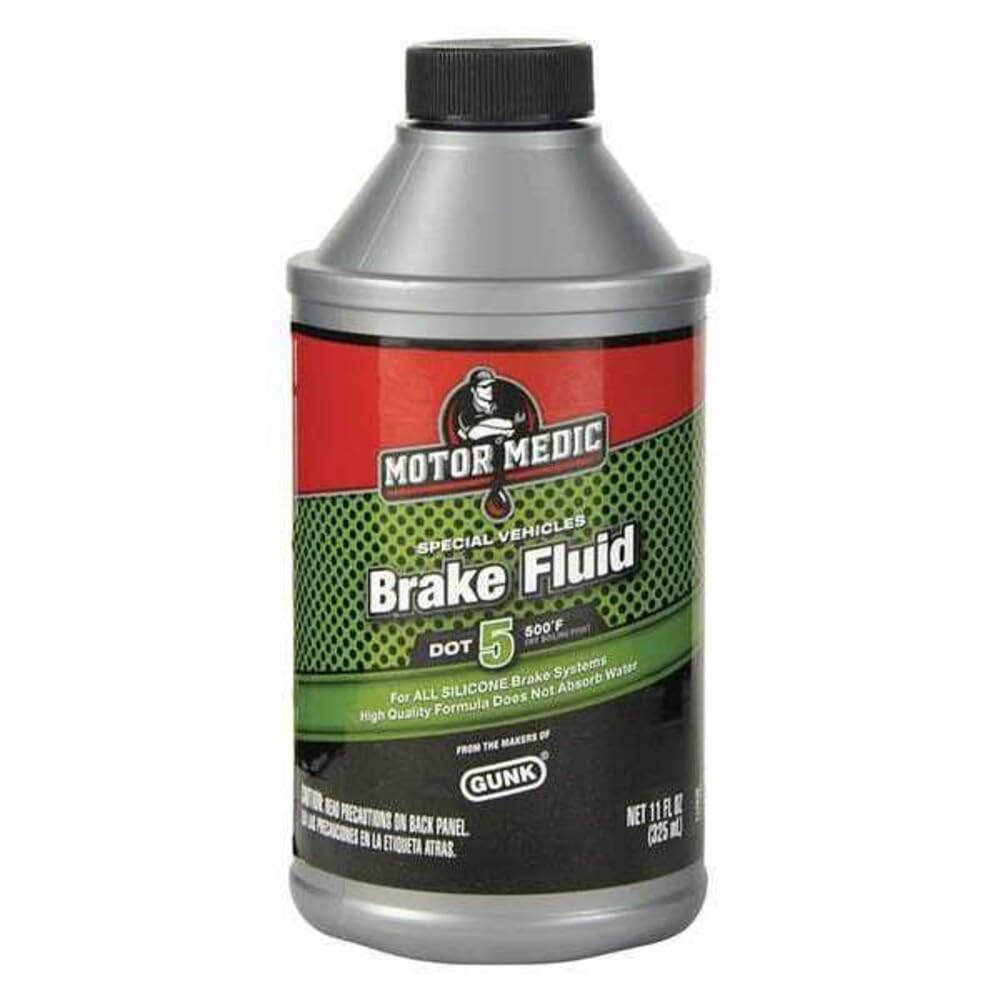
Brake fluid is one of those consumables that rarely gets much thought until something goes wrong. DOT 5 fluid, in particular, occupies a niche corner of the market. Niteo’s Motor Medic M4011/12 is an 11-ounce container of DOT 5 silicone-based brake fluid, and it’s aimed at a specific set of vehicles and use cases. This review looks at what it offers, where it fits, and where it doesn’t.
First, a quick chemistry lesson: DOT 5 is not the same as DOT 5.1. DOT 5 is silicone-based, while DOT 3, 4, and 5.1 are glycol-based. That distinction matters because the two types are not interchangeable. DOT 5 is favored in certain classic cars, motorcycles, and military vehicles because it doesn’t absorb water like glycol fluids do, and it won’t damage painted surfaces if spilled. However, it also has drawbacks, such as slightly higher compressibility and a tendency to aerate if agitated. The Motor Medic M4011/12 is a straightforward DOT 5 fluid that meets the specification, and it’s packaged in an 11-ounce bottle—a size that’s convenient for smaller systems or top-offs.
In real-world use, DOT 5 fluid is typically found in vintage vehicles that were originally specified for it, or in applications where its non-hygroscopic nature is a benefit—for example, vehicles that sit for long periods. It’s also used in some racing applications where high temperatures are a concern, though many racers prefer DOT 5.1 for its lower compressibility. The Motor Medic fluid is a reasonable choice for a weekend mechanic doing a brake system flush on a classic car that calls for DOT 5. The 11-ounce bottle is enough for a small system, but larger systems may require more than one bottle.
Key functional features of this product include its silicone base, which means it doesn’t absorb moisture from the air. That can extend the fluid’s life in vehicles that aren’t driven regularly. It also has a high boiling point, which is typical of DOT 5 fluids, though exact specifications aren’t provided on the label. The bottle is a standard plastic container with a tamper-evident seal, and the fluid is dyed a distinctive purple color—a common practice for DOT 5 to prevent confusion with glycol fluids. That color coding is helpful because mixing DOT 5 with DOT 3 or 4 can cause serious brake problems.
One limitation is that DOT 5 fluid is not compatible with anti-lock braking systems (ABS) in many modern vehicles. The silicone fluid can aerate under the high-pressure cycling of ABS, leading to a spongy pedal. For that reason, most modern cars specify DOT 4 or DOT 5.1. So if you’re working on a daily driver from the last couple of decades, this is likely not the right fluid. Another trade-off is that DOT 5 is more expensive than glycol-based fluids, and it’s less readily available at local parts stores. The 11-ounce size is also on the smaller side; for a full flush of a typical car’s brake system, you might need two or three bottles, which adds to the cost.
Compared to a glycol-based DOT 4 fluid, the Motor Medic DOT 5 has both advantages and disadvantages. Glycol fluids are more common, cheaper, and compatible with ABS, but they absorb moisture over time and require more frequent changes. DOT 5’s resistance to moisture absorption is a clear benefit for vehicles that are stored or driven infrequently. However, glycol fluids generally provide a firmer pedal feel because they are less compressible. For a classic car that’s driven occasionally, the trade-off may be acceptable; for a performance vehicle, it might not be.
Who is this for? It’s suitable for owners of classic vehicles that specify DOT 5 fluid, particularly those who do their own maintenance and need a small quantity for a flush or top-off. It’s also appropriate for certain motorcycles and off-road vehicles where DOT 5 is recommended. It is not suitable for modern vehicles with ABS that require DOT 3, 4, or 5.1, nor is it a good choice for anyone looking for a low-cost, readily available fluid for a daily driver. Additionally, if you’re unsure what type of fluid your vehicle requires, consult the owner’s manual—using the wrong fluid can lead to brake failure.
In terms of performance, the Motor Medic DOT 5 fluid meets the DOT 5 specification, so it should perform as expected in the right application. It’s not a premium or racing-grade fluid, but for a standard DOT 5 product, it does the job. The 11-ounce bottle is a convenient size for small jobs, though the per-ounce cost is higher than buying a larger container. The purple dye is a nice touch for safety, and the bottle is clearly labeled. There’s nothing particularly remarkable about this fluid, but that’s not necessarily a bad thing—it’s a commodity product that meets a specification.
One thing to note is that DOT 5 fluid should never be mixed with DOT 3, 4, or 5.1, and even trace amounts of glycol fluid can contaminate a DOT 5 system. So if you’re switching to DOT 5, the system must be completely flushed. That’s a consideration for anyone considering this product as an upgrade—it’s not a simple drain-and-fill. Also, DOT 5 fluid can be more difficult to bleed because it tends to hold air bubbles more than glycol fluids. That’s a practical limitation that DIYers should be aware of.
Overall, the Niteo Motor Medic M4011/12 DOT 5 Brake Fluid is a niche product for a niche audience. It’s a competent DOT 5 fluid in a convenient size, but it’s not a universal solution. If you have a vehicle that specifically requires DOT 5, this is a reasonable option. If you’re not sure, or if you have a modern car, look elsewhere. The product does what it says on the label, but it’s important to understand the limitations of DOT 5 fluid before purchasing.