
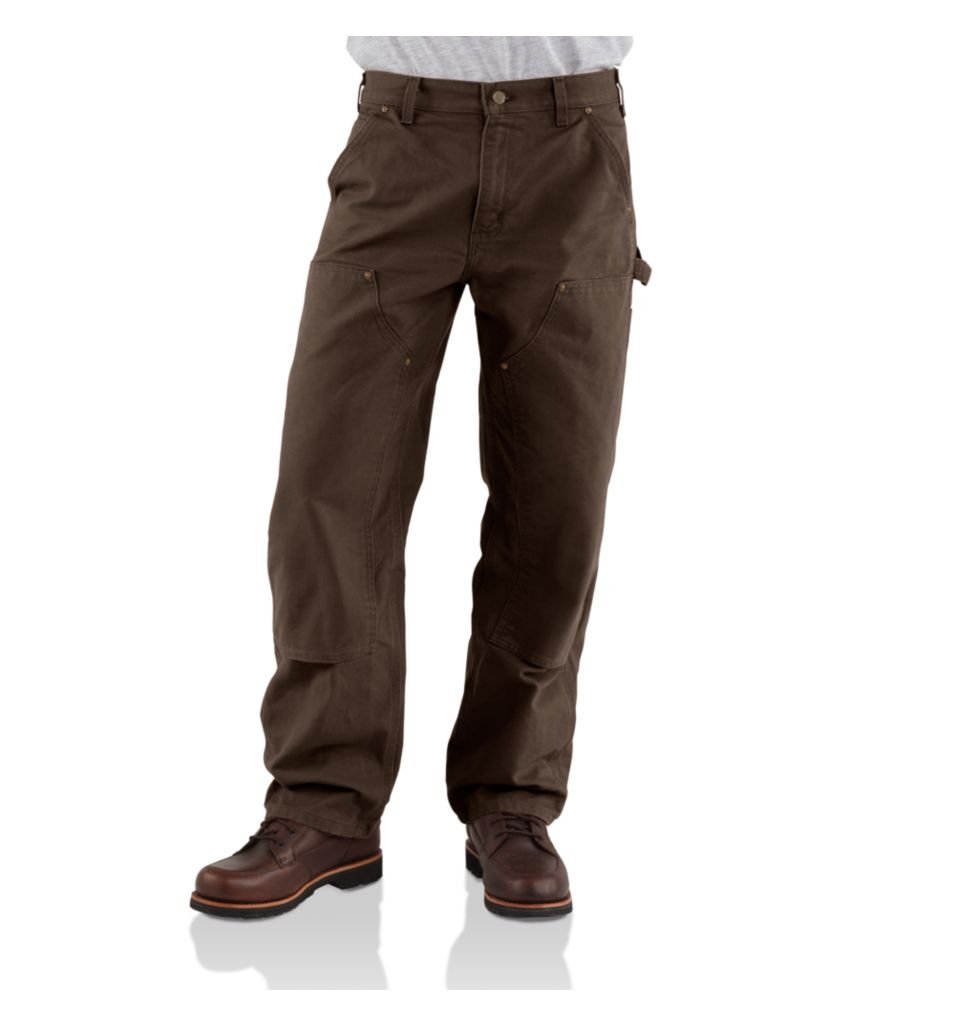
The Carhartt double-front dungaree is one of those garments that has outlasted several generations of workwear trends without changing much, and the washed duck version in dark brown shows why. It is a heavy cotton pant built around a simple premise: put extra fabric where knees and thighs take abuse, cut it loose enough to move in, and let the wearer deal with the break-in period. That premise holds up, but it comes with trade-offs worth understanding before you buy a pair.
In practice, these pants show up in places like job sites, farm supply runs, garage workshops, and warehouse floors. The double front is the defining feature: a second layer of duck canvas runs from the thigh down over the knee, with an opening at the bottom that accepts knee pads. For anyone who kneels, crouches, or drags across rough surfaces regularly, that reinforcement is the reason to choose this model over a standard five-pocket canvas pant. The fabric itself is a washed 12-ounce cotton duck, which softens the hand slightly compared to Carhartt’s rigid duck, though it still starts out stiff.
Construction details are functional rather than decorative. There are hammer loops on both legs, a rule pocket on the right leg, and utility pockets sized for tools or a phone. The loose straight cut runs roomy through the seat and thigh with a straight leg that fits over boots without bunching. The waistband sits at the natural waist, and the dark brown colorway hides dirt reasonably well without looking like a uniform. Triple-stitched seams at stress points and metal rivets at the pocket corners are standard Carhartt fare, and they generally hold up over years of regular use.
Break-in is the honest part of the story. The washed duck is softer than rigid duck, but the double front adds bulk and stiffness at the knee that takes several weeks of wear to loosen. Early on, the pants can feel board-like and may chafe behind the knee until the fabric relaxes. Sizing is another consideration: the loose fit runs generous, and many buyers find they can size down in the waist, especially if they plan to wear them without heavy layering. The 32-inch inseam on this W32 x L30 pair is accurate, but the straight leg means hem length matters if you prefer a cleaner break over your boots.
Where these pants fall short is in versatility and comfort during heat. The double-layer knee makes them warmer than a single-layer canvas pant, and the heavy cotton does not breathe like synthetic work pants or lighter twill. In summer heat or indoor shops without airflow, that becomes noticeable. They also are not a substitute for dedicated rain gear; the duck resists light moisture but soaks through in sustained wet conditions. And while the loose cut is great for movement, it is not a slim or tapered look, so anyone wanting a modern silhouette will find these boxy.
Compared with a lighter alternative such as Dickies’ standard duck pant or a synthetic stretch work pant, the Carhartt double front is heavier, stiffer, and more protective. The trade-off is clear: you get durability and knee reinforcement at the cost of weight and initial comfort. Against Carhartt’s own rigid duck double front, the washed version is easier to live with from day one but still requires patience. Against a dedicated knee-pad pant with built-in padding, this one is more flexible because the pads are optional and removable.
These pants suit people who do real physical work and accept a break-in period: carpenters, mechanics, landscapers, farm workers, and homeowners with serious weekend projects. They are also reasonable for casual wear if you like a workwear look and do not mind the weight. They are not ideal for anyone who wants an immediately soft pant, runs hot, needs a slim fit, or works in wet environments without additional protection. For the right user, the double front is the point, and the pant delivers on it without pretending to be something else.