
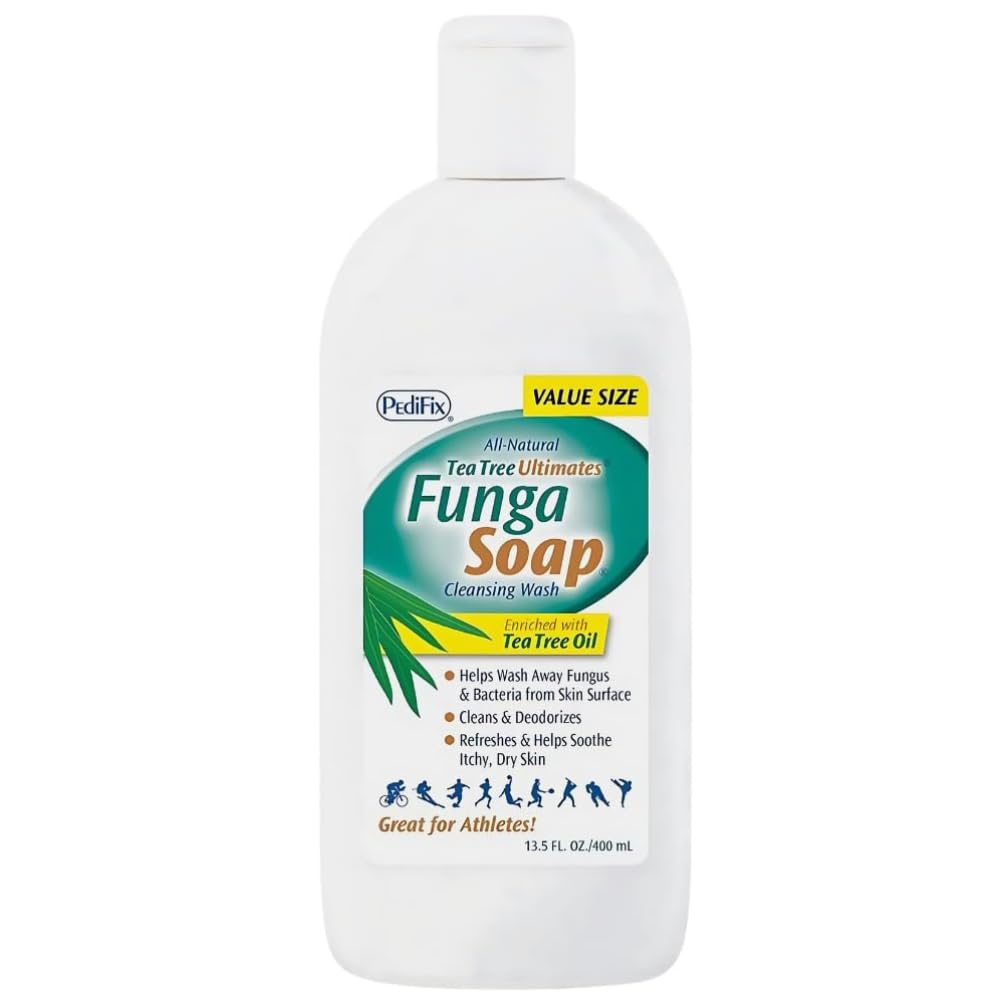
FungaSoap is one of those products that sits at an odd intersection: it’s marketed as a foot and body wash, but its name and packaging suggest something closer to a treatment than a daily cleanser. Pedifix sells it in a 13.5 fluid ounce bottle, which is roughly the size of a standard body wash, and the active ingredient list leans on tea tree oil alongside other botanical components. The question worth asking is whether it functions as a straightforward hygiene product or something you’d only reach for when a problem arises.
In practice, most people use it in the shower the way they would any liquid soap—applied to a washcloth or loofah, worked into a lather, and rinsed. The texture is thinner than a typical gel body wash, and the tea tree scent is pronounced but not overwhelming. It rinses clean without leaving a filmy residue, which matters for anyone who has used medicated washes that feel tacky on the skin. For foot-specific use, it works best when applied directly between the toes and along the sole, then left on for a short period before rinsing, though the label doesn’t specify a contact time and the product isn’t formulated as a leave-on treatment.
The functional features are modest but relevant. Tea tree oil is the headline ingredient, and it’s included for its well-documented antifungal and antibacterial properties. The formula also contains aloe vera and glycerin, which temper the drying effect that tea tree can have on skin. It’s pH-balanced, which is a low bar but worth noting since some medicated washes are harsh enough to disrupt the skin barrier with regular use. The bottle has a flip-top cap, and the product is clear and lightly foaming—nothing about the physical experience feels clinical.
Where the product runs into trouble is in expectation management. Tea tree oil is not a cure for fungal infections, and FungaSoap doesn’t claim to be, but the name and the foot-focused marketing can lead buyers to treat it as a standalone solution for athlete’s foot or persistent odor. It isn’t. It’s a supportive cleanser—useful as part of a routine that includes drying feet thoroughly, changing socks, and using a proper antifungal cream when needed. Used alone for an active infection, it will likely disappoint.
A second limitation is the scent. Tea tree has a medicinal, slightly camphoraceous smell that some people find refreshing and others find off-putting. It lingers faintly on the skin after rinsing, so it’s not the product to reach for if you’re heading somewhere and don’t want to smell like a spa treatment. The 13.5 ounce size is also smaller than it appears in photos; at twice-daily use on both feet, a bottle lasts roughly three to four weeks, which makes it a more expensive habit than a standard body wash.
Compared to a generic antibacterial body wash, FungaSoap is more targeted but less versatile. A drugstore antibacterial wash costs less per ounce and works fine for general cleansing, but it doesn’t offer the tea tree oil component that some users specifically want for foot odor. Compared to a dedicated antifungal cream or spray, FungaSoap is a weaker intervention—creams stay on the skin and deliver active ingredients over hours, while a wash is rinsed away in under a minute. The two categories aren’t interchangeable, and buyers should understand which job they’re hiring the product to do.
Who is it for? People dealing with mild foot odor, those who want a tea tree-based cleanser for daily shower use, and anyone looking for a gentle wash that won’t strip the skin on feet or body. It’s also reasonable for gym-goers who want a post-workout wash with some antibacterial support. Who is it not for? Anyone with an active fungal infection should start with a proven antifungal treatment, not a wash. People with sensitive skin should patch-test first, since tea tree oil can irritate. And anyone expecting a dramatic fix for chronic foot odor will likely need to address footwear and sock habits before a wash makes a visible difference.
The honest summary: FungaSoap is a decent, mildly medicated cleanser with a specific use case. It does what a tea tree wash should do—clean without over-drying—but it’s not a treatment, and the price per ounce reflects the niche positioning. Buy it as a supporting player in a foot-care routine, not as the headline act.