
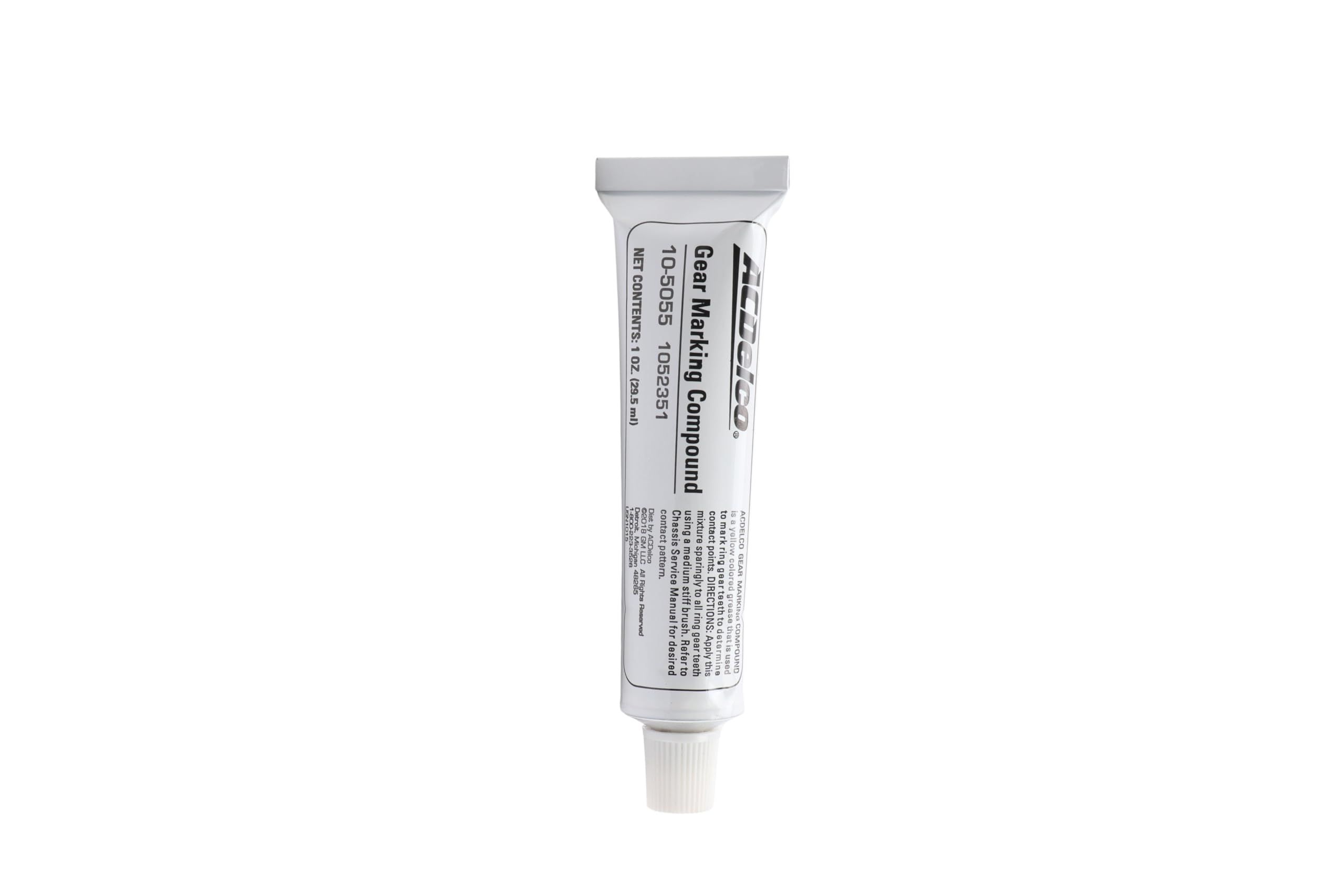
ACDelco’s 10-5055 multi-purpose compound grease (also sold under the GM part number 01052351) occupies a fairly specific spot in the parts catalog: it is the lubricant General Motors specifies for a range of chassis, suspension, and underhood applications on its own vehicles. That framing matters more than any marketing claim, because it tells you what the product is actually for. This is a service-grade grease meant to go where the factory service manual says it goes, not a universal miracle lubricant for every joint on every machine.
In practice, the 10-5055 shows up in ball joints, tie rod ends, idler arms, and other grease fittings on older GM trucks and cars, and it is also commonly used on battery terminals, hood latches, door hinges, and similar low-speed pivot points. The tube format fits standard grease guns, which is how most people will use it. The compound is a lithium-complex-style chassis grease with a dark, tacky consistency. It stays put on vertical surfaces better than thin general-purpose grease, which is the main reason it holds up in suspension joints that see load and vibration rather than high speed.
What it does well is fairly narrow but real. It clings to metal, resists being washed out by road spray, and provides the kind of cushioning that grease fittings on a worn front end actually need. For anyone maintaining an older GM vehicle, using the factory-specified grease removes a small variable from the equation. The spec exists for a reason, and matching it is a reasonable default.
The limitations are worth being clear about. This is not a high-temperature wheel bearing grease in the modern sense, and it is not formulated for constant-velocity joints or sealed bearings that call for a specific NLGI grade and base oil viscosity. Putting it in the wrong place can do more harm than good, particularly in high-speed bearing applications where a chassis grease may not flow or shed heat the way the bearing design expects. It is also a conventional-style product in an era when many buyers have moved to synthetic greases with wider temperature ranges. For a daily-driven truck doing normal duty, that difference rarely shows up; for heavy towing in extreme heat or cold, a synthetic alternative may be the better call.
Compared with a generic NLGI #2 lithium grease from a hardware store, the ACDelco product is more expensive per tube and harder to find outside dealership parts counters or online. The generic grease will handle hinges and battery terminals fine and costs less. Where the ACDelco earns its price is in the chassis fittings on a GM vehicle, where the factory spec and the tackier formulation give a bit more confidence. Compared with a dedicated moly-fortified grease for high-load sliding surfaces, the 10-5055 is not the specialist choice either; it is a middle-of-the-road compound that covers a lot of ground without excelling at any single extreme.
Realistic expectations matter here. A tube of grease will not fix a clunking ball joint or restore a worn tie rod. It will slow wear, quiet a squeaky hinge, and keep fittings from seizing between services. Buyers should expect a normal service interval, not a permanent fix, and should plan to grease fittings at the manufacturer’s recommended mileage rather than assuming the product is a one-and-done treatment.
Who is this for? Primarily owners of GM vehicles, especially older trucks and SUVs with greaseable front-end components, who want to match the factory specification without hunting down an obscure equivalent. It also suits anyone doing routine underhood maintenance who wants one tube that handles latches, terminals, and chassis points. Who is it not for? Owners of vehicles that specify a synthetic or high-temperature grease, anyone servicing sealed bearings or CV joints, and buyers who simply need the cheapest general-purpose lubricant for household hinges. Those users will pay more for a spec they do not need.
The packaging is unremarkable, and the tube is the usual size that fits a standard gun. There is nothing flashy about the product, and that is appropriate. It is a consumable that does a defined job. The main caution is to read the service manual before assuming it belongs in a given application, because the 10-5055 is a good fit for the jobs it was designed for and a questionable one everywhere else.