
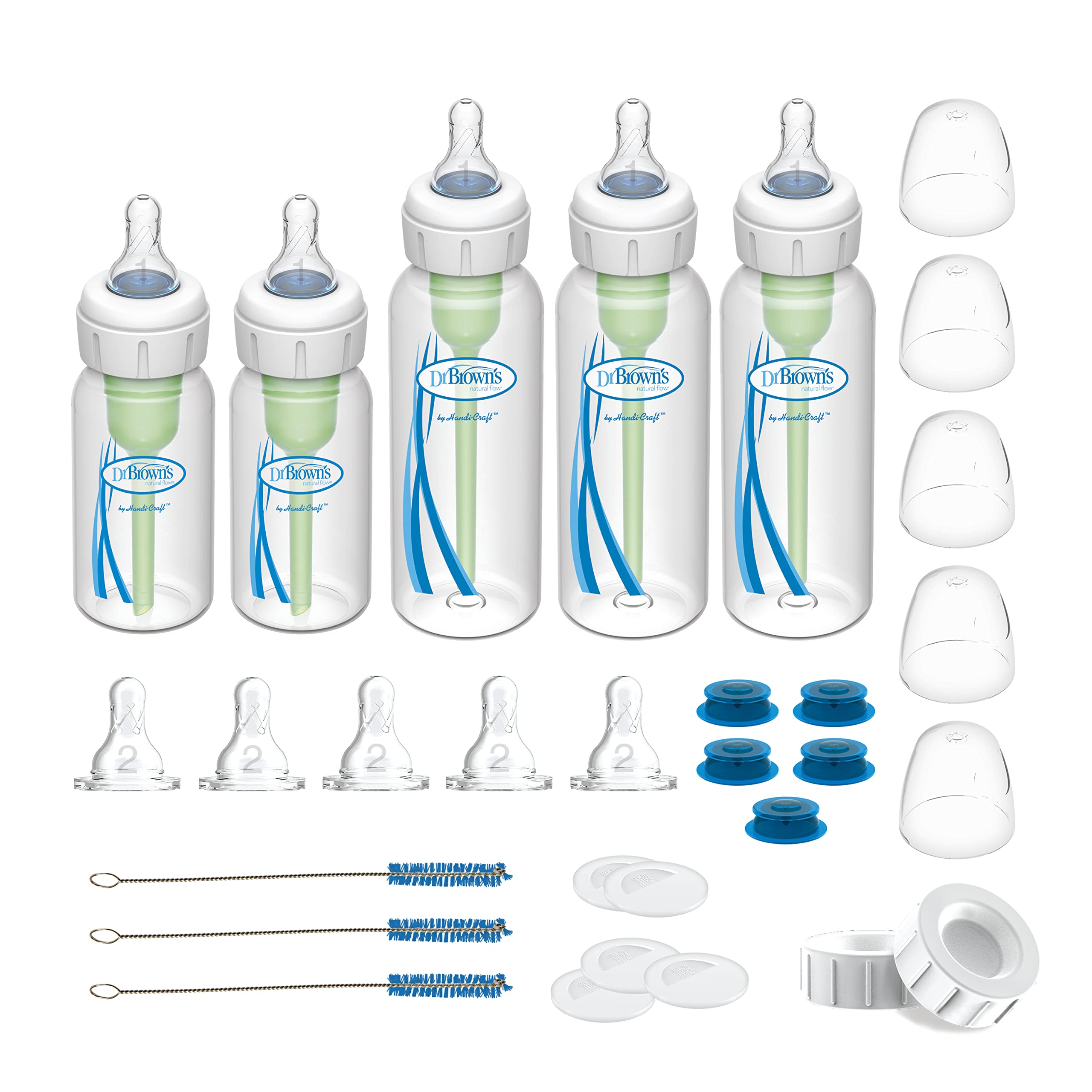
Feeding a baby with a cleft lip, tongue tie, or similar oral-motor challenge often turns ordinary bottle-feeding into a series of workarounds. The Dr. Brown’s Specialty Feeding System Starter Kit is one of the few off-the-shelf products aimed squarely at that situation. It pairs the company’s familiar narrow bottle design with a valve system intended to reduce the effort a baby needs to draw milk, and it is sold as a starter kit rather than a single bottle, which matters for parents who are still figuring out what works.
The central component is the infant-paced feeding valve, sometimes called a specialty valve. In a standard bottle, a baby has to generate suction to pull milk through the nipple. For infants with a compromised seal or limited tongue movement, that suction is hard to sustain, and feeding becomes tiring or inefficient. The specialty valve is designed to let milk flow with less suction effort while still responding to the baby’s suck pattern. In practice, this is the feature that distinguishes the kit from a regular Dr. Brown’s bottle, and it is the reason the product exists at all.
The kit also includes the internal vent system Dr. Brown’s is known for. The vent channels air away from the nipple and toward the back of the bottle, which is meant to reduce air swallowing and the associated fussiness. For babies who feed slowly or take breaks, that venting can be genuinely useful, though it also means more parts to wash. The narrow bottle shape is worth noting: some parents and feeding therapists prefer narrow bottles for infants with oral-motor difficulties because the smaller nipple base can be easier to latch, but narrow bottles hold less and are less stable on a counter than wide-neck designs.
Real-world use tends to look different from the box. Many families do not buy this kit on day one; they buy it after a lactation consultant, speech-language pathologist, or pediatric feeding specialist has flagged a concern. That means the kit is often used alongside a feeding plan rather than as a standalone solution. Parents commonly report using it for some feeds and a different bottle for others, depending on how tired the baby is or what position works that day. It is not a device that replaces professional guidance, and the kit itself does not include instructions tailored to a specific diagnosis, which is a real gap for a product marketed to families in stressful circumstances.
Functionally, the kit delivers what it claims: a bottle with a valve that changes the flow dynamics. What it does not do is solve feeding problems on its own. Tongue tie releases, cleft lip repair, and feeding therapy are medical and therapeutic interventions; the bottle is a tool that can make feeding more manageable in the meantime or afterward. Parents should expect the kit to reduce effort and frustration, not to normalize feeding overnight. Some babies take to it immediately; others reject the nipple shape or the flow rate, and the kit offers limited nipple-level variety compared with buying individual nipples separately.
Compared with a standard anti-colic bottle, the Specialty Feeding System costs more and adds complexity. Compared with specialty feeders from other brands, such as the Haberman feeder or the Medela SpecialNeeds feeder, the Dr. Brown’s kit is generally less expensive and more widely available, but it relies on a valve-and-vent approach rather than a truly variable-flow nipple that responds to compression. The Haberman, for instance, is often cited by cleft palate teams because its nipple responds to jaw compression rather than suction alone. The Dr. Brown’s kit is a reasonable middle ground, but it is not the most specialized option on the market, and families with significant cleft palate needs may be steered elsewhere by their care team.
Cleaning is the practical trade-off. The vent system, valve, and nipple add up to several small parts per bottle, and the manufacturer’s instructions call for careful washing. For parents already exhausted by feeding difficulties, the extra assembly and dish duty is a genuine burden. The narrow bottles also mean more frequent refills during a feed, which can interrupt a baby who has finally settled into a rhythm.
Who it suits: families whose feeding specialist has recommended a lower-effort bottle for a baby with tongue tie, lip tie, or mild oral-motor difficulty, and parents who want a widely available, moderately priced option before committing to a more specialized feeder.
Who it does not suit: babies with significant cleft palate who need a compression-responsive nipple, families looking for a single bottle that requires no extra parts, and parents who have not yet had a feeding assessment, since the kit is best used as part of a plan rather than as a first guess.