
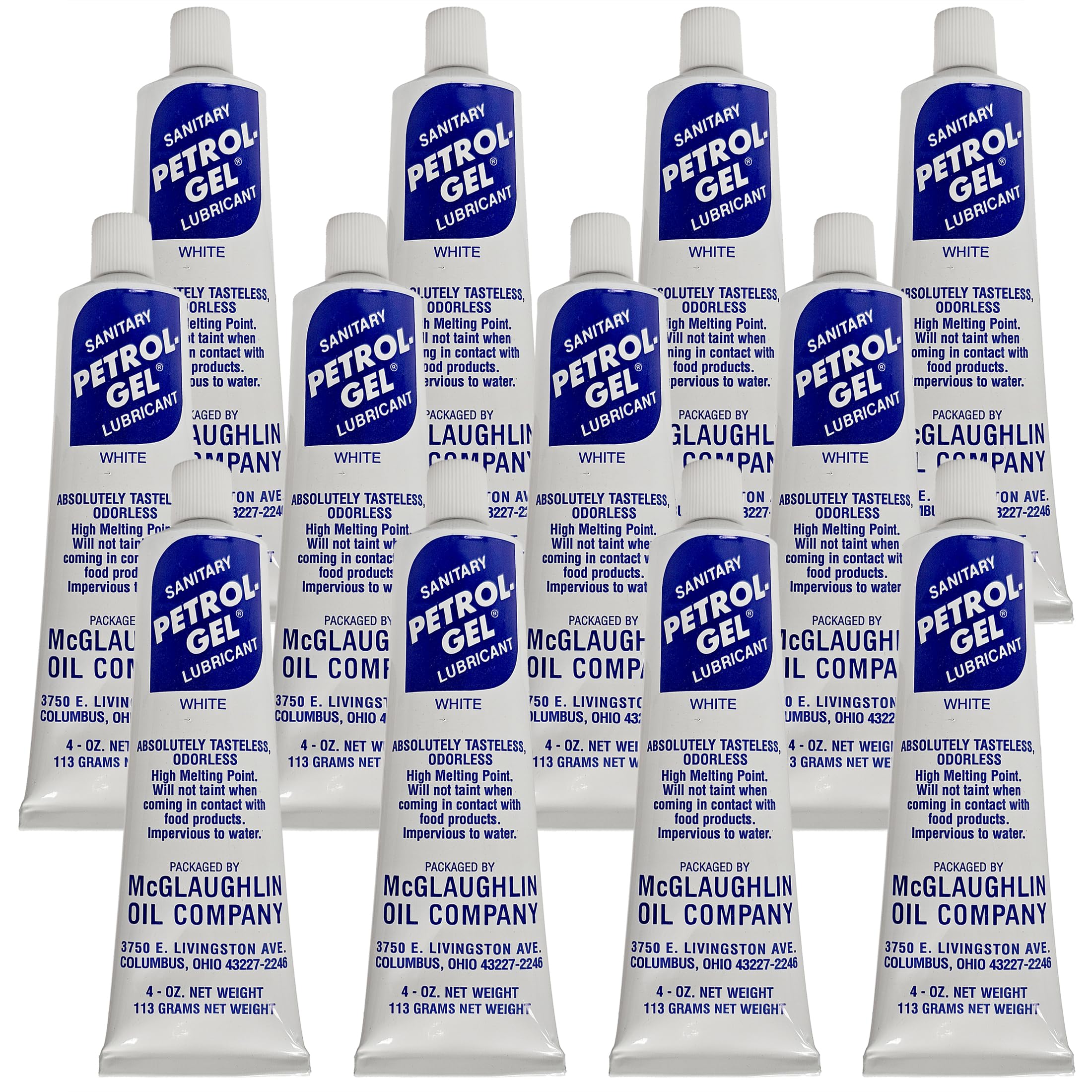
Petrol Gel is a food-grade lubricant that comes in a 4-ounce bottle, and this particular listing is for a 12-pack. Food-grade lubricants are used in settings where incidental contact with food is possible, such as kitchen appliances, meat slicers, coffee grinders, and even ice cream machines. The gel formula is thicker than oil, so it tends to stay put rather than running off. In this review, we’ll look at what the product is, how it performs, and where it might fall short.
First, what does “food grade” actually mean? It means the lubricant is formulated with ingredients that are safe for incidental food contact. It’s not meant to be eaten, but if a small amount ends up in food, it’s not considered harmful. Petrol Gel meets NSF H1 registration, which is a common standard for food-grade lubricants. The gel is translucent and has a consistency similar to petroleum jelly, though it’s designed to be more stable at higher temperatures.
In real-world use, this lubricant is often applied to the moving parts of kitchen equipment. For example, the gears in a stand mixer, the sliding mechanism of a meat slicer, or the drive shaft of a commercial coffee grinder. Because it’s a gel, it can be applied with a brush or a gloved finger, and it doesn’t drip. That’s a plus in food prep areas where drips could contaminate surfaces. The 4-ounce bottle is a convenient size for occasional use, and the 12-pack suggests it’s aimed at businesses or serious home cooks who go through lubricant regularly.
One of the key features is its temperature range. Petrol Gel is rated for temperatures up to 400°F (204°C) intermittently, which covers most kitchen equipment. It’s also water-resistant, so it won’t wash away easily during cleaning. That said, it’s not a high-speed bearing grease; it’s intended for low-speed, high-load applications like hinges, gears, and slides. Using it on a high-speed motor bearing would likely result in it being flung off.
Another consideration is compatibility with different materials. Petrol Gel is safe for most metals and plastics, but it can degrade certain rubbers and elastomers. If you’re unsure, test a small amount on a hidden area first. Also, while it’s food-grade, it’s not a cleaner or sanitizer. Surfaces should be cleaned before application to avoid trapping debris.
Compared to a standard white petroleum jelly, Petrol Gel is more expensive but offers the assurance of food-grade certification. Compared to a food-grade oil, the gel is less likely to migrate but can be harder to apply in tight spaces. For applications where a thin film is needed, an oil might be better. For vertical surfaces or areas prone to dripping, the gel has the advantage.
Who is this for? It’s suitable for restaurant owners, commercial kitchens, and home cooks with high-end equipment that requires regular lubrication. It’s also useful for hobbyists who restore or maintain food processing machines. The 12-pack is likely overkill for a single household unless they have multiple machines and use lubricant frequently. For someone who just needs a small amount for occasional use, a single bottle might last years. So the 12-pack is more for businesses or those who share with a community.
Who is it not for? If you’re looking for a general-purpose lubricant for non-food applications, a standard grease or oil will be cheaper and equally effective. Also, if your equipment requires a specific lubricant (like a manufacturer’s recommendation), using a different product could void warranties. Always check your equipment manual first.
In terms of performance, Petrol Gel does what it claims: it lubricates and stays in place. It doesn’t have a strong odor, which is good for food areas. However, it can be sticky, and over-application can attract dust and flour, creating a gummy mess. A little goes a long way. The 4-ounce bottle has a flip-top cap, which makes dispensing easy, but the gel can clog the opening if not wiped clean after use.
One limitation is that it’s not a multi-purpose lubricant for extreme conditions. It won’t replace a high-temperature bearing grease or a penetrating oil for rusted bolts. It’s a niche product for a specific need. Also, the 12-pack takes up storage space and has a shelf life. While the product doesn’t expire quickly, the gel can separate over time if exposed to temperature extremes. So buying in bulk only makes sense if you’ll use it within a couple of years.
In summary, Petrol Gel Food Grade Lubricant is a solid choice for maintaining food equipment. It’s safe, effective, and convenient for the right applications. The 12-pack is best for commercial users or those who go through lubricant regularly. For occasional home use, a smaller quantity would be more practical. As with any lubricant, follow the equipment manufacturer’s guidelines and use it sparingly.