
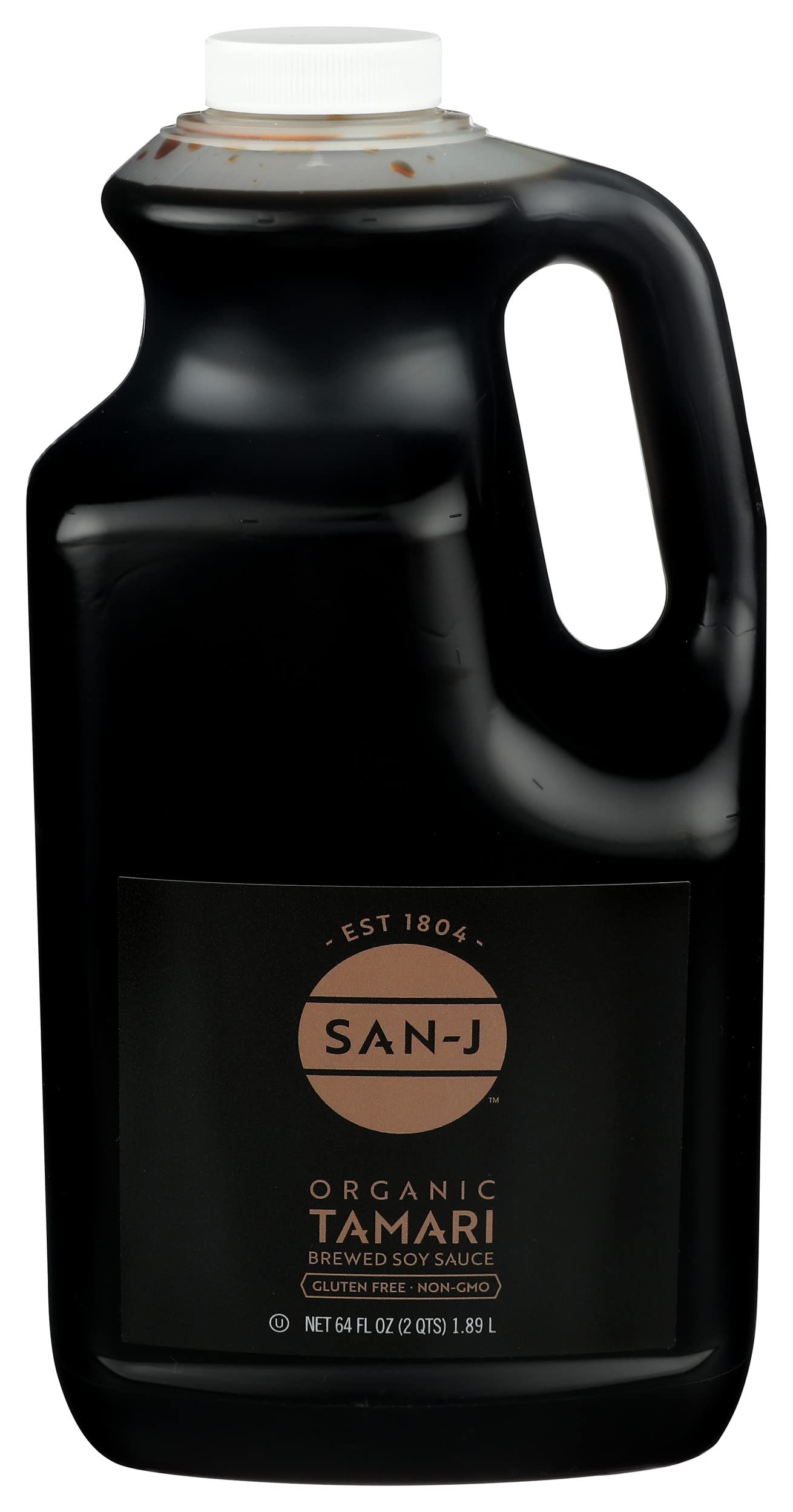
San-J’s organic gluten-free tamari comes in a 64-ounce container that sits somewhere between a home pantry staple and a small commercial supply. It is a wheat-free soy sauce brewed from 100 percent whole soybeans, and the size alone signals what it is for: people who cook with soy sauce often enough that an 8- or 10-ounce bottle would be a nuisance. The question worth answering is whether the bulk format and the tamari style justify the counter and fridge space they take up.
Tamari is the practical answer for anyone avoiding wheat, but it is not simply “gluten-free soy sauce.” Traditional tamari is brewed with little or no wheat, which gives it a rounder, slightly less sharp profile than standard soy sauce. San-J’s version leans into that: it is darker, a touch thicker, and tastes more of fermented soybean than of salt and grain. In a stir-fry, a marinade, or a dipping sauce, that difference is noticeable but not dramatic. It behaves like soy sauce should — it seasons, it adds color, it carries umami — without announcing itself as a substitute.
In practice, the container gets used in a few predictable ways. It is poured into marinades for chicken, beef, and tofu; splashed into fried rice and noodle dishes; mixed with rice vinegar and sesame oil for a quick dressing; and used as a table condiment for sushi or dumplings. Because tamari is a bit more concentrated in flavor than many mass-market soy sauces, a little goes further, which partly offsets the cost per ounce. The 64-ounce bottle is also useful for households that cook Asian food several times a week, or for anyone who makes large batches of sauce or marinade to freeze.
Functionally, the product is straightforward. It is USDA organic and certified gluten-free, brewed from whole soybeans, and contains no added preservatives or artificial colors. The plastic jug has a screw cap and a handle, which makes pouring manageable even when full, though the wide mouth means it is easy to over-pour if you are not paying attention. Once opened, it keeps well in the refrigerator for months, and the size means you will likely finish it before quality declines — but only if you cook with it regularly.
The main trade-off is the format itself. A 64-ounce jug is heavy, takes up significant shelf or door space, and is awkward for anyone who uses soy sauce sparingly. If you cook for one or two people and reach for soy sauce a few times a month, a smaller bottle is more sensible; the bulk size only pays off with frequent use. There is also the question of variety: tamari has a distinct, slightly richer flavor, and some dishes — lighter broths, delicate dipping sauces — may call for a thinner, sharper soy sauce instead. This is not a universal replacement for every soy sauce in the kitchen.
Compared with conventional soy sauce, the difference is mostly about wheat and depth. Standard soy sauce, brewed with wheat, tends to be sharper and more saline; tamari is rounder and, in San-J’s case, a bit more savory. Compared with coconut aminos — a common gluten-free alternative — tamari is much closer to real soy sauce in flavor and salt content, while coconut aminos are sweeter and thinner. For anyone who wants a gluten-free product that still tastes like soy sauce, tamari is the closer match; coconut aminos are a different ingredient with a different job.
This product suits people with celiac disease or gluten sensitivity who cook often and want a reliable, certified gluten-free soy sauce in a quantity that lasts. It also works for small food businesses or serious home cooks who go through soy sauce quickly. It is less suitable for occasional users, for anyone with limited fridge space, or for cooks who want a single all-purpose soy sauce and are not concerned about gluten — a standard soy sauce will be cheaper and sharper. Those who dislike the deeper, slightly fermented flavor of tamari may also prefer a lighter style.
Realistically, this is a solid, functional pantry item rather than a revelation. It does what tamari should do, it is certified and organic, and the bulk size is convenient for heavy users. The drawbacks are the physical bulk, the higher upfront cost, and the fact that tamari is not a one-to-one swap for every soy sauce application. Buy it if you cook with soy sauce weekly and want a gluten-free option that does not taste like a compromise; skip it if you need only occasional splashes or prefer the sharper profile of conventional soy sauce.