
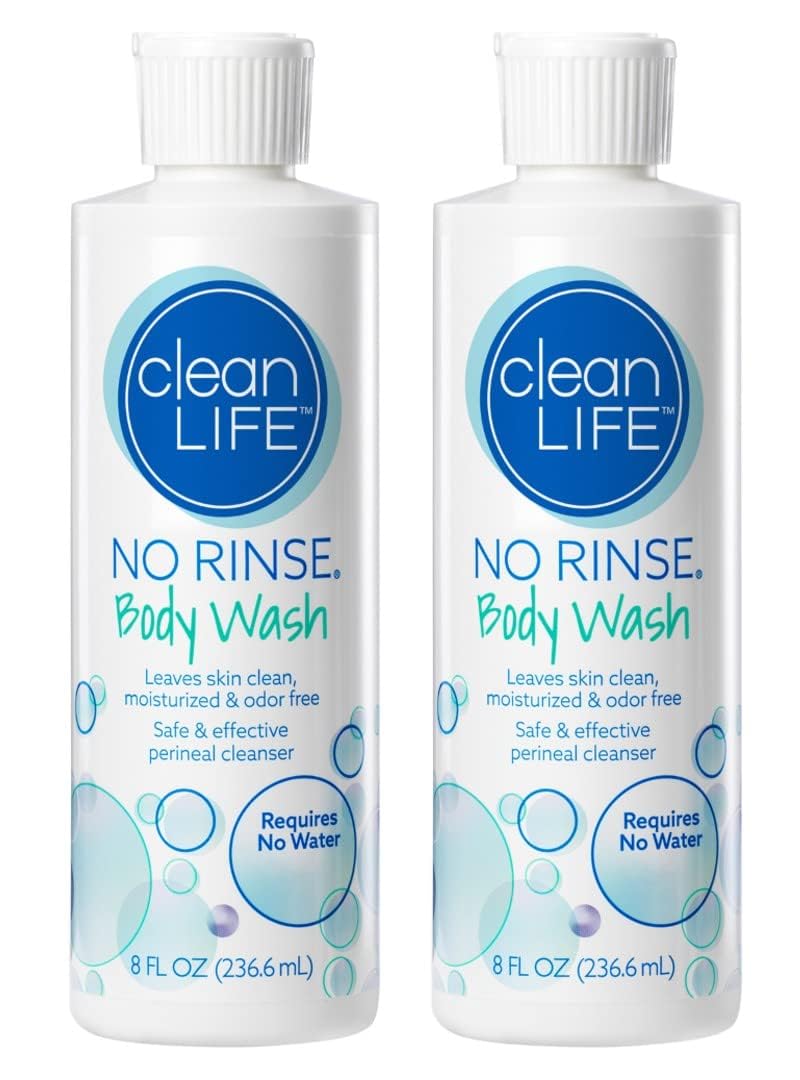
No-rinse body washes occupy a narrow but genuinely useful category. They exist for situations where a shower is impractical, unsafe, or simply unavailable, and they succeed or fail on how well they clean without water. This two-pack of 8 fl oz bottles from an unnamed manufacturer (the listing emphasizes “Made in USA” but offers little brand context) is aimed at surgery recovery, elderly care, and camping—three very different use cases that stress the formula in different ways. The short version: it does what a rinse-free cleanser is supposed to do, with some caveats worth knowing before you buy.
In practice, these products are used by applying the liquid to a cloth or directly to skin, working it in, and then wiping or toweling off rather than rinsing. That’s the entire workflow, and it’s why no-rinse washes show up in post-operative instructions, hospice and home-care routines, and hospital-adjacent settings where getting a patient into a shower is a logistical or safety problem. The 8 oz size is reasonable for a bedside kit or a toiletry bag; the two-pack means one can live in a bathroom cabinet while the other travels.
The functional claims here are modest and largely credible for the category. The formula is described as cleansing, moisturizing, and odor-eliminating, and as safe for sensitive skin. Most no-rinse washes rely on mild surfactants plus a moisturizing agent, and this one appears to follow that pattern. Importantly, it is not a disinfectant or a substitute for soap and water where visible soiling or wound care is involved—nothing in the listing suggests otherwise, and buyers should not assume it. The “sensitive skin safe” claim is worth taking with the usual grain of salt: fragrance and preservatives are common irritants, and the listing doesn’t disclose a full ingredient list, which is a real gap for anyone with known contact allergies.
Where this type of product performs best is in maintenance cleaning—a day or two between full showers, a bedbound patient’s daily freshening, or a camping trip where a full wash isn’t happening. It removes surface oils and light sweat reasonably well, and the moisturizing component keeps skin from feeling tight afterward, which is the main complaint people have with plain soap-and-wipe approaches. Odor control is typically the weakest claim in this category; expect it to reduce rather than eliminate odor, and expect the effect to fade over a day. It won’t replace deodorant.
The main trade-off is residue. Rinse-free formulas leave a thin film by design, and on some skin types—particularly oily or acne-prone skin—that film can feel tacky or contribute to clogged pores if used daily for extended periods. Toweling off thoroughly helps, but it’s a step people skip. There’s also a volume problem: 8 oz goes quickly if you’re doing full-body washes daily for one person. For long-term caregiving, a larger bottle or a bulk format is usually more economical, and this two-pack is better suited to short-term recovery or intermittent use than to months of daily care.
Compared with the alternatives, the calculus is straightforward. Traditional bar or liquid soap requires water and a basin, which is fine at home but awkward in a tent or at a bedside. Pre-moistened bath wipes are more convenient—no bottle, no cloth—but they dry out, generate more waste, and offer less control over how much product you apply. A no-rinse liquid like this sits in the middle: more flexible than wipes, less fuss than a basin bath, and cheaper per use than most wipe products. Hospitals and home-care agencies often use similar formulations in larger dispensers, which is a reasonable signal that the approach works, though it says nothing about this specific brand.
Who is this for? People recovering from surgery who’ve been told to avoid full showers for a period, caregivers managing bedbound or mobility-limited individuals, campers and hikers on multi-day trips, and anyone without reliable access to bathing facilities. It’s also a reasonable emergency-kit item. Who is it not for? Anyone expecting a shower-equivalent clean, people with sensitive skin who can’t verify the ingredient list, and households doing daily full-body washes for months—they’ll burn through the bottles fast and may find the residue accumulates. If you have open wounds, a rash, or a skin condition, this isn’t a medical product and shouldn’t be treated as one.
Realistic expectations matter here. This is a stopgap cleanser, not a replacement for bathing, and it performs at the level you’d expect from a mid-range rinse-free wash: adequate cleansing, some moisturizing, partial odor control, and a residue trade-off. The lack of a published ingredient list and the small bottle size are the two things most likely to frustrate buyers. For short-term recovery, occasional caregiving, or camping, the two-pack is a sensible, low-commitment purchase. For ongoing daily care, look for a larger format from a brand that discloses its full ingredients.