
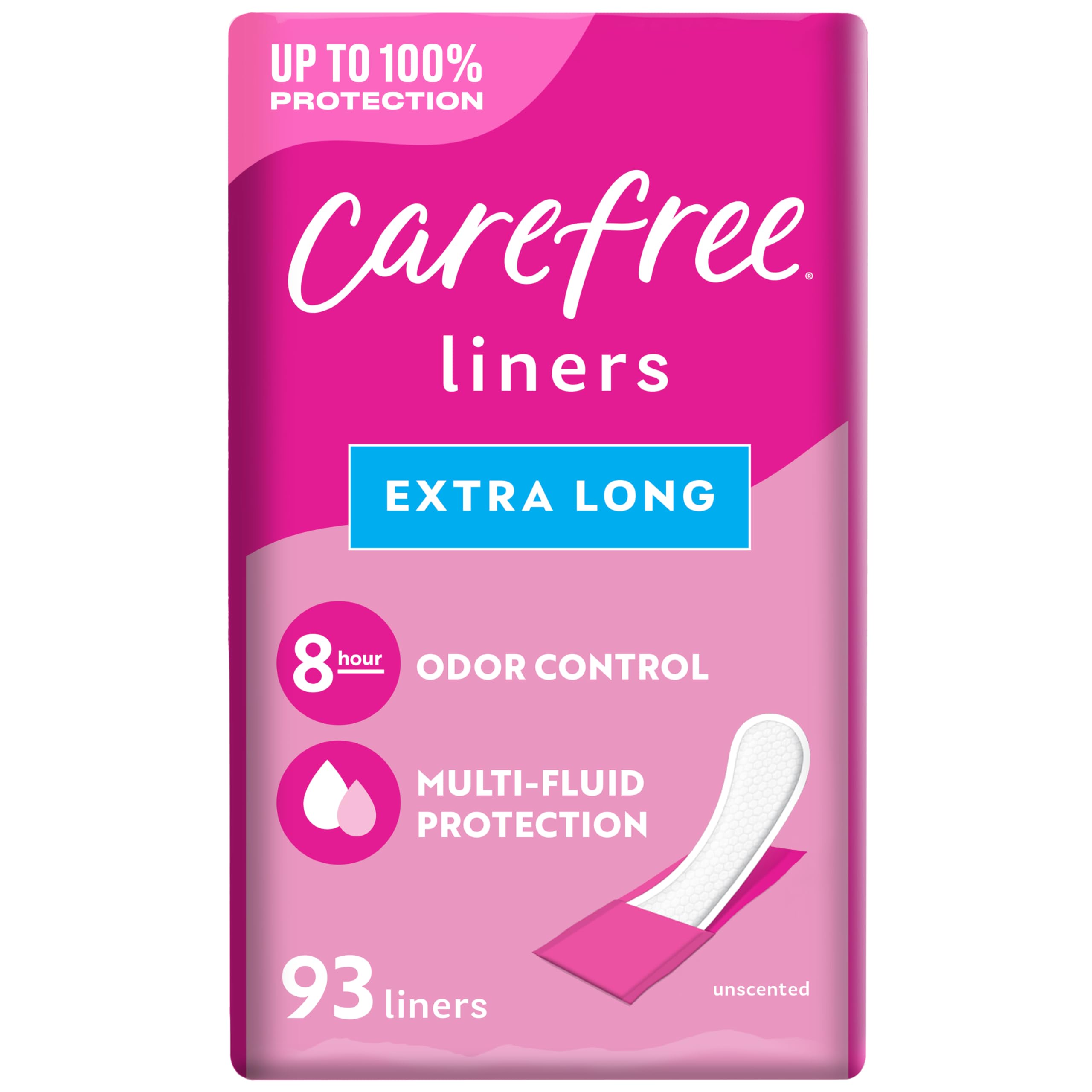
Carefree Light panty liners occupy a specific spot in the feminine hygiene aisle: they are the thin, everyday option rather than a backup for heavy flow. This particular version adds two practical tweaks to the basic liner formula — an extra-long shape and individual wrapping — and sells in a 93-count box. Whether those details matter depends heavily on how you plan to use them, so it is worth separating the useful features from the marketing noise.
What you actually get
The liners are thin, unscented, and shaped to sit flat against underwear. The “Light” designation refers to absorbency: these are designed for discharge, spotting, or the lightest days of a period, not for anything resembling a flow. Each liner is individually wrapped, which is the detail that distinguishes this box from the unwrapped multipacks Carefree also sells. The extra-long length adds coverage front to back compared with standard liners, and the count of 93 is on the generous side for a drugstore box.
How they perform in daily use
In practice, these are the liners you keep in a bag or desk drawer for the end of a period, for discharge management, or for days when you want a little protection without committing to a full pad. The thin profile means they stay largely unnoticed under most clothing, and the unscented construction avoids the fragrance that some users find irritating. The extra length is genuinely useful for anyone who has found standard liners too short at the back, particularly when wearing lower-rise underwear or during activity.
The individual wrapping is the feature most likely to divide people. It makes the liners easy to carry discreetly and keeps them clean in a purse or gym bag, which is a real advantage for travel or commuting. The trade-off is waste: 93 individually wrapped liners generate noticeably more packaging than an equivalent unwrapped box, and unwrapping one takes a few extra seconds each time. For home use, that friction adds up over months. For on-the-go use, the wrapping earns its keep.
Where they fall short
The most important limitation is absorbency. Despite the extra length, these are still light liners. Anyone expecting them to handle a moderate flow, postpartum bleeding, or a heavy spotting day will be disappointed; they will need a regular pad or a higher-absorbency liner. The length can also create fit issues — on very small underwear or with certain cuts, the extra-long liner may extend beyond the gusset and bunch or fold at the edges. That is not a defect so much as a mismatch between the product’s shape and some garments.
Adhesion is typical for the category: the liner stays put on cotton underwear but can shift on smooth synthetic fabrics or if the underwear is loose. Users who need secure placement during intense exercise may find themselves adjusting, and the thin material can occasionally wrinkle if applied hastily.
How they compare
Against standard-length unwrapped liners, the Carefree Extra Long version offers more coverage and better portability at the cost of more packaging and a slightly higher per-liner price. Against reusable cloth liners, the disposable option wins on convenience and hygiene for travel or busy days, while cloth wins on long-term cost and waste reduction. Against higher-absorbency liners, this product is clearly the lighter-duty choice — it is not a substitute for a pad, and it is not marketed as one. Compared with store-brand equivalents, the Carefree liners are broadly similar in construction; the main differentiators are the wrapping and the specific length, both of which generic lines increasingly offer as well.
Who this suits, and who it does not
These liners fit well for people who want light daily protection, manage discharge or end-of-period spotting, and value being able to carry a liner discreetly. They are also reasonable for teens or anyone new to liners who wants a thin, unscented option. They are less suitable for heavy flow, for anyone sensitive to adhesive or synthetic top sheets (a minority of users report irritation with any disposable liner), and for households trying to reduce single-use plastic waste, given the individual wrapping. People with very small underwear or who prefer minimal coverage may also find the extra length excessive.
Bottom line
This is a competent, unremarkable liner that does exactly what the label says. The extra length and individual wrapping are the reasons to choose it over the standard box, and the light absorbency is the reason to look elsewhere if your needs are heavier. It is a reasonable staple for a bathroom cabinet or a bag, provided you go in expecting light-duty protection rather than anything more.