
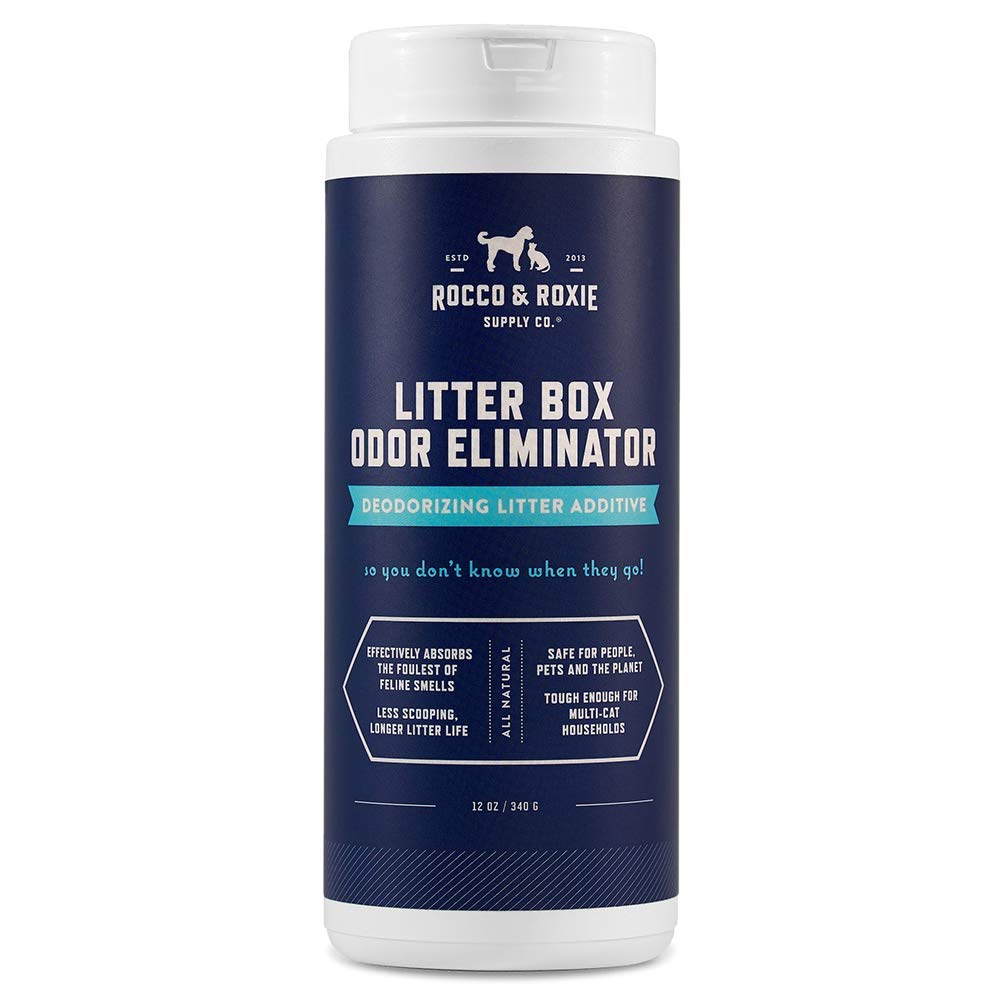
Rocco & Roxie is a brand best known for its pet stain and odor products, and this 12 oz Litter Box Odor Eliminator sits in a crowded category of sprays meant to address what happens between full litter changes. It is not a litter additive, not a deodorizing powder, and not a replacement for scooping. It is a spray you apply to the box and surrounding area, and understanding that distinction matters more than most product descriptions let on.
In practice, the product is used in a few predictable ways. Some people spray the inside of the litter box after scooping, letting it dry before the cat returns. Others use it on the box exterior, the lid, the mat, or the floor and walls around the box, where urine and litter dust tend to accumulate. A third use is on soft surfaces nearby, like a rug or a blanket the cat sleeps on near the box. The 12 oz size is small enough to keep next to the litter station without being obtrusive, though heavy users will go through it fairly quickly.
Functionally, the product is a liquid spray formulated to neutralize odor rather than simply mask it. That is the standard claim in this category, and the honest version is that enzymatic and odor-neutralizing sprays vary widely in how well they handle the ammonia smell of cat urine. On fresh, surface-level odor, a spray like this can make a noticeable difference within minutes. On odor that has soaked into litter, carpet padding, or baseboards over months, no spray is a full fix. Expect it to reduce smell, not erase a long-standing problem.
The application is straightforward: spray, wait, and let the area dry. There is no mixing, no dilution, and no special equipment. For people who already scoop daily, a quick spray of the box after scooping is a low-effort addition to the routine. For people hoping to stretch the time between full litter changes, it can help, but it should not be treated as a substitute for changing litter on a reasonable schedule. Spraying over soiled litter that needed replacing days ago tends to produce a damp, slightly perfumed mess rather than a clean box.
One limitation worth flagging is that cats can be particular about scent. A spray that smells clean to a human may read as unfamiliar or unpleasant to a cat, and some cats will avoid a box that has been sprayed until it dries. The practical workaround is to spray when the cat is elsewhere and allow full drying time, but that adds a step that not every household will bother with. It is also worth noting that the product addresses odor, not the underlying hygiene issue, so a box that is too small, rarely scooped, or placed in a poorly ventilated spot will still smell regardless of what is sprayed on it.
Compared with litter box deodorizing powders, which are mixed into the litter and work continuously, a spray is more targeted and better suited to surfaces outside the litter itself. Powders can clump or dust, and some cats dislike the texture change in the litter. A spray avoids that but requires repeated application and does nothing for odor once it has been absorbed into the litter bed. Compared with general-purpose enzymatic cleaners, this product is more convenient for quick touch-ups around the box but is not a deep cleaner for soaked carpets or subfloor. Households dealing with a cat that marks or sprays urine outside the box will likely need a dedicated enzymatic cleaner in addition to this product.
Who is this for? It suits cat owners with a single box or a small number of boxes who scoop regularly and want a quick way to freshen the box area between cleanings. It is also reasonable for apartments or small rooms where litter box odor is more noticeable and a targeted spray is easier than rearranging the whole setup. It is less suitable for multi-cat households with heavy odor load, for homes dealing with soaked-in urine in carpets or furniture, or for cats that are sensitive to unfamiliar scents around their box. Anyone expecting a spray to replace scooping or regular litter changes will be disappointed, and rightly so.
At 12 oz, the bottle is a reasonable trial size, and the value depends heavily on how often it is used. Light use on the box exterior and surrounding floor can stretch it out; daily spraying inside the box will use it up faster. The product does what a surface odor spray can reasonably do, and no more. It is a useful supporting tool in a litter routine, not a solution on its own.