
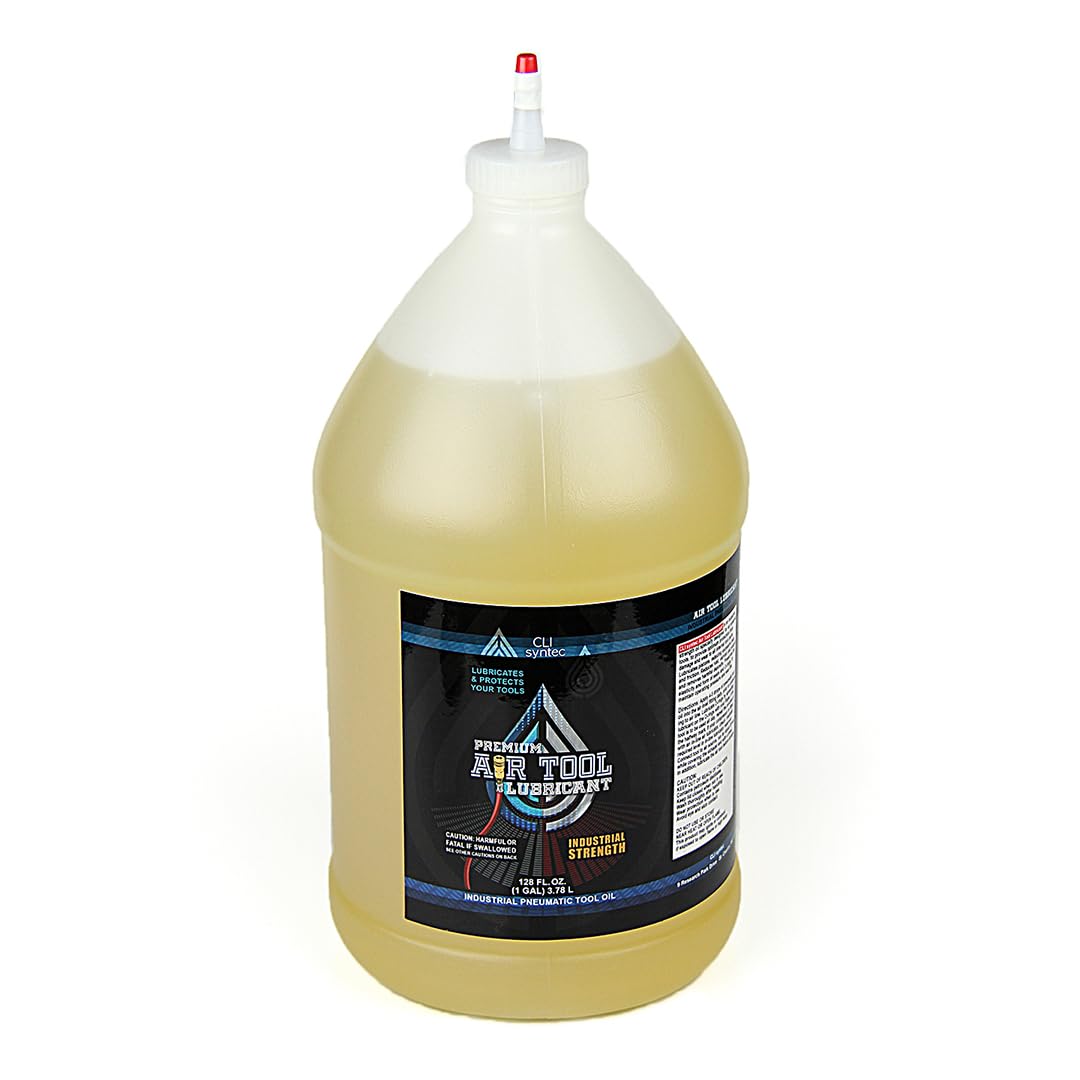
Air tools are simple machines, but they still need oil to survive. The CLIsyntec Premium Air Tool Lubricant comes in a 1-gallon jug and promises to keep pneumatic tools running smoothly. It’s a conventional petroleum-based oil, not a synthetic, and it’s aimed at people who use air tools regularly—whether in a home garage or a professional shop. We spent some time looking at what this oil offers, how it compares to alternatives, and where it might fall short.
What it is and how it’s used
Pneumatic tools like impact wrenches, die grinders, and nailers rely on a constant supply of oil to reduce wear on internal parts. Most people add a few drops directly into the tool’s air inlet before each use, or they use an inline lubricator on their air line. CLIsyntec’s oil is designed for both methods. The gallon size is practical for shops that go through oil quickly, and the jug has a built-in handle for pouring. It’s a straightforward product: no fancy additives or synthetic base stocks, just a standard petroleum oil with some anti-wear and anti-corrosion properties.
Key features
- Volume: 128 fl. oz. (1 gallon) – enough for months of regular use in a small shop.
- Base oil: Petroleum-based (mineral oil), which is common for air tool lubricants.
- Viscosity: Not specified on the label, but typical for air tool oil—light enough to flow through lines but heavy enough to cling to moving parts.
- Additives: Includes anti-wear and corrosion inhibitors, though the exact formulation isn’t disclosed.
- Compatibility: Suitable for most pneumatic tools, but not for tools that require synthetic oil or specific manufacturer approvals.
Performance expectations
In real-world use, this oil does what it’s supposed to: it lubricates. Tools run smoother and last longer when oiled regularly, and this oil meets that basic need. It doesn’t offer the extended drain intervals or high-temperature stability of synthetic oils, but for typical shop use, it’s adequate. We wouldn’t expect it to magically fix a worn-out tool or compensate for poor maintenance. It’s also worth noting that the oil may produce more mist than some synthetic alternatives, which could be a concern in enclosed spaces.
Limitations and trade-offs
The biggest trade-off is that it’s a conventional oil. Synthetics generally last longer, resist breakdown better, and can handle higher temperatures. For occasional use, the difference may not matter, but for high-demand environments, a synthetic might be worth the extra cost. Also, the gallon jug is large; if you only use a few drops at a time, it could take years to go through, and the oil has a shelf life. Finally, the label doesn’t provide detailed specs (viscosity, specific approvals), which might bother users who want to be sure it meets a particular standard.
Comparison to alternatives
Compared to dedicated air tool oils from brands like Ingersoll Rand or DeWalt, CLIsyntec is a budget-friendly option. Those brands often sell in smaller quantities (pints or quarts) and may include more detailed specifications. On the other hand, some users prefer using automatic transmission fluid (ATF) as a cheap substitute, but ATF isn’t formulated for air tools and may not provide the same protection. CLIsyntec sits in the middle: it’s more appropriate than ATF but less specialized than premium brands.
Who it’s for and who it’s not
This oil is a good fit for home mechanics and small shops that use air tools regularly and want a no-nonsense lubricant at a reasonable price per ounce. It’s also fine for people who maintain their tools diligently and don’t mind a conventional oil. However, it’s not for professionals who need documented performance specs, or for tools under warranty that require a specific oil. If you’re running high-end tools in a production environment, a synthetic oil with a known spec sheet is a safer bet. And if you only use an air tool a few times a year, a smaller bottle might be more practical.
Overall, CLIsyntec’s air tool oil is a functional, affordable choice that gets the job done without frills. Just don’t expect it to outperform specialized synthetics—and be prepared to store that gallon jug for a while.