
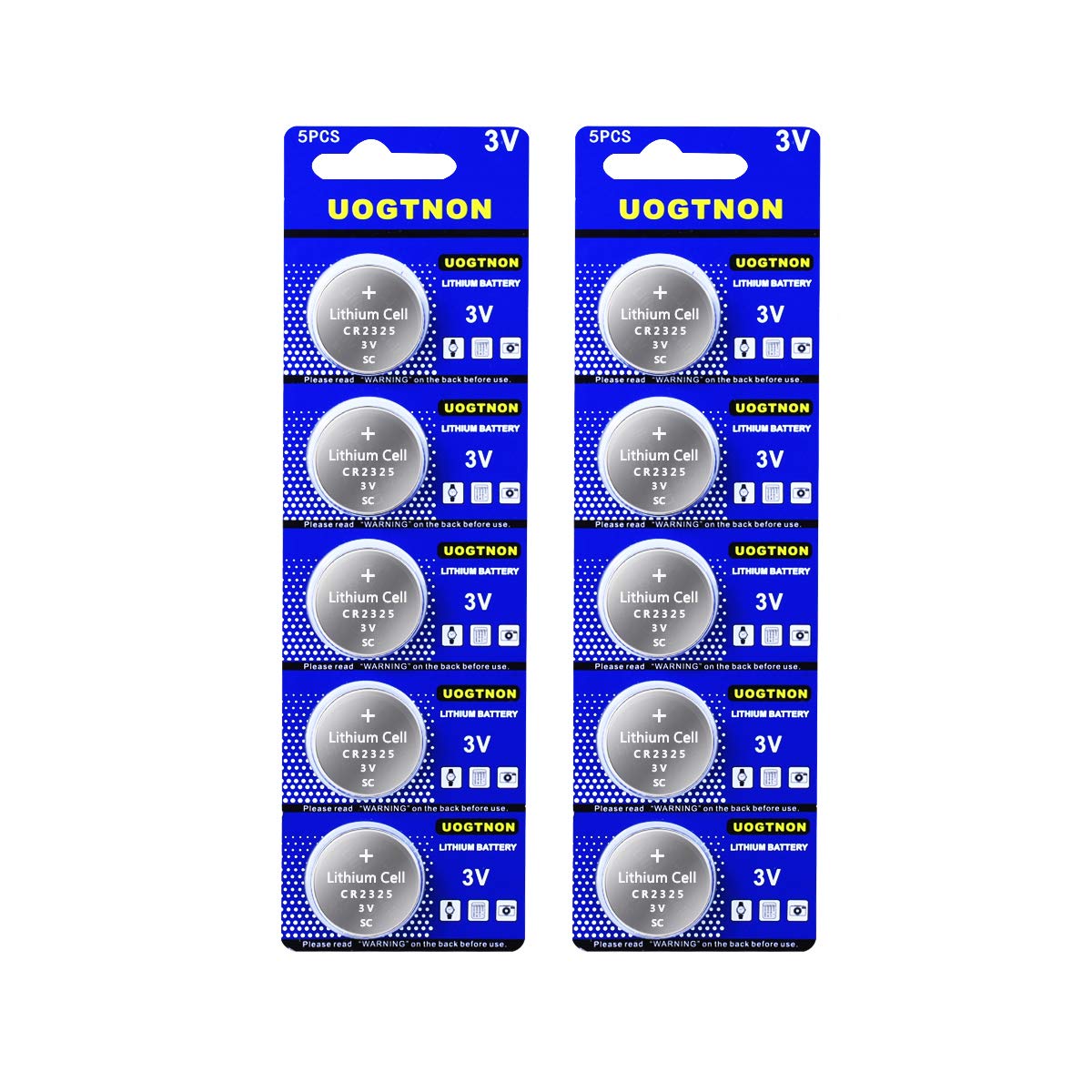
Coin cell batteries are one of those purchases nobody thinks about until a watch stops, a key fob goes dead, or a bathroom scale refuses to turn on. The UOGTNON CR2325 3V lithium battery 10-pack is aimed squarely at that situation: a multipack of the less common CR2325 size, sold in bulk so you have spares on hand. Whether that makes sense depends heavily on which devices you actually own, because CR2325 is not the coin cell most households need.
The CR2325 is a 3V lithium manganese dioxide cell with a nominal capacity in the range of 160–190 mAh, depending on the manufacturer and discharge conditions. It shares the familiar 23mm diameter of the CR2032 but is noticeably thicker at roughly 2.5mm, which means it is not interchangeable with the far more common CR2032 despite the similar name. UOGTNON’s listing presents the cells as standard replacements for devices specifying CR2325, and the ten-pack format is the main selling point: a single card of cells rather than a two- or three-pack at a pharmacy counter.
In practice, CR2325 cells turn up in a narrower set of products than CR2032s. They show up in some digital watches, small remote controls, medical devices such as glucose meters, car key fobs in certain models, and a range of small electronics where the extra thickness is needed for capacity or fit. If you have already checked the battery compartment and the label says CR2325, this pack covers you for years of replacements across a household. If you have not checked, do that first — buying this pack for a CR2032 device will leave you with ten batteries that do not fit.
Functionally, these are straightforward lithium coin cells. They are rated at 3V, use the standard lithium manganese dioxide chemistry, and carry a shelf life typically quoted around 5–10 years when stored in a cool, dry place. The cells arrive in individual blister packaging on a card, which helps keep unused units protected from moisture and shorting. There is no special feature here — no leak-guard claim worth repeating, no low-self-discharge marketing beyond what the chemistry already provides. That is not a criticism; coin cells are a mature commodity, and the honest expectation is standard performance, not standout performance.
Realistic performance expectations matter here. In a low-drain device like a watch or a remote, a CR2325 should last months to a couple of years depending on usage. In a higher-drain device, expect shorter life. Budget-priced multipacks like this one are generally fine for low-stakes applications, but they are not the cells to trust in a medical device where a premature failure has consequences, or in a device that is difficult to access for replacement. For those cases, buying a brand-name cell from a retailer with reliable stock rotation is the safer choice, even at a higher per-unit cost.
The main trade-off with this pack is volume versus need. Ten CR2325 cells is a lot for a single household unless you have several devices that use that specific size. Coin cells do age on the shelf, and while the quoted shelf life is long, a ten-pack bought for one device may outlast the device itself. The other consideration is provenance: UOGTNON is not a widely recognized battery brand, and budget multipacks vary in consistency. Some units may deliver close to rated capacity; others may fall short. There is no independent testing data readily available for this specific pack, so buyers are relying on the seller’s specifications.
Compared with alternatives, the choice comes down to format and brand. A card of two or three brand-name CR2325 cells from a local store costs more per unit but gives you a known quantity and fresh stock. A generic ten-pack like this one trades brand assurance for convenience and price per cell, which is a reasonable trade for watches, toys, and remotes and a poor one for critical equipment. Rechargeable options exist in some coin cell sizes, but CR2325 is not commonly available as a rechargeable, so that comparison is mostly academic.
Who is this for? People who have confirmed their device takes CR2325, want spares on hand, and are replacing cells in low-drain, non-critical items. It also suits small offices or repair shops that go through coin cells periodically. Who is it not for? Anyone who has not verified the size, anyone with only one CR2325 device, and anyone replacing a battery in a medical device or a hard-to-open enclosure where reliability matters more than cost. For those buyers, a smaller pack of a known brand is the more sensible purchase.