
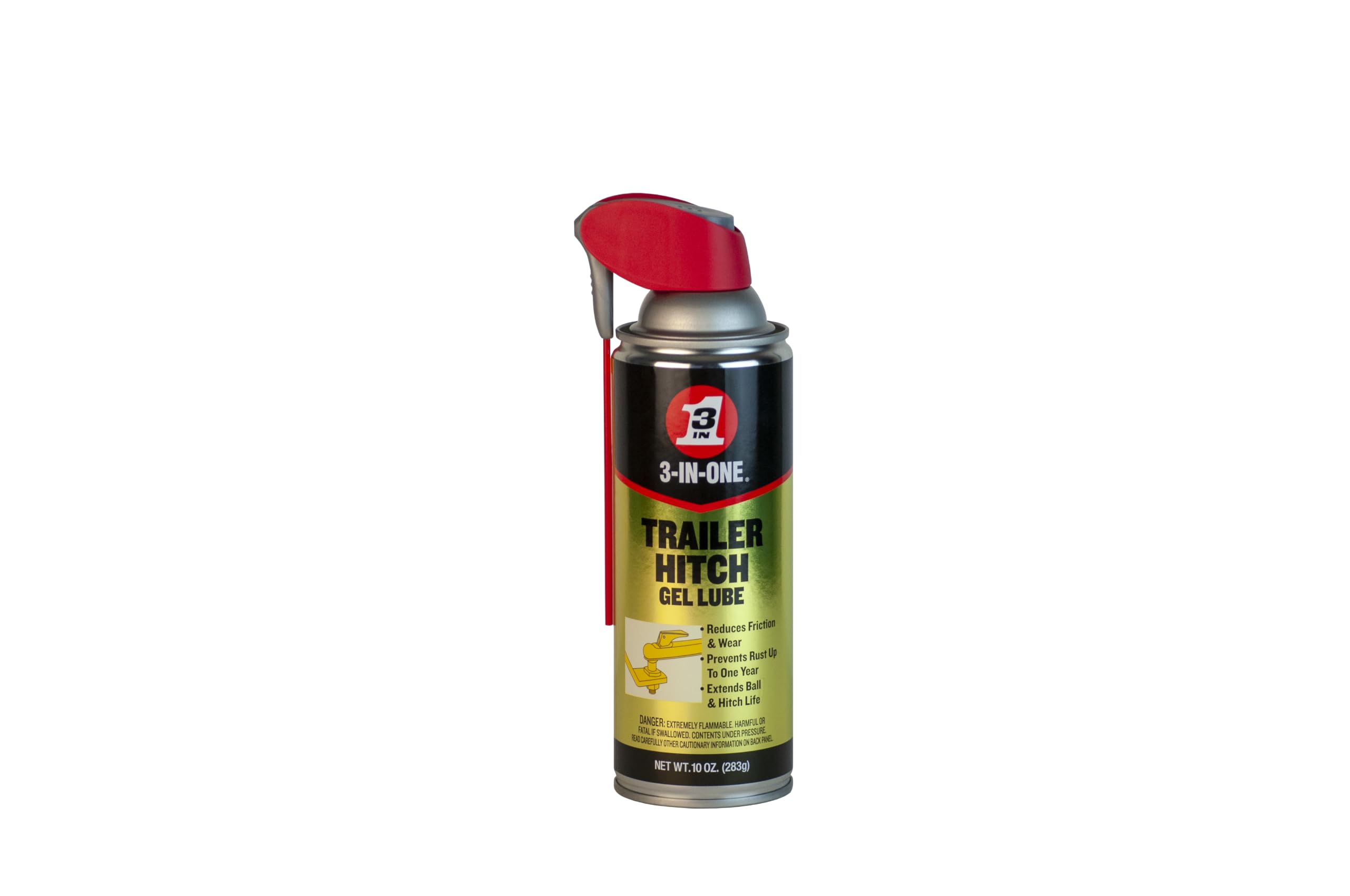
Trailer hitches are one of those maintenance points that tend to get ignored until something starts making noise. The 3-IN-ONE Trailer Hitch Gel Lube is a targeted product aimed at that specific nuisance: the grinding, popping, and wear that comes from a metal ball moving inside a metal coupler. It is not a general-purpose lubricant, and the formulation reflects that narrow intent.
The core idea is viscosity. Standard spray lubricants and light oils tend to migrate off a hitch ball quickly, especially in rain or on long highway drives, leaving the contact surfaces dry again within a short time. This product is a gel, which means it clings to vertical and curved surfaces rather than running off. Applied to the ball and the inside of the coupler, it forms a persistent film that stays put through a few trips before needing reapplication.
In practice, the application routine is straightforward. You wipe the ball clean, apply a thin coat to the ball and the coupler’s interior surfaces, and hitch up. The gel consistency makes it easier to control than a spray, which is a real advantage when you are working under a bumper and do not want overspray on paint, wiring, or your clothes. A little goes a long way, and over-application mostly results in excess grease squeezing out around the coupler, which then collects road grit.
Functionally, the product addresses three things: reducing friction between ball and coupler, limiting wear on the mating surfaces, and cutting down on the noise that worn or dry hitches produce. It also offers some corrosion protection on the ball itself, though that should be treated as a secondary benefit rather than a rust-proofing solution. The gel is formulated to resist washout, which matters for boat trailers and anything routinely exposed to water, but no grease is permanent, and periodic reapplication is part of ownership.
There are trade-offs worth naming. Grease on a hitch ball is messy by nature. Anything that contacts the ball, including your hands, shins, and the inside of a vehicle’s cargo area, will pick up a film. Some owners deliberately run dry hitches to avoid this, accepting more noise and wear in exchange for cleanliness. The gel is also not a substitute for inspecting a coupler for wear, a loose latch, or a damaged ball; lubrication quiets symptoms but does not fix mechanical problems. And because it is a thicker product, it is less convenient for tight pivot points or latch mechanisms where a penetrating oil would reach more effectively.
Compared with a general-purpose lithium grease or a spray-on white grease, the gel’s main advantage is staying power on the ball. A tub of chassis grease is cheaper per ounce and works fine if you do not mind scooping it out, while aerosol lubricants are faster but tend to disappear sooner. The 3-IN-ONE product sits between those options: more controlled than a tub, longer-lasting than a spray. That middle ground is useful for people who tow occasionally and want a low-effort routine rather than a full grease-gun setup.
Who is this for? It suits people who tow regularly enough to notice hitch noise, especially those with utility trailers, boat trailers, or campers where the coupler sees repeated connect-disconnect cycles. It is also reasonable for anyone storing a trailer outdoors who wants a bit of protection on the ball between trips. Who is it not for? Owners of weight-distribution systems with specific manufacturer lubrication guidance should check that guidance first, since some setups call for dry or differently lubricated surfaces. People who tow once or twice a year may find a small tube of grease or even a wipe-down with oil sufficient. And anyone expecting a permanent fix for a worn coupler will be disappointed, because this is maintenance, not repair.
Realistic expectations matter here. The gel reduces friction and noise noticeably when applied correctly, and it lasts longer than thin oils, but it will still need reapplication after enough miles, water exposure, or heavy use. It will not eliminate all hitch movement, and it will not compensate for a mismatched ball and coupler size. Treated as a consumable maintenance item rather than a one-time upgrade, it does its job without much fuss.