
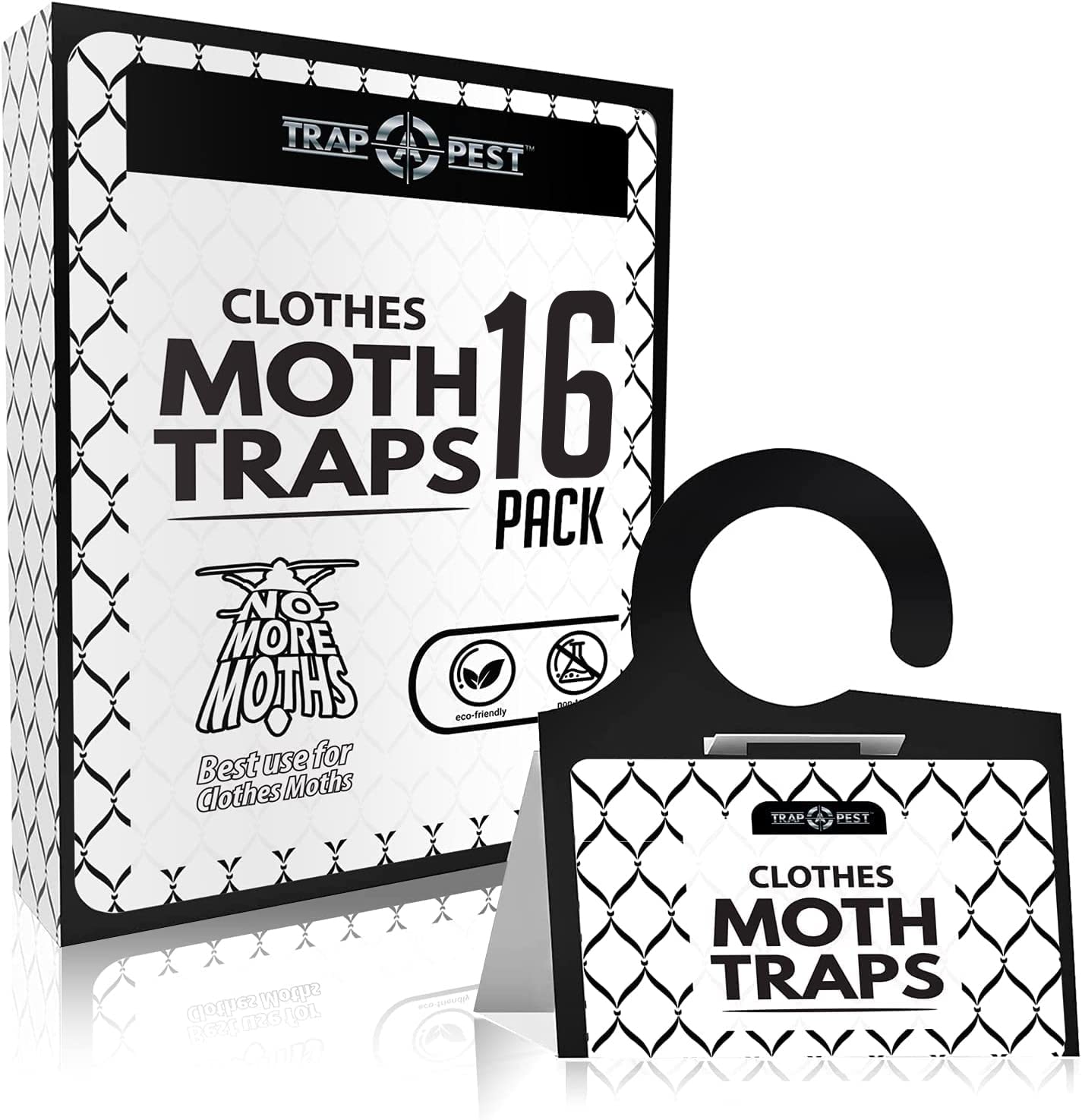
Clothing moths are one of those household problems that tend to be discovered after the damage is done—a small hole in a wool sweater, a silky web along a stored suit. Pheromone traps like the Trap a Pest Clothing Moth Traps are designed to interrupt that cycle by catching adult males before they can mate. This 16-pack is aimed at anyone dealing with an active infestation or hoping to keep one from taking hold in a closet, wardrobe, or storage bin.
The product consists of folded cardboard traps coated with glue and loaded with a female moth pheromone lure. The idea is straightforward: adult males follow the scent, land on the sticky surface, and get stuck. Because they are not designed to kill larvae or eggs, they work best as a monitoring and population-reduction tool rather than a standalone cure. Each trap is typically folded into a tent or diamond shape and placed where moths are likely to travel—hanging in a closet, tucked between stored garments, or set near a drawer. The 16-count package suits larger wardrobes or multi-room use, and having spares means you can replace traps as they fill up or lose their potency.
In practice, the traps are simple to deploy. You unfold the cardboard, peel off a protective liner where applicable, and position the trap. The pheromone lure is built into the glue surface on most designs of this type, so there is nothing to mix or refill. Expect the lure to remain effective for roughly two to three months depending on conditions, after which the trap should be swapped out. The glue itself holds up reasonably well in normal indoor humidity, though dusty or very warm environments can reduce stickiness over time. Checking the traps periodically gives you a rough sense of activity—a sudden uptick in captures is a useful signal that moths are still present and that further cleaning or source-hunting is needed.
One important limitation is that these traps are not a complete solution. They attract males of specific clothing moth species, and the lure may not be equally effective across all moth types. If you have a mixed infestation or another species such as pantry moths, results will vary. The traps also do nothing about larvae already feeding in fabrics, nor do they address the underlying conditions—stored wool, pet hair, or dark undisturbed corners—that let moths thrive. A common mistake is to place a few traps and assume the problem is solved; in reality, the traps are one part of a broader effort that includes laundering or dry-cleaning affected items, vacuuming, and storing clean textiles in sealed containers.
Compared with alternative approaches, pheromone traps sit somewhere between passive deterrents like cedar blocks and full treatment methods like professional fumigation or targeted insecticide sprays. Cedar and lavender sachets are cheap and low-effort but have limited evidence of killing or trapping moths; they may deter some egg-laying but will not reduce an active population. Chemical treatments can be effective but involve more safety considerations, especially around clothing and living spaces. Pheromone traps occupy a useful middle ground: they are non-toxic, easy to place, and provide visible feedback on whether moths are present. The trade-off is that they require patience and ongoing replacement, and they will not rescue an infestation on their own.
This pack is best suited to households with wool, cashmere, silk, or other natural-fiber clothing and a confirmed or suspected moth problem. It also works for people who want an early-warning system in seasonal storage—placing a trap in a garment bag or storage box and checking it monthly can catch activity before it spreads. It is less suitable for anyone expecting a one-and-done fix, for homes with pets or small children who might disturb or contact the sticky traps, or for situations where the infestation is already extensive and fabrics are visibly damaged. In those cases, the traps can still be part of the plan, but professional help or more aggressive cleaning is likely needed first.
Overall, the Trap a Pest 16-pack is a practical, low-cost monitoring and reduction tool with realistic limitations. It will not magically clear a closet, but used consistently alongside cleaning and proper storage, it can help break the moth life cycle and give you a clearer picture of what is happening in your wardrobes. The value depends less on the traps themselves and more on how diligently they are checked and replaced.