
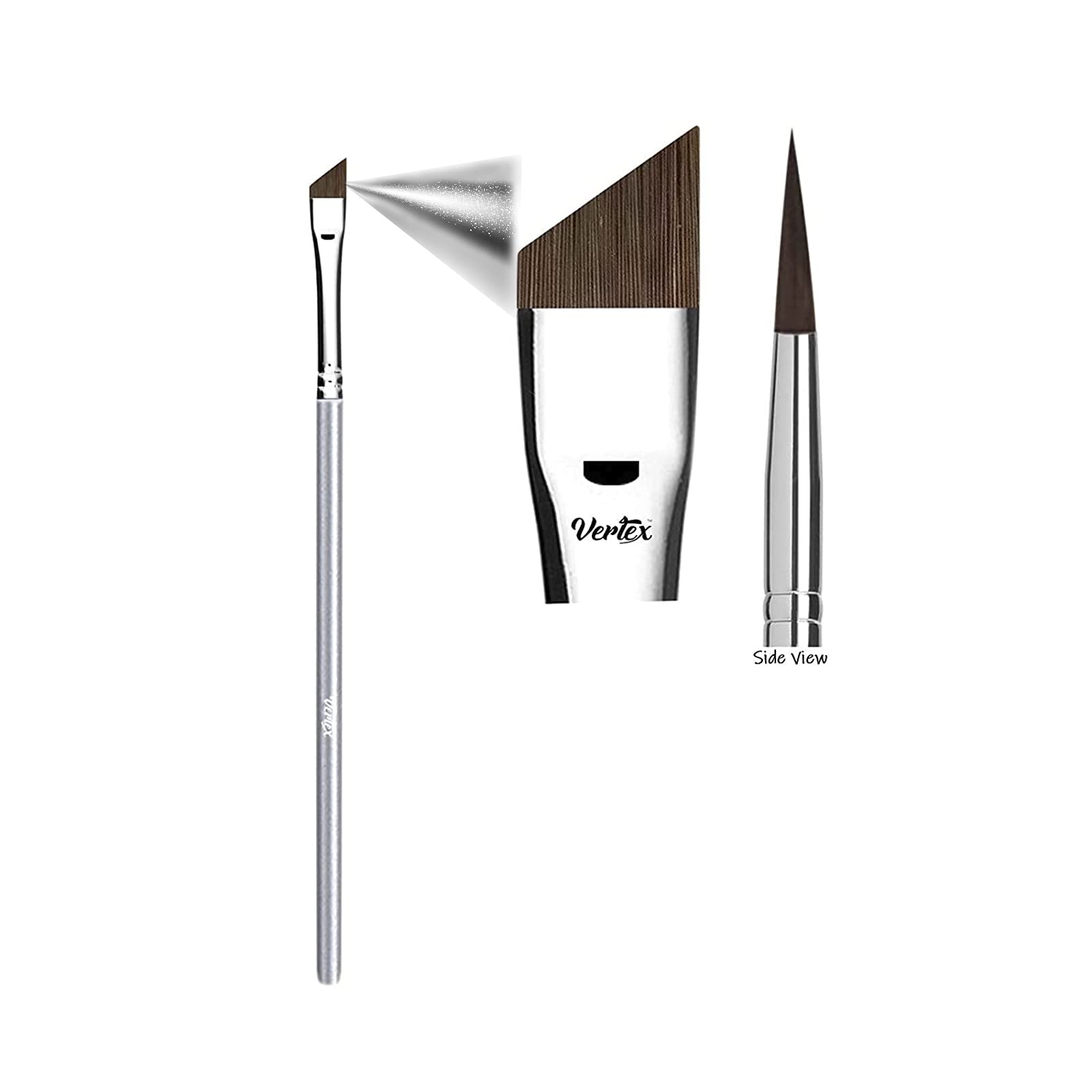
Angled eyeliner brushes occupy a specific niche: they’re the tools people reach for when a felt-tip pen or a fine liner brush isn’t quite giving them the control they want. This particular version is a small, thin slanted brush aimed at liquid and gel liner application, with a flat angled edge designed for pressing product into the lash line and pulling out a fine wing. It’s a modest tool with a narrow job, and whether it earns space in a makeup bag depends largely on how you like to apply liner.
The most common way this brush gets used is with a gel liner pot. You dip the angled edge into the product, tap off excess, and then press the brush into the lash line in short strokes before flicking outward at the outer corner. Because the bristles are cut at an angle, the tip gives you a thin point for the wing while the broader side of the edge can lay down a slightly thicker line along the lid. That dual-purpose edge is the core functional idea here, and it’s the reason angled brushes have stuck around despite the dominance of pen liners. The same brush also works with liquid liners that come in a pot or with a separate mixing palette, though liquid formulas tend to load the brush differently and can drip if you pick up too much.
In terms of build, the brush is described as small and thin, which matters more than it sounds. A slimmer brush head is easier to maneuver close to the inner corner and along the lower lash line, and it obstructs less of your view while you work. The flat angled edge is stiff enough to hold a line but should still flex slightly when pressed, which helps avoid dragging. Synthetic bristles are typical for this type of brush and are generally easier to clean than natural hair, especially with gel formulas that can cling to the base of the bristles.
Realistic expectations are worth setting here. An angled brush does not make winged liner automatic. It rewards a steady hand and a bit of practice, and the learning curve is real, particularly for the outer flick where the angle of your wrist controls the taper. People used to the instant feedback of a fine-tip pen may find the brush slower at first. The thin profile that makes it precise also means it holds less product, so you’ll reload more often during a full eye, and gel liner can dry on the bristles mid-application if you’re not quick about it.
There are trade-offs to weigh. The main one is that this is a single-purpose tool. It’s excellent for liner and can double for tightlining or smudging a soft edge, but it won’t replace a blending brush or a detail brush for other tasks. Compared with a felt-tip liquid liner pen, the angled brush offers more control over line thickness and lets you use any potted formula you like, but it requires more setup and cleanup. Compared with a fine-point liner brush, the angled cut is more forgiving for beginners learning the wing shape, though it’s less suited to ultra-fine hairline strokes. If you already own a pen liner you love, this brush is a complement rather than a replacement.
Care is straightforward but not optional. Gel and liquid liners dry hard, so rinsing the bristles soon after use and reshaping the edge while damp keeps the angle intact. A brush that’s been left to dry with product in it will splay and lose the clean edge that makes it useful in the first place.
Who it suits:
- People who prefer potted gel or liquid liner and want control over line thickness
- Anyone learning winged liner who wants a forgiving angled edge rather than a fine point
- Users who like a slim brush head for close work near the inner corner and lower lash line
Who it may not suit:
- Those who want one-step application and dislike brush cleanup
- People who need ultra-fine, hairline strokes, where a pointed detail brush performs better
- Anyone expecting a brush alone to produce a symmetrical wing without practice
Overall, this is a competent, narrowly focused tool. It does its job well for gel and liquid liner work, provided you’re willing to learn its quirks and maintain it. It isn’t a shortcut to a perfect cat eye, but for people who already like working with a brush, it’s a reasonable addition to the kit.