
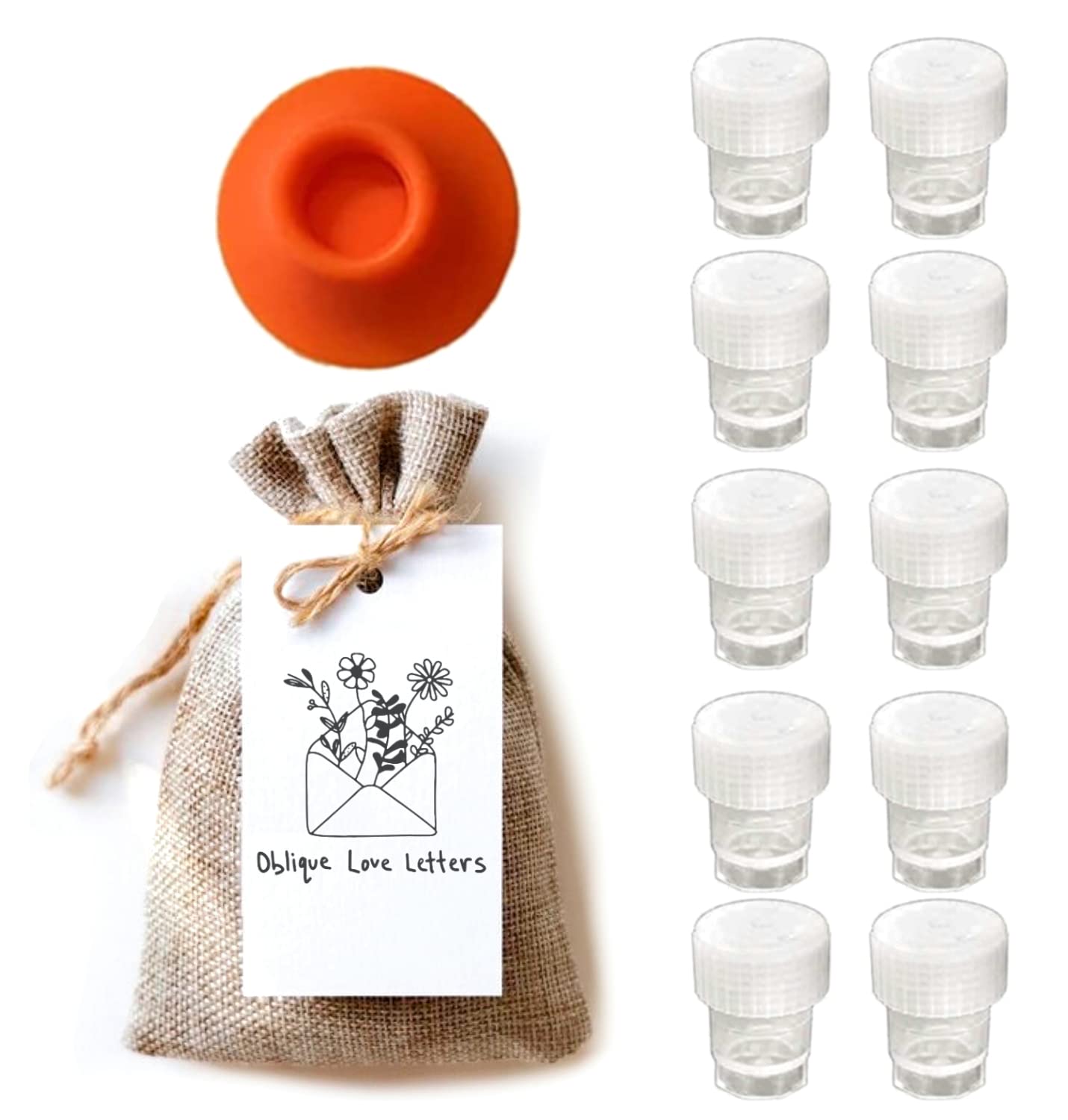
There’s a certain ritual to using a dip pen. You open the ink bottle, dip the nib, and hope you don’t knock the whole thing over. That’s where a dedicated ink well comes in. This particular model, a small glass or acrylic vessel with a lid, is designed to hold ink for dip pens, including glass dip pens, and it solves a few problems while introducing a couple of its own.
The first thing you notice is the size. It’s compact, which is good if you’re working at a crowded desk or taking it to a workshop. The lid is a simple twist-off or pop-off design, depending on the version you get, and it seals well enough for short-term storage. You wouldn’t want to store ink in it for months, but for a week or two, it’s fine. The base is weighted, which is a thoughtful touch—it doesn’t tip over easily when you’re reaching for your pen.
In practice, the well works as intended. You pour a small amount of ink from your main bottle into the well, dip your nib, and write. The wide mouth gives you easy access, and the shallow depth means you don’t have to submerge the nib too far, which is key for avoiding ink blobs on the paper. If you’re using a glass dip pen, the well’s opening is wide enough to accommodate the thicker glass shaft without scraping the sides.
One feature that stands out is the lid. It’s not just a dust cover—it actually reduces evaporation. If you leave ink in the well overnight, it stays usable the next day, which is more than you can say for an open jar. That said, the lid doesn’t create an airtight seal. If you leave it for a week, you’ll notice the ink thickens slightly. You’ll need to add a drop or two of water or ink conditioner to bring it back to its original consistency. It’s a minor annoyance, but it’s worth knowing.
Compared to using the original ink bottle, this well is a clear upgrade for daily practice. The bottle is often tall and narrow, making it awkward to dip a glass pen without hitting the sides. The well’s low profile and wide base make it more stable and easier to control. However, if you’re someone who only writes occasionally, you might find the extra step of transferring ink to be a hassle. In that case, a simple ink bottle with a dropper cap might be more direct.
The material is another point to consider. The glass version feels sturdy and is easy to clean—just rinse with water and wipe dry. The acrylic version is lighter and less fragile, but it can get scratched over time, and the ink can stain it if left too long. Neither is a dealbreaker, but if you’re clumsy, the acrylic might be the safer bet.
There’s also the matter of the lid’s fit. On the sample we tested, the lid screwed on smoothly, but it didn’t have a rubber gasket. That means it’s not completely leak-proof. If you toss it in a bag without securing it upright, you risk a small spill. It’s not a travel container by any means. For desk use, it’s fine, but don’t expect it to survive a commute.
Who is this for? It’s ideal for calligraphers who practice regularly and want a stable, accessible ink reservoir. It’s also good for glass pen users who appreciate a wider opening. If you’re a beginner just starting with dip pens, this is a nice-to-have, but not essential—you can get by with the original bottle. And if you’re a professional who works with multiple colors, you’ll probably want several of these, one for each ink.
On the other hand, if you’re someone who leaves ink out for weeks at a time, or if you need a leak-proof container for travel, this isn’t the right tool. For those cases, a sealed ink vial or a dedicated travel inkwell would serve you better.
Overall, this ink well does its job without fuss. It’s a practical accessory that improves the dip pen experience, even if it has a few minor quirks. It won’t transform your handwriting or make you a master calligrapher, but it will make the process a little cleaner and more convenient. If you’re already using a dip pen regularly, it’s a reasonable addition to your desk. Just don’t expect it to be the last ink holder you ever buy—there’s always room for one more.