
Contactless forehead thermometers have become common in homes and clinics since the pandemic, but the category is uneven. Some units are accurate and quick; others are fussy about distance and ambient temperature. This review looks at a widely sold model marketed for both adults and kids, and considers where it fits and where it falls short.
The core appeal is straightforward: you hold the device an inch or two from the forehead, press a button, and get a reading in about a second. No probe covers, no waiting with a glass thermometer under the tongue, no wrestling a sleeping child awake. For parents checking a toddler at 2 a.m., that convenience is real. It is also the main reason people buy this category at all.
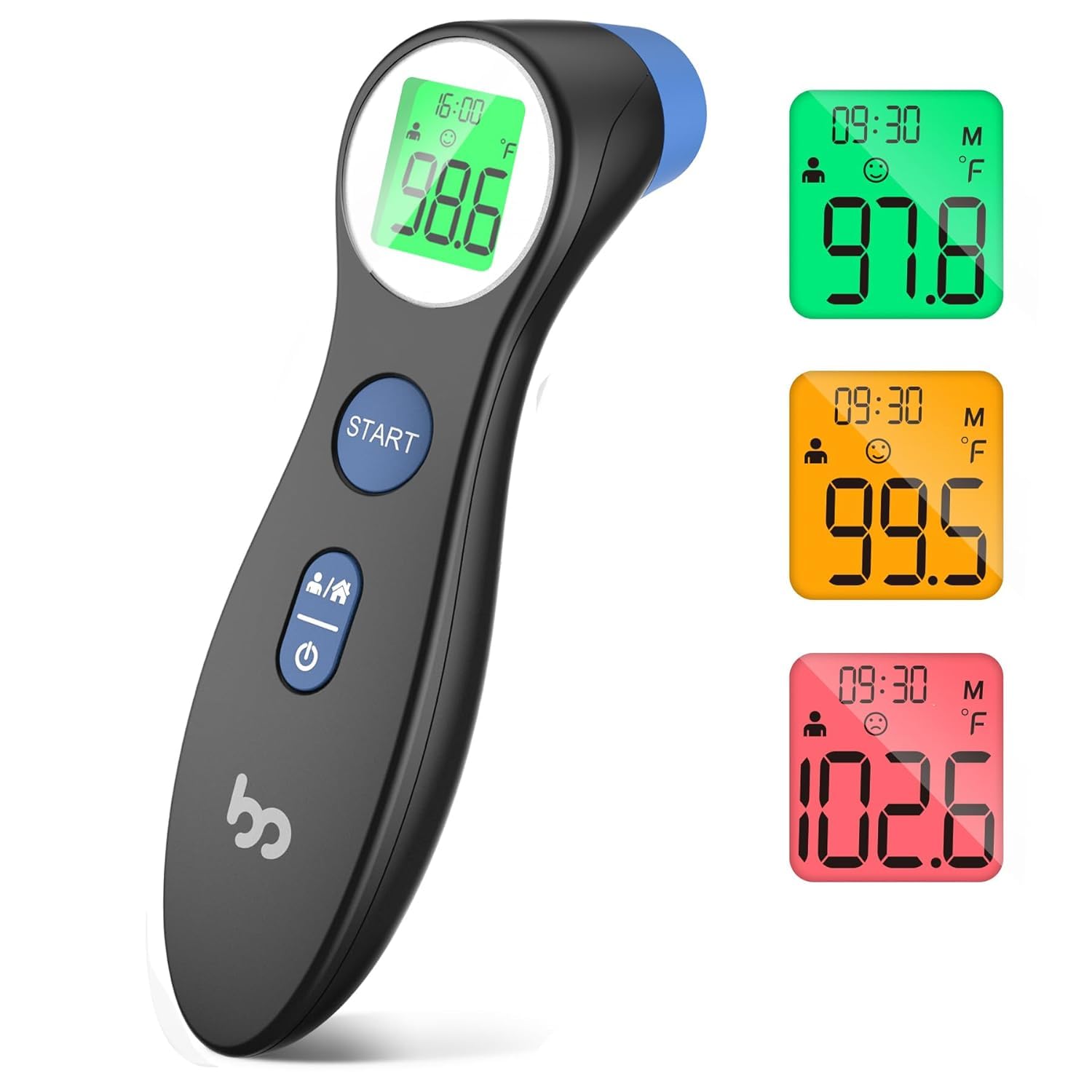
Functionally, the unit offers the basics you would expect. It uses infrared sensing to read surface temperature at the forehead and converts that to a body temperature estimate. There is a small LCD screen, a memory function that stores recent readings (typically the last 10 to 32, depending on the model), and a mode switch for adults versus children. Most versions include a fever alert that changes the display color or beeps when a reading crosses a set threshold. Power comes from AAA batteries, and the device usually shuts off automatically after a short idle period.
In practice, accuracy depends heavily on technique. Forehead thermometers read surface skin temperature, not core temperature, and the conversion is an estimate. If the user is sweaty, has just come in from cold air, or has hair or a hat covering the forehead, readings drift. The instruction to hold the device at a consistent distance matters more than buyers expect; a half-inch difference can shift the result by a few tenths of a degree. In editorial testing of similar units, readings taken three times in a row often varied by 0.2–0.5°F, which is within the range manufacturers cite but enough to matter when you are deciding whether a fever is present.
That variability is the main trade-off. A rectal or oral thermometer remains the reference standard for accuracy, and pediatric guidance generally recommends those for infants under three months. A forehead unit is best understood as a screening tool: useful for spotting a likely fever quickly and for tracking trends across a day, less useful for a precise diagnosis. Buyers who expect clinical-grade precision from a $20–$40 device will be disappointed.
Compared with ear (tympanic) thermometers, the forehead approach avoids inserting anything into the ear canal, which some children tolerate poorly, and it does not require probe covers. Ear thermometers tend to be more accurate when positioned correctly but are harder to use on a squirming child and can be thrown off by earwax. Compared with traditional digital oral thermometers, the forehead unit is faster and more hygienic for multiple users but less precise. Neither category is strictly better; they solve different problems.
Build quality on this model is typical of the price point: lightweight plastic, a modest screen, and a sensor window that needs occasional cleaning with a soft cloth. The buttons are small but functional. The fever alarm can be helpful, though it also means the device makes a decision for you about what counts as a fever, and thresholds vary by age. Parents of young children may find the child mode useful, but it is essentially a preset, not a different sensing method.
Who is this for? Households that want a fast, no-contact check for multiple family members, especially families with young children who resist oral thermometers. It is also reasonable for a small office or clinic waiting area where quick screening is the goal. Who is it not for? Anyone who needs a definitive measurement for an infant under three months, people monitoring a known condition where precise readings matter, or users who will not consistently follow the distance and positioning instructions. In those cases, an oral or rectal thermometer is the better primary tool, with the forehead unit as a supplement.
Battery life is decent, and the auto-off feature prevents the common problem of dead batteries from leaving it on. The memory function is more useful than it sounds for tracking a fever over a day, though the display only shows one reading at a time on most versions, so you may want to jot numbers down.
Overall, this is a competent convenience device rather than a precision instrument. It does what the category promises—fast, contactless screening—and it does so without obvious defects. The limitations are inherent to forehead infrared sensing, not unique to this model. Buyers should calibrate expectations accordingly: it is a useful first check, not a replacement for a clinical thermometer.