
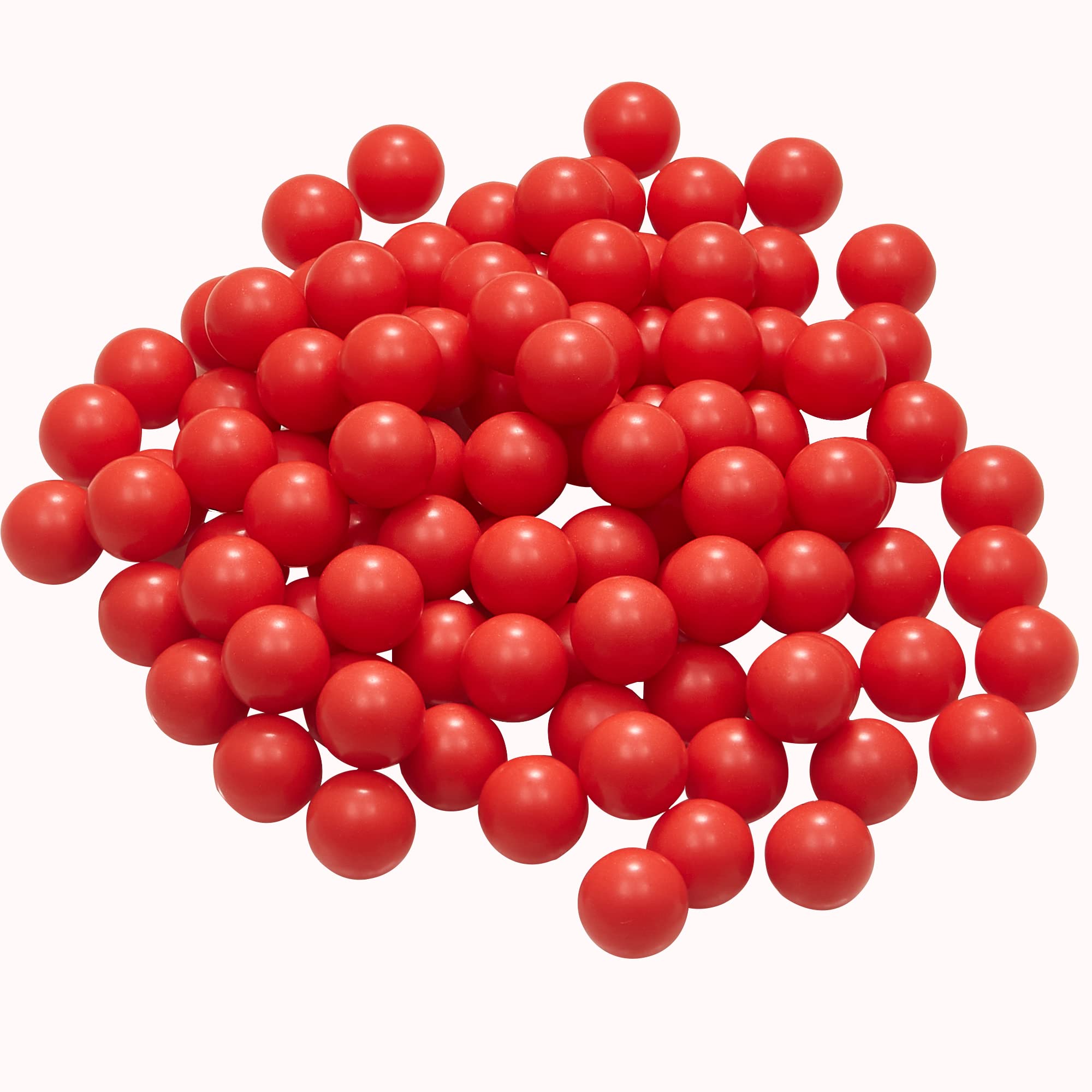
If you own a TR50 paintball marker, you’ve probably noticed that ammunition choices are limited. The Lambid 100 Rounds .50 Cal Solid Plastic Paintballs are one of the few options explicitly designed for that platform. These are not your standard gelatin-shell paintballs; they’re solid plastic spheres, which changes the experience significantly. This review examines what they are, how they perform, and where they fall short.
First, a clarification: despite the name, these are not paint-filled projectiles. They are solid plastic balls, often called training rounds or practice paintballs. The ‘paintball’ label is a bit of a misnomer, but it’s common in the industry for any .50 caliber spherical ammo. The Lambid rounds are made from a hard plastic that’s designed to be reusable, though they do eventually wear out or get lost.
In real-world use, these rounds are typically employed for target practice, plinking, and force-on-force training where marking is not required. Because they don’t contain paint, they don’t leave stains, which is a big plus for backyard shooting or indoor ranges. They’re also cheaper per shot than paint-filled rounds, making them attractive for high-volume practice. However, they are not intended for actual paintball games where hitting an opponent needs to be visually confirmed.
Key functional features include a .50 caliber diameter, solid plastic construction, and a quantity of 100 rounds per package. They are designed to fit the TR50 marker, which is a popular low-cost option for casual shooters. The rounds are lightweight, which means they shoot at higher velocities than paint-filled balls, but they also have less mass, so they may be affected by wind more. The plastic is rigid, so they don’t deform in the barrel, which can lead to better accuracy but also means they don’t absorb impact energy as well.
One limitation is that these rounds can be hard on your marker. Because they are solid and don’t break, they transfer all their energy to whatever they hit. That’s fine for paper targets, but if you accidentally shoot something fragile, it will break. Also, they can bounce back, so eye protection is absolutely necessary. Another trade-off is that they are not biodegradable. Paint-filled rounds eventually break down, but these plastic balls will persist in the environment. If you’re shooting outdoors, you need to be diligent about picking them up. They are also not as accurate as premium paintballs because the plastic surface can be inconsistent, and seams from molding can affect flight.
Compared to standard .50 caliber paintballs, the Lambid rounds are cheaper and cleaner but lack the marking capability. They are more akin to reusable rubber balls or airsoft BBs in terms of function, but they are specifically sized for paintball markers. If you’re looking for an alternative, you might consider rubber practice balls, which are softer and less likely to damage property, but they are also more expensive and may not feed as reliably in a TR50.
Who is this for? It’s suitable for TR50 owners who want to practice shooting without spending a lot on paint or dealing with cleanup. It’s also good for training exercises where you want to simulate shooting without the mess. It is not suitable for actual paintball games, for use in markers other than the TR50 (unless they are compatible with .50 cal solid rounds), or for environments where plastic litter is a concern. Additionally, if you need pinpoint accuracy, these may disappoint.
In terms of performance, expect these to shoot similarly to other solid plastic rounds: they’ll fly straight for the first 30-40 feet, but then drop off. The lack of spin means they aren’t stabilized, so accuracy beyond that is hit-or-miss. They also tend to bounce off hard surfaces, so you’ll need a proper backstop. The plastic is durable enough to be reused a few times if you can find them, but they will eventually crack or become too scuffed to fly straight.
Overall, the Lambid 100 Rounds .50 Cal Solid Plastic Paintballs are a niche product for a niche marker. They serve a purpose for practice and training, but they come with compromises. If you understand their limitations and use them accordingly, they can be a cost-effective training tool. Just don’t expect them to replace paintballs for actual gameplay.