
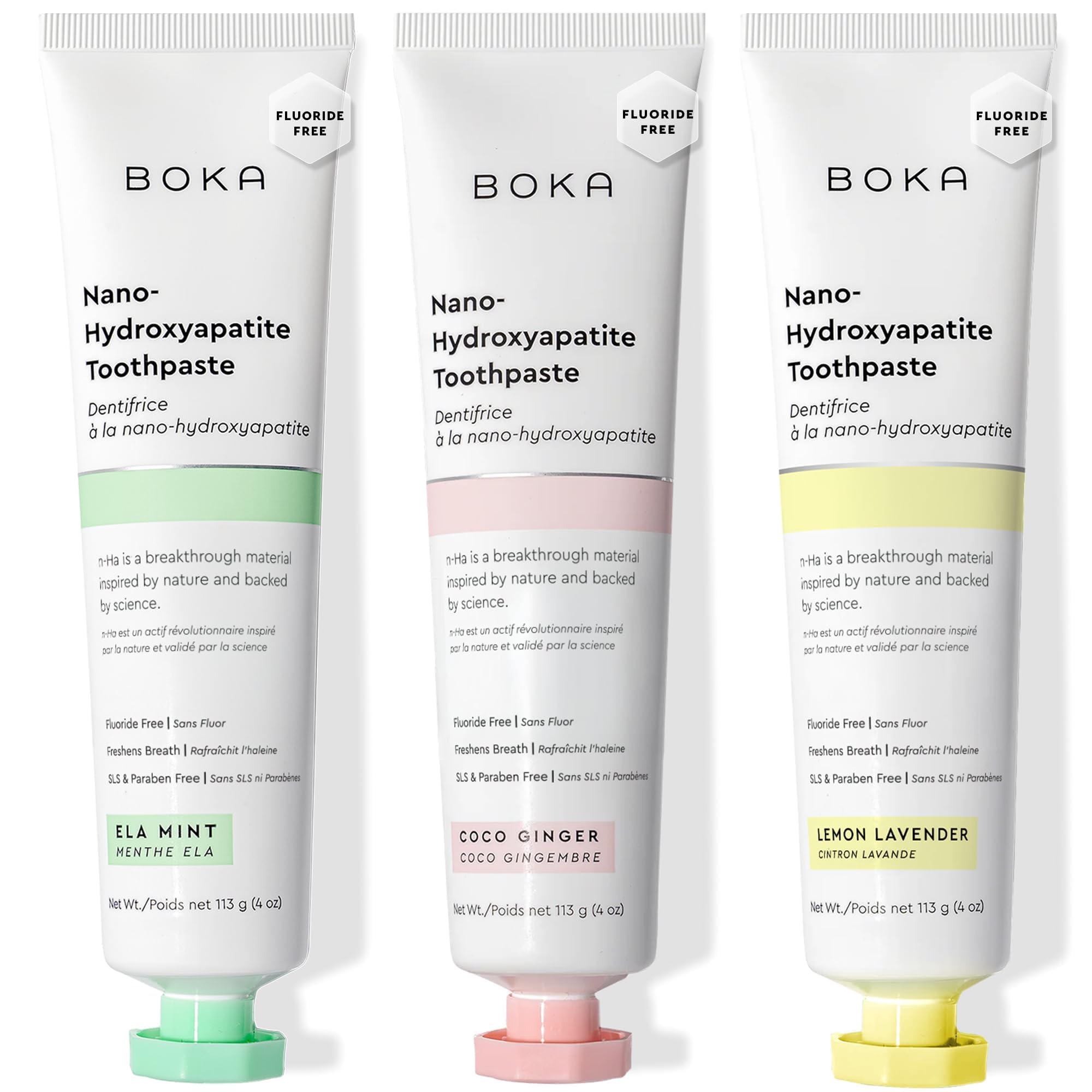
Boka’s toothpaste sits in a category that has grown quietly but steadily over the past several years: fluoride-free pastes built around nano-hydroxyapatite rather than sodium fluoride. Hydroxyapatite is the calcium phosphate mineral that makes up most of tooth enamel, and the nano-sized version used in oral care products is intended to bind to enamel surfaces and support remineralization. It has a longer track record in Japan than in the US, where it occupies a smaller but expanding niche. Boka is one of the more visible brands in that niche, and its toothpaste is a reasonable entry point for anyone curious about the category.
In everyday use, this is a conventional toothpaste in most respects. You wet the brush, apply a pea-sized amount, brush for the usual two minutes, and spit. It foams, though less aggressively than many mainstream pastes, and it rinses clean without a lingering film. The texture is smooth and slightly creamy rather than gritty, which matters if you have sensitivity around the gumline. The flavor is mild mint — noticeably less sharp than a typical drugstore paste, which some people will appreciate and others will find underwhelming. There is no strong sweetener aftertaste, and the lack of sodium lauryl sulfate means it does not produce the intense lather that SLS-based pastes do.
The functional story is where the product asks for some trust. Nano-hydroxyapatite is the active ingredient, and the formulation also includes xylitol and aloe, which are common in gentler pastes. What the product does not contain is fluoride, and that is the central trade-off. Fluoride has decades of clinical evidence behind it for cavity prevention, and hydroxyapatite, while promising, does not carry the same weight of long-term population-level data. For a low-risk adult with good hygiene and regular dental visits, that may be an acceptable exchange. For someone with a history of cavities, orthodontic appliances, dry mouth, or a diet high in sugar, it is a meaningful downgrade in protection, and a dentist should be part of that decision.
Performance expectations should be realistic. This is not a whitening paste in any dramatic sense. It will help maintain the appearance of teeth by cleaning surface stains through normal brushing, but it will not lighten shade the way a peroxide-based whitening product might. Sensitivity relief is plausible for some users given the remineralizing intent, but it is not a substitute for a desensitizing paste with potassium nitrate if sensitivity is severe. The paste also does not address gum disease, and no toothpaste does — that requires professional care and flossing.
- Active approach: Nano-hydroxyapatite as the remineralizing agent instead of fluoride
- Formulation: Fluoride-free, SLS-free, with xylitol and aloe
- Texture and flavor: Smooth paste, mild mint, low foam
- Format: Standard tube, widely available online and in some retail stores
- Price position: Higher per ounce than mass-market pastes, closer to specialty oral care brands
Compared with a conventional fluoride toothpaste from a major brand, Boka costs more and offers less established cavity protection. Compared with other hydroxyapatite pastes, it is competitively positioned and easier to find than many smaller brands. The closest alternative category is prescription or over-the-counter high-fluoride paste for anyone at elevated risk, and that is a different tool for a different job rather than a direct competitor. If the goal is simply a gentler, fluoride-free daily paste with a modern active ingredient, this fits. If the goal is maximum cavity prevention, it does not.
Who is it for? Adults and older children who have discussed fluoride alternatives with a dentist, people who react to SLS with mouth irritation, and anyone who prefers a milder mint flavor and lower foam. It is also a common choice for households trying to reduce fluoride exposure for reasons of preference rather than medical need. Who is it not for? Anyone with active decay, a recent restoration, orthodontic treatment, or a medical condition that increases cavity risk should be cautious. Parents of young children should note that pediatric fluoride guidance is specific and should not be replaced casually. People who want visible whitening or strong breath-freshening intensity will likely be disappointed.
The honest summary is that Boka is a well-made product in a category that is genuinely interesting but not yet a full substitute for fluoride in every mouth. It cleans well, feels pleasant to use, and the hydroxyapatite approach is grounded in real science even if the evidence base is thinner than fluoride’s. The price and the reduced margin of cavity protection are the costs. For the right user, those are reasonable; for the wrong one, they are not. That is less a flaw in the product than a boundary worth understanding before buying.