
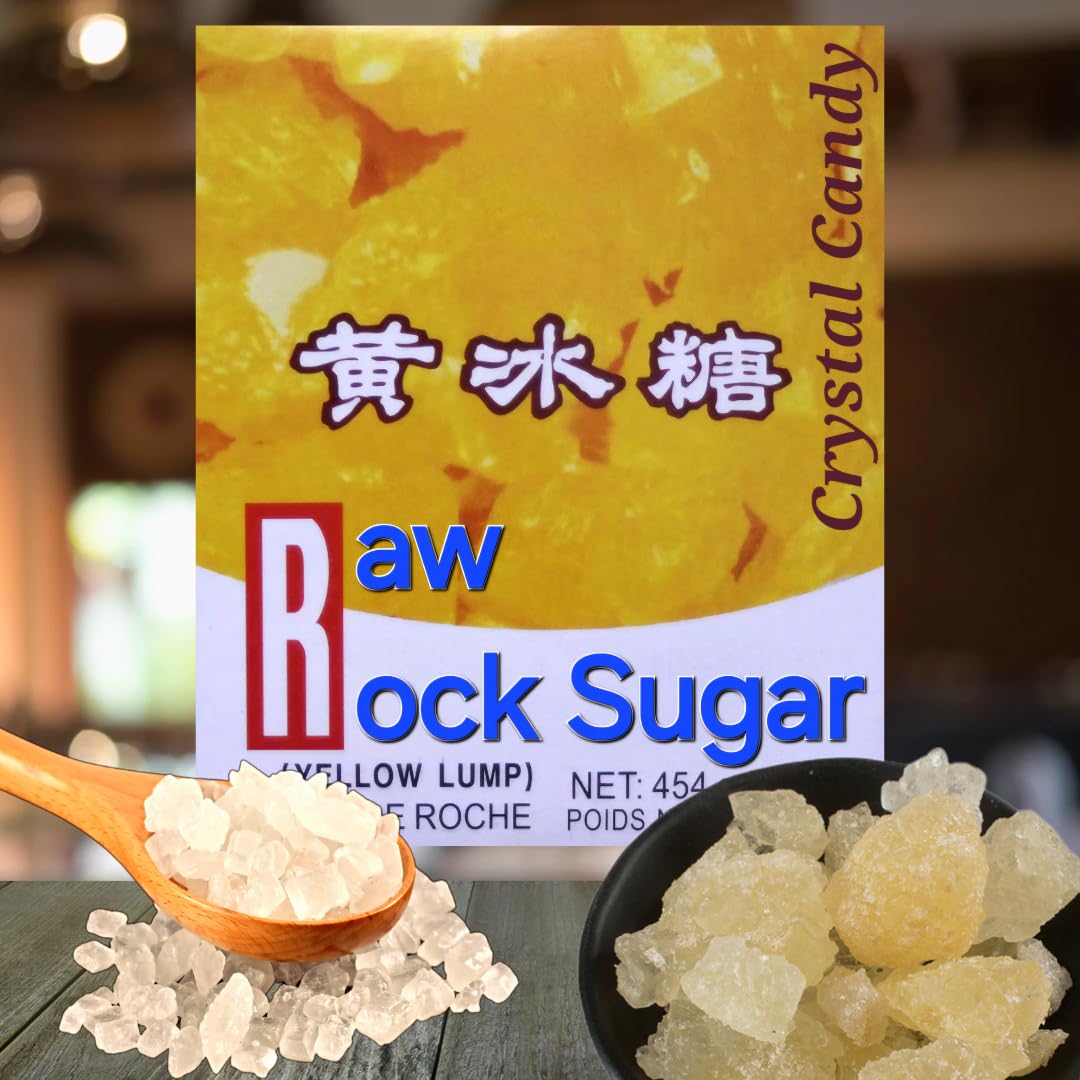
Rock sugar, known by many names—黄冰糖, Lung Po Rock Candy, Nabat, Misri, or Kalkandu—has been a staple in Asian and Middle Eastern kitchens for centuries. This 16-ounce package of premium yellow rock sugar offers a natural, crystalline sweetener that dissolves slowly, making it a favorite for enhancing beverages and traditional dishes. Unlike regular granulated sugar, rock sugar is minimally processed, retaining trace minerals that give it a distinct, mellow sweetness. In this review, we examine its uses, features, and whether it’s worth incorporating into your pantry.
In practice, rock sugar is most commonly used to sweeten tea, coffee, and herbal infusions. Its large, irregular crystals dissolve gradually, allowing for a controlled release of sweetness without overwhelming the drink. In Chinese cuisine, it’s a key ingredient in braised dishes, adding a glossy sheen and subtle caramel note. Indian households often use it in festive sweets and as a remedy for coughs and colds, while in Iran and the Middle East, it’s a traditional accompaniment to tea. Beyond beverages, it can be used in desserts, preserves, and even homemade confections like candied fruits or syrups.
Functionally, rock sugar is valued for its slow dissolution and mild flavor. The yellow variety, like this one, is less refined than white rock sugar, containing molasses that impart a light amber hue and a hint of caramel. The crystals are large and hard, requiring a mortar and pestle or a strong hand to break them down if a finer texture is needed. A 16-ounce bag may seem modest, but because the crystals are dense, it lasts a surprisingly long time—about 2 cups of loosely packed pieces. It’s shelf-stable and should be kept in an airtight container to prevent clumping.
One limitation is its inconvenience compared to regular sugar. The large chunks don’t dissolve quickly in cold liquids, so it’s best suited for hot beverages or cooking where time allows. Breaking the crystals can be laborious, and the irregular sizes mean inconsistent sweetness if not measured by weight. Additionally, it’s more expensive per ounce than granulated sugar, which may deter everyday use. For those accustomed to the convenience of cubes or fine sugar, rock sugar requires a bit of patience.
Compared to other sweeteners like honey, maple syrup, or palm sugar, rock sugar offers a neutral, clean sweetness without strong competing flavors. Honey adds floral notes, maple brings a distinct woodsy taste, and palm sugar has a deeper, almost smoky profile. Rock sugar, by contrast, is subtle, making it ideal for recipes where you want sweetness without altering the flavor profile. However, it lacks the convenience of liquid sweeteners and the affordability of white sugar. It’s a niche product, but for traditional recipes, it’s irreplaceable.
Who is this for? It’s well-suited for enthusiasts of Asian and Middle Eastern cooking, tea aficionados who appreciate a slow-sweetened cup, and anyone interested in traditional remedies. It’s also a good choice for those seeking a less processed alternative to white sugar, though it’s still sugar and should be consumed in moderation. It is not for people looking for a quick-dissolving sweetener for cold drinks or baking, where granulated sugar is more practical. Nor is it ideal for those on a tight budget, as the cost per use is higher.
In conclusion, this premium rock sugar delivers authentic quality and versatility for its intended uses. It’s not a everyday sweetener, but a specialized ingredient that shines in specific applications. If you enjoy traditional teas, braised meats, or homemade confections, it’s a worthwhile addition to your pantry. Just be prepared for the extra effort it requires.