
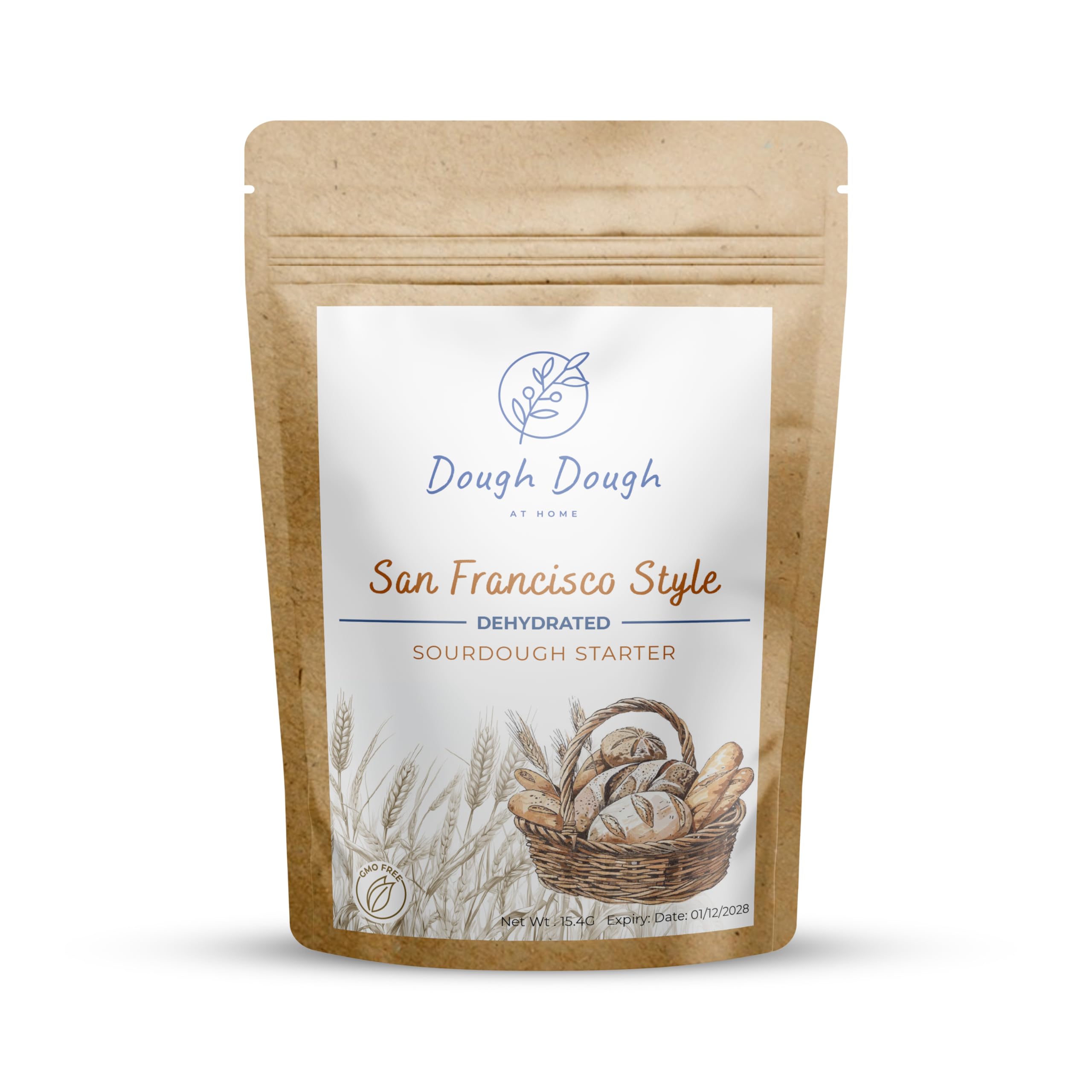
For anyone who has tried to make sourdough from scratch, the process can be a lesson in patience. Creating a stable starter from just flour and water takes days, sometimes weeks, and the results are not guaranteed. Dough Dough at Home offers a shortcut: a dehydrated sourdough starter in a 15.4-gram packet, marketed as San Francisco style. It’s an heirloom, non-GMO live culture that promises to bring the tang of the Bay Area to home bakers. But does it deliver? This review examines what the product is, how it performs, and where it might fall short.
First, a quick primer on what you’re getting. The packet contains a small amount of dried starter—just over half an ounce. That doesn’t sound like much, but once rehydrated and fed, it multiplies. The instructions typically call for mixing the contents with water and flour, then letting it sit until bubbles form. From there, you treat it like any other starter: regular feedings, refrigeration between uses, and a bit of planning before bake day. The San Francisco style designation refers to the specific strains of yeast and bacteria that give the bread its characteristic sourness. In practice, that means a more pronounced tang than starters from other regions, though the final flavor also depends on your flour, hydration, and fermentation time.
Using the starter is straightforward, but it’s not instant. After rehydrating, it can take a few days for the culture to become active enough to leaven bread. Some users report seeing activity within 24 hours, while others wait longer. That variability is normal for any dried starter. The packet itself is small and lightweight, making it easy to store until you’re ready to begin. Once activated, you can keep it going indefinitely with regular feedings, or dry some out for future use. The heirloom and non-GMO claims appeal to bakers who care about ingredient sourcing, though it’s worth noting that most commercial starters are already non-GMO since they contain only flour and water.
One of the main advantages of a dehydrated starter is shelf stability. Unlike a fresh starter that requires weekly feedings, this packet can sit in your pantry for months. That makes it a good option for occasional bakers or those who want a backup culture. It’s also a practical way to try San Francisco style sourdough without tracking down a local baker willing to share their starter. However, there are trade-offs. The flavor may not be identical to a starter maintained in San Francisco for years; the microbial community can shift depending on your local environment. And while the packet is convenient, it’s more expensive per use than maintaining a starter from scratch—if you already have one.
How does it compare to alternatives? If you’re a frequent baker, a fresh starter from a friend or a local bakery is free and already active. For those who want a specific regional flavor, buying a dehydrated starter from a known source can be worthwhile. There are other brands offering similar products, some with different regional profiles like San Francisco, Parisian, or Italian. Dough Dough at Home’s version sits in the middle of the pack: it’s not the cheapest, but it’s not the most expensive either. The 15.4-gram size is typical; larger packets exist but cost more. The main difference is the claimed San Francisco style, which may or may not matter to you depending on your taste preferences.
In real-world use, this starter is best for beginners who want to dip their toes into sourdough without the commitment of building a culture from zero. It’s also handy for experienced bakers who need a reliable backup or want to experiment with a different flavor profile. On the other hand, it’s not for someone expecting instant results—sourdough baking always requires time and attention. And if you already have a thriving starter, there’s little reason to buy this unless you’re curious about San Francisco style. The packet is also not resealable, so once opened, you should use it promptly or store the dried culture in an airtight container.
Performance-wise, the starter does what it claims: it rehydrates, becomes active, and leavens bread. The sourness level is subjective; some testers find it moderately tangy, while others expect more punch. That’s partly because San Francisco sourdough flavor depends on the specific bacteria strain Lactobacillus sanfranciscensis, which this product likely contains, but the expression can vary. Don’t expect bakery-level sourness on your first bake; it often develops over time as you maintain the starter. Also, the instructions are basic—if you’re new to sourdough, you’ll need to consult additional resources for shaping, proofing, and baking techniques.
In summary, Dough Dough at Home’s dehydrated starter is a practical entry point for home bakers. It removes the initial hurdle of creating a starter from scratch, offers a taste of San Francisco style, and stores easily. But it’s not a magic bullet: you still need patience, practice, and a willingness to learn. For the right person—a curious beginner or a baker seeking a convenient backup—it’s a reasonable purchase. For those already deep into sourdough, it may be redundant. As with any fermented product, your results will vary, but that’s part of the craft.