
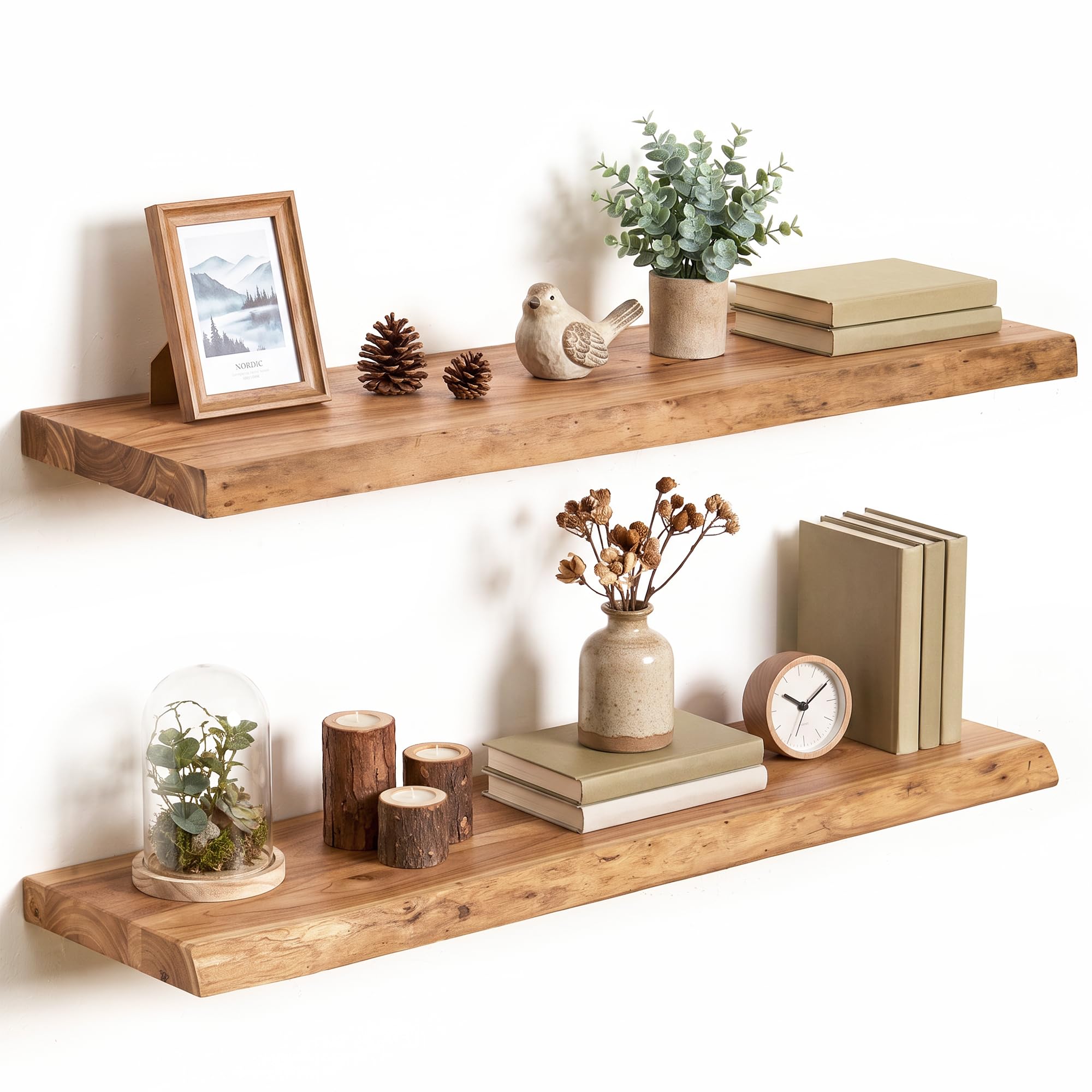
Floating shelves have become a staple in modern interiors, offering a way to display items without visible brackets. This 2-pack of 36-inch shelves from an unnamed manufacturer uses elm wood with a live edge and a natural finish. While the concept is appealing, the execution has some notable quirks that potential buyers should consider.
In real-world settings, these shelves are likely to be used in living rooms for books and decor, in kitchens for spices and jars, or in bathrooms for toiletries. The 36-inch length provides ample space for a row of books or a small collection of plants. However, the live edge—where the natural contour of the tree is preserved—means each shelf has a unique, irregular front edge. This can be a charming detail, but it also makes precise alignment with other furniture tricky. If you prefer clean lines, this might not be the best fit.
The shelves are made of elm, a hardwood known for its durability and distinctive grain patterns. The natural finish likely highlights the wood’s warm tones and swirling grain. Elm is also relatively resistant to moisture, though it’s not as water-resistant as teak or cedar. For bathroom use, it’s advisable to keep the shelves away from direct water exposure. The live edge is typically created by leaving the outer edge of the plank unfinished, which can sometimes include bark. If the bark is present, it may shed over time, requiring occasional cleanup.
Installation is a critical factor for floating shelves. These shelves likely use a hidden bracket system, often a metal rod that inserts into the back of the shelf and mounts to the wall. The 36-inch span is substantial, so it’s essential to mount into studs or use heavy-duty anchors. Without proper support, the shelves may sag over time, especially if loaded with heavy items. The package probably includes mounting hardware, but the quality can vary. Some users report that the included screws are soft and strip easily, so replacing them with higher-grade hardware is a common recommendation.
One limitation of this design is the weight capacity. While elm is strong, the floating mechanism relies on the bracket’s strength and the wall’s integrity. These shelves are not intended for heavy items like large appliances or dense book collections. They are better suited for lightweight to medium-weight objects. Additionally, the live edge can make it difficult to place items flush against the wall, as the uneven surface may cause items to lean or wobble.
Compared to standard MDF or particleboard floating shelves, these elm shelves offer a more organic, high-end look. However, they also come with a higher price tag and more maintenance. MDF shelves are uniform, easy to clean, and typically cheaper, but they lack the natural character. If you want a rustic or Scandinavian aesthetic, the elm shelves are a better choice. If you need something purely functional and low-maintenance, MDF might be more practical.
Who are these shelves for? They appeal to DIY enthusiasts and homeowners looking to add a touch of natural warmth to their space. They work well in rooms with a rustic, farmhouse, or bohemian theme. However, they are not ideal for renters who cannot make permanent holes in the wall, or for those who need precise, uniform shelving for a minimalist or modern aesthetic. Also, if you’re not comfortable with minor imperfections like knots, cracks, or uneven edges, the live edge might frustrate you.
In terms of performance, expect the shelves to hold up well if installed correctly and not overloaded. The natural finish may require occasional re-oiling to prevent drying and cracking, especially in dry climates. Direct sunlight can cause the wood to fade over time, so placement away from windows is wise. Cleaning should be done with a damp cloth and mild soap, avoiding harsh chemicals that could damage the finish.
Overall, these floating shelves offer a blend of natural beauty and functional storage, but they demand careful installation and realistic expectations. They are not a plug-and-play solution; they require some DIY skill and an appreciation for the imperfections of natural wood. If that sounds like you, they can be a rewarding addition to your home.