
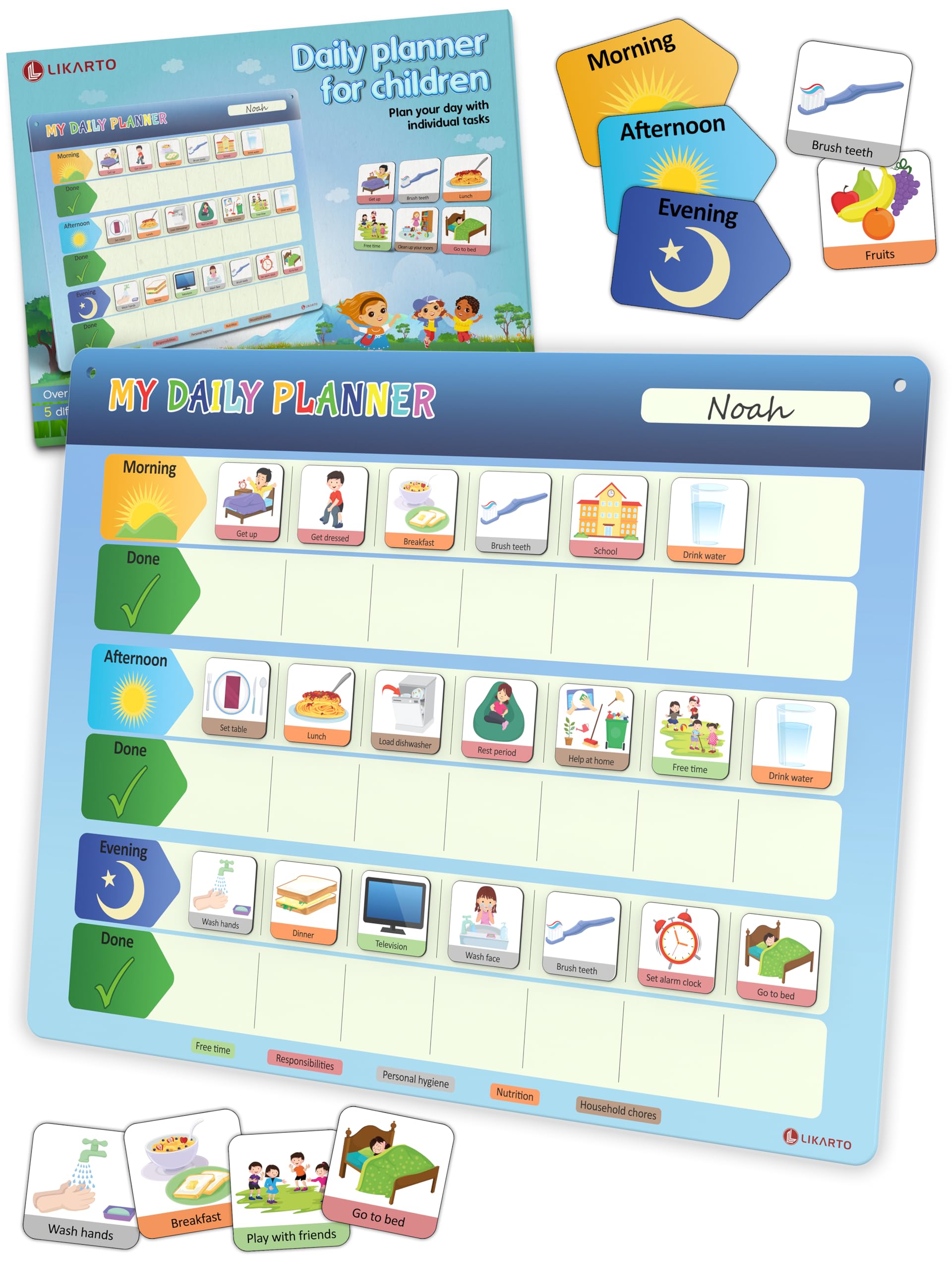
Visual schedules can be a useful tool for families navigating the daily chaos of getting kids dressed, fed, and out the door. The LIKARTO Visual Schedule for Kids is one such option: a magnetic board with 147 magnets depicting common activities. It’s designed for children who benefit from visual cues, including those with autism or ADHD, but also for any household trying to establish a more predictable routine.
The product consists of a magnetic board (size not specified, but likely around 12×16 inches based on similar products) and 147 magnets. These magnets cover a range of activities: morning tasks like brushing teeth and getting dressed, after-school activities like homework and playtime, and evening routines like bath and bedtime stories. There are also blank magnets for customization. The board can be mounted on a wall or refrigerator, and the magnets are stored on the board when not in use.
In practice, parents typically set up the schedule each day or week, placing the relevant magnets in order. Children then move the magnets to a ‘done’ section or remove them as tasks are completed. This tactile involvement can be engaging for kids and provides a clear visual of what’s next. For children with autism or ADHD, the predictability and visual nature can reduce anxiety and improve transitions. However, the effectiveness depends heavily on consistent use and the child’s individual needs.
Key features include the sheer number of magnets, which allows for detailed routines without needing to draw or write. The magnets are illustrated with simple icons and text labels, making them accessible to pre-readers. The board itself is likely magnetic and may have a dry-erase surface for additional notes. The product is marketed as suitable for toddlers through early elementary, but the small magnets could pose a choking hazard for children under three, so supervision is required.
One limitation is the potential for clutter. With 147 magnets, storage can become an issue if not organized. The board may not hold all magnets at once, so a separate container might be needed. Also, the magnets are specific; if your routine includes activities not depicted, you’ll rely on the blank ones, which require writing and may not match the visual style. The board’s size might be smaller than expected, limiting the number of magnets displayed simultaneously. Additionally, the magnets could be misplaced or lost, and replacing individual pieces may not be easy.
Compared to alternative products like printed paper schedules or whiteboards with handwritten lists, the LIKARTO offers durability and reusability. Paper schedules are cheap but get lost or torn; whiteboards require drawing and rewriting. Magnetic schedules like this one are more permanent and visually appealing, but they come at a higher cost and take up wall space. Another alternative is digital apps, which offer reminders and customization but lack the tactile, screen-free interaction that many parents prefer for young children.
Who is this for? It’s best suited for families with children aged 3-8 who need structure and respond well to visual aids. It can be particularly helpful for kids with autism spectrum disorder or ADHD, as it externalizes expectations and provides a sense of control. Parents who are willing to invest time in setting up and maintaining the schedule will get the most out of it. It’s also useful for children who are learning to read, as the text labels reinforce word recognition.
Who is it not for? Families with children under 3 should avoid due to small parts. Those who prefer a minimalist approach or don’t have wall space might find it bulky. If your routine changes frequently or includes many unique activities, the fixed set of magnets may feel restrictive. Also, if a child is not responsive to visual schedules, this won’t magically work; it’s a tool, not a solution. And for older kids (9+), it might feel too babyish.
In terms of quality, the magnets are likely thin and could bend or lose magnetism over time, but for typical home use, they should hold up. The board’s magnetic surface may not be strong enough to hold multiple magnets stacked, so arranging them in a single layer is advisable. The printing on magnets might fade with frequent handling, but that’s a common trade-off.
Overall, the LIKARTO Visual Schedule is a practical tool for families seeking to implement structure. It’s not without flaws—storage, size, and specificity are drawbacks—but for the right household, it can be a valuable aid in reducing morning and evening battles. As with any routine tool, success depends on consistent use and adapting it to your child’s needs.