
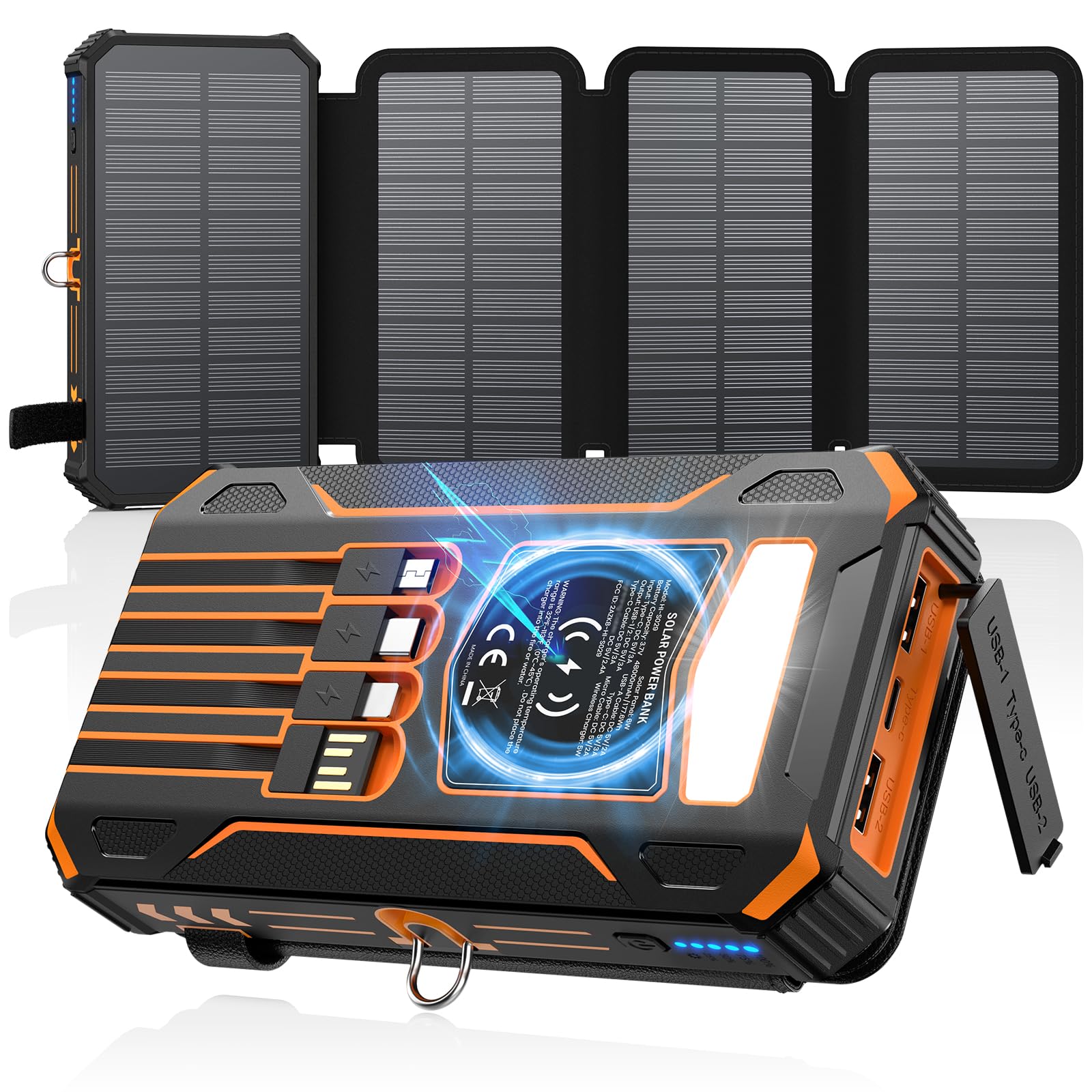
The SOARAISE 48000mAh solar power bank is a hefty brick of portable energy that tries to do a lot: charge multiple devices, include the cables you need, and even top itself up from the sun. After spending a couple of weeks with it as my main travel charger, I have a clear picture of where it shines and where it stumbles.
The first thing you notice is the size and weight. At over a pound and a half, this is not a pocket accessory. It’s closer to a small dumbbell. But that bulk buys you a massive 48,000mAh capacity—enough to fully recharge a typical smartphone eight to ten times, or a tablet three or four times. For multi-day camping trips, long flights, or emergency kits, that kind of reserve is genuinely useful. I used it to keep a phone, a handheld fan, and a pair of earbuds alive for a weekend without wall power, and it barely dipped below half.
The built-in cables are a thoughtful touch. You get a USB-C, a Lightning, and two micro-USB cables woven into the body, so you don’t have to carry separate cords. They’re a bit short and stiff, but they work fine for propping a phone on top of the power bank while it charges. The wireless charging pad on the top surface is convenient for phones that support it, though it maxes out at 15W. That’s fine for overnight top-ups, but don’t expect the speedy charging you get from a dedicated wall adapter.
Output options are plentiful: two USB-A ports, one USB-C port (which also handles input), plus the built-in cables. You can theoretically charge up to five devices at once, but in practice, the total output is shared. I found that plugging in two phones and a tablet slowed things down considerably. It’s best to think of this as a multi-device trickle charger rather than a rapid-charging station. The included LED flashlight has three modes—steady, strobe, and SOS—which is a nice emergency addition, though the light isn’t particularly bright.
Now, the solar panel. This is the feature that draws a lot of attention, and it’s also the biggest letdown. The panel on the front is small, and in my testing under direct summer sun, it took roughly 20 hours to add just 10% to the power bank’s internal battery. That’s not a typo. Solar charging here is an emergency-only feature, useful for stretching your reserve a little over several days in the wilderness, but it will never fully recharge the unit in any realistic timeframe. If you’re expecting to rely on the sun, you’ll be disappointed. The panel is more of a gimmick than a practical charging method.
Compared to a standard 20,000mAh power bank without solar, the SOARAISE is much heavier and more expensive. A typical 20,000mAh unit from Anker or RAVPower will charge your phone just as many times (since you rarely need 48,000mAh on a single trip) and will fit in a backpack pocket. The extra capacity and built-in cables are the main reasons to choose the SOARAISE over those slimmer options. If you’re a minimalist, the bulk won’t be worth it. If you’re prepping for emergencies or traveling with a group, the capacity and cable variety start to make sense.
Build quality is decent but not premium. The plastic body feels sturdy enough, but the surface scratches easily, and the built-in cables feel like they could wear out after heavy use. The digital display shows remaining battery percentage clearly, which is helpful, and the unit does pass-through charging (you can charge the power bank and your devices simultaneously). However, the power bank itself takes a long time to charge from a wall outlet—expect a full recharge to take 10 to 12 hours with a 20W adapter. Plan accordingly.
Who is this for? It’s a good match for campers who want a single, rugged power source for a long weekend, or for households that want a backup battery for emergencies. It’s also useful if you travel with multiple devices that use different connectors, since the built-in cables eliminate the need to pack separate cords. On the other hand, it’s not ideal for everyday carry, for people who prioritize fast charging, or for anyone who thinks the solar panel will meaningfully offset their charging needs. That solar feature is more of a safety net than a primary power source.
In the end, the SOARAISE 48000mAh solar power bank is a capable, if imperfect, product. It delivers on capacity and convenience, but the solar charging is largely symbolic, and the weight is a real drawback. If you can live with those trade-offs, it’s a solid option for off-grid scenarios. If not, a smaller, non-solar power bank will serve you better for less money and less bulk.