
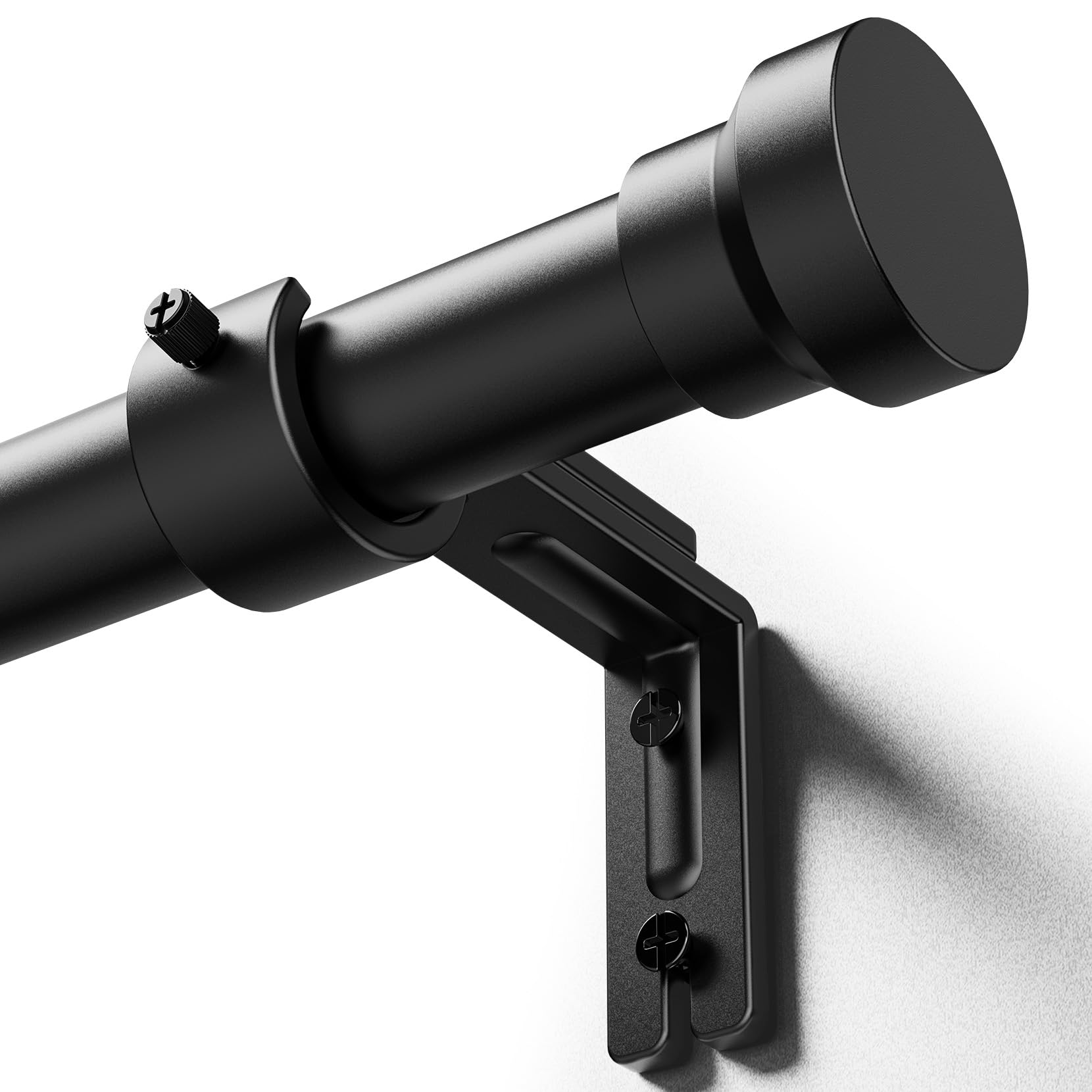
Curtain rods are one of those purchases that rarely get much thought until something goes wrong — a sag in the middle of a wide span, brackets that pull loose from drywall, or a finish that starts flaking after a year. The YaFex adjustable rod, sold in a 32-to-84-inch configuration with a 1-inch diameter, sits in a crowded field of budget-to-midrange hardware, and it’s worth understanding what it actually offers before deciding whether it fits your window.
The core appeal here is the diameter. Many inexpensive rods on the market are 5/8 inch or 3/4 inch, which is fine for lightweight sheers but noticeably flexes under heavier drapery across a long span. A 1-inch rod is closer to what you’d find in hotel or custom-install contexts, and it reads as more substantial visually. For a living room or dining area where curtains are a design element rather than an afterthought, that extra thickness matters.
The adjustable range of 32 to 84 inches covers a lot of ground. In practice, this means one rod can handle a standard single window or extend out toward a wide sliding glass door or picture window. The telescoping design uses a smaller inner rod that slides into the outer section, secured by a locking mechanism. This is a common approach, and it works, but it comes with a trade-off worth naming: telescoping rods are inherently less rigid than a single-piece rod of the same length, and the joint where the two sections meet can be a weak point under load. At the shorter end of the range, this is a non-issue. Extended toward 84 inches with heavy blackout curtains, expect some flex, and consider a center bracket if your setup allows it.
Installation is straightforward in the way most rod hardware is: brackets mount to the wall or window trim, and the rod sits in the bracket cups. The package includes the mounting hardware, and the process is manageable for a DIYer with a drill and a level. One thing to plan for is the bracket placement — the included brackets are designed for wall mounting, and if you’re mounting to window casing or trim, you’ll want to confirm the screw length and bracket profile work with your surface. Hollow drywall without studs will require anchors, which are not always included in generous quantities, so check the contents before you start drilling.
The black finish is a matte-to-satin look that suits modern and transitional interiors without drawing attention. It’s a powder-coat-style finish rather than a painted one, which generally holds up better against handling and humidity, though long-term durability in a bathroom or humid climate isn’t something a finish like this is specifically rated for. In a bedroom or living room, it should be fine.
Compared with a single-piece fixed-length rod, the YaFex is more flexible for renters or anyone who might reconfigure a room, and it’s easier to source for odd window widths. Compared with a tension rod, it’s far more secure and appropriate for heavier curtains, since tension rods rely on pressure and are really only suited to lightweight panels in doorways or small windows. The trade-off for that security is that you’re committing to drilling holes.
Who it suits: homeowners or renters with a window in the 40-to-75-inch range who want a thicker, more substantial rod for medium-weight curtains, and anyone who values adjustability over a perfect fixed fit. It’s also a reasonable choice for a first curtain rod installation since the hardware and process are conventional.
Who should look elsewhere: anyone hanging very heavy velvet or lined drapes across the full 84-inch extension, where a single-piece rod or a rod with a center support is the safer bet. Similarly, if you need a rod for a bay window with angled returns or a ceiling-mount track system, this isn’t the right format. And if you’re renting and can’t drill, a tension rod remains the only real option despite its limitations.
Overall, the YaFex rod is a sensible, unremarkable-in-a-good-way piece of hardware. It doesn’t promise anything exotic, and it delivers the basics — a thicker profile, a wide adjustment range, and standard mounting — without obvious shortcuts. The main caveats are the inherent flex of a telescoping design at long extensions and the need to verify your mounting surface and hardware before installation. For the price bracket this sits in, those are reasonable compromises rather than deal-breakers.