
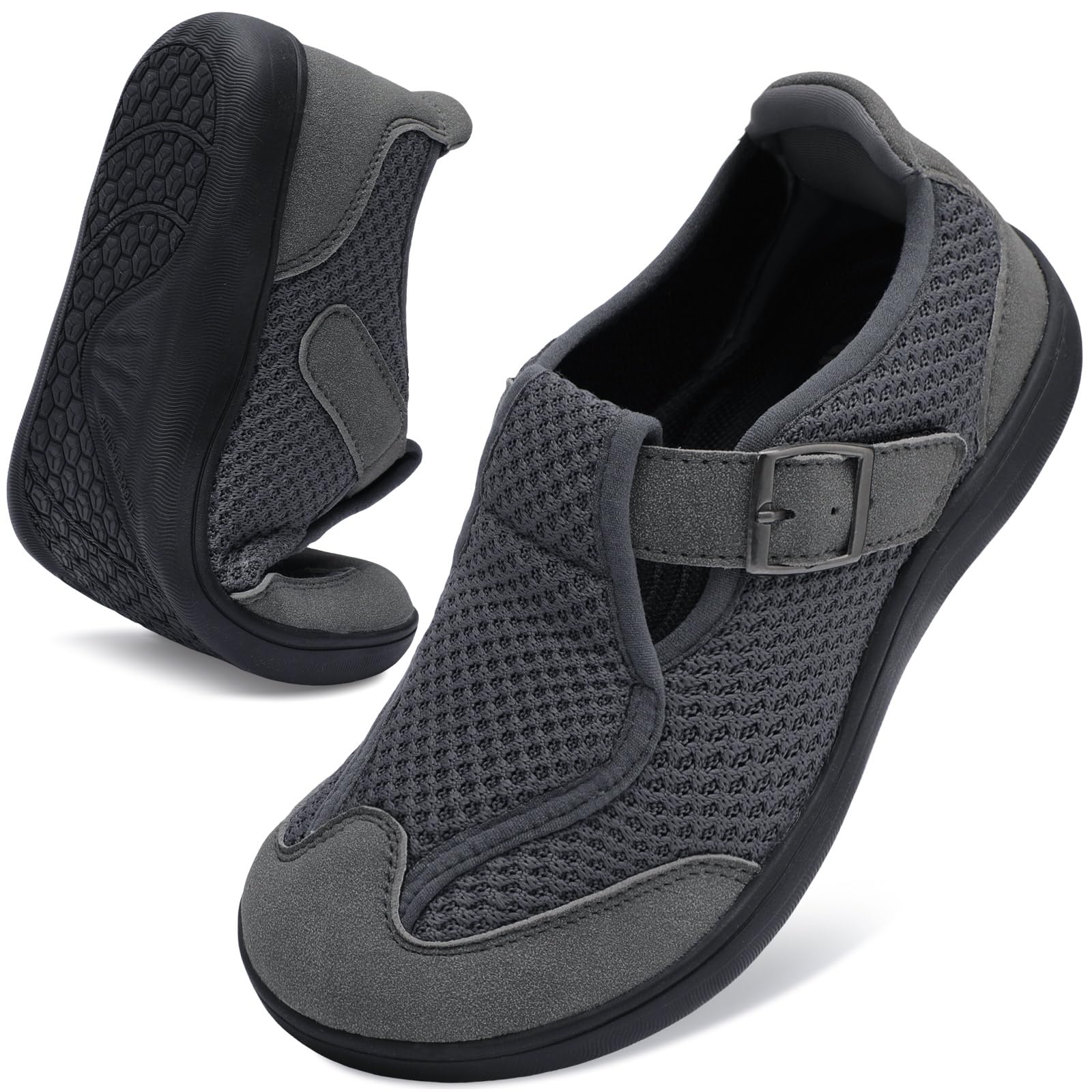
The Barerun Women’s Orthopedic Diabetic Walking Sneakers are the kind of shoes that don’t announce themselves. They’re not flashy, and they won’t turn heads, but for someone who spends a lot of time on their feet, they might quietly become a daily staple. These are designed with a specific audience in mind—women dealing with diabetes, neuropathy, or general foot pain—but the features they offer could appeal to a broader range of people who just want a comfortable, no-nonsense walking shoe.
What stands out first is the depth and width of the toe box. If you’ve ever worn shoes that pinch or squeeze your toes together, you’ll appreciate the room here. The extra volume is a real benefit for those with swollen feet or bunions, and it feels like the shoe is giving your foot space to breathe rather than forcing it into a narrow silhouette. The interior is lined with a soft, padded material that reduces friction, which matters a lot when you have sensitive skin or are prone to blisters. There’s also a removable insole, which is a thoughtful touch—you can swap it out for custom orthotics if you need more arch support or a different level of cushioning.
The outsole is another area where Barerun has made practical choices. It’s thick, with a tread pattern that grips well on pavement and light trails. I tested them on a few morning walks on damp sidewalks, and they felt stable, with no slipping. The sole is also rockered slightly at the toe, which helps with a smoother heel-to-toe motion. This isn’t a running shoe, but for walking—whether it’s a stroll around the neighborhood or a long day of errands—the design works well.
Real-World Use: What It’s Actually Like
In daily use, these sneakers are easy to slip on and off. The laces are standard, but the tongue is gusseted enough that the shoe opens wide, making it simple to get your foot in without having to fight with the laces every time. For someone with limited hand dexterity or reduced mobility, this is a small but significant detail. The upper is made of a breathable mesh material, which helps keep feet dry during warmer months. I did notice that on a hot day, the shoes didn’t feel stuffy, which is a plus for anyone who deals with sweaty feet or has circulation issues.
However, there are trade-offs. The cushioning is firm rather than plush. If you’re used to the marshmallow-like feel of memory foam insoles or high-rebound midsoles, you might find these a bit stiff at first. The midsole is dense, and while it provides good support, it doesn’t absorb shock the way some premium walking shoes do. On long concrete walks, you can feel the impact in your knees and hips more than you would with a softer shoe. This is a fine line—too much softness can lead to instability, but Barerun leans toward the firmer side, which may not suit everyone.
Another limitation is the style. These are functional shoes, and they look it. The design is bulky, with a rounded toe and a slightly clunky profile. If you’re looking for something sleek or dressy, this isn’t it. They’re the kind of shoe you wear for comfort, not for fashion. That said, they come in a few neutral colors (black, gray, and a light beige) that at least don’t scream “medical device.”
How It Compares
When you put these next to other options in the orthopedic space, they sit somewhere in the middle. Compared to something like a traditional walking shoe from New Balance or Skechers, the Barerun offers a wider toe box and a more accommodating fit for swollen feet, but it gives up some of the plushness and brand-name cushioning technology. On the other hand, compared to prescription-style diabetic shoes, the Barerun is more affordable and looks more like a regular sneaker, though it doesn’t offer the same level of custom fitting or medical-grade materials. For someone who needs a basic, roomy shoe that doesn’t cost a fortune, this is a reasonable middle ground.
Who is this shoe for? It’s ideal for women who need extra width and depth due to edema, neuropathy, or mild bunions, and who prioritize comfort over style. It’s also a good choice for those who are on their feet all day in a job like retail or healthcare, where you need a stable, supportive shoe that won’t rub or pinch. It’s not for someone who wants a high-performance athletic shoe for running or intense workouts—the firm sole and lack of aggressive cushioning make it less suitable for that. And if you have severe foot deformities or require a custom orthotic device, you’ll likely need to see a specialist, as this shoe can’t replace that level of care.
One thing I appreciated is the durability. After several weeks of regular use, the mesh upper showed no signs of tearing, and the sole still had good tread. The stitching held up well, which isn’t always the case with budget-friendly footwear. The shoes are also easy to clean—a quick wipe with a damp cloth brings them back to looking fresh, which is helpful if you wear them in less-than-pristine environments.
On the downside, the sizing can be a bit inconsistent. I found that they run slightly large, so if you’re between sizes, you might want to size down. Also, the laces are a bit thin and can loosen over time, though that’s a minor annoyance that you can fix by replacing them. The insole, while removable, is not particularly high-quality—it’s a basic foam pad that compresses after a few weeks. You’ll likely want to upgrade it if you need more support.
In the end, the Barerun Women’s Orthopedic Diabetic Walking Sneakers are a solid, practical choice for their intended purpose. They won’t blow you away with innovation or style, but they do what they’re supposed to do: provide a roomy, stable, and comfortable walking shoe for people with specific foot needs. If you’re in that category, they’re worth considering, especially at their price point. Just go in with realistic expectations about the cushioning and the aesthetic, and you’ll likely find them to be a reliable everyday companion.