
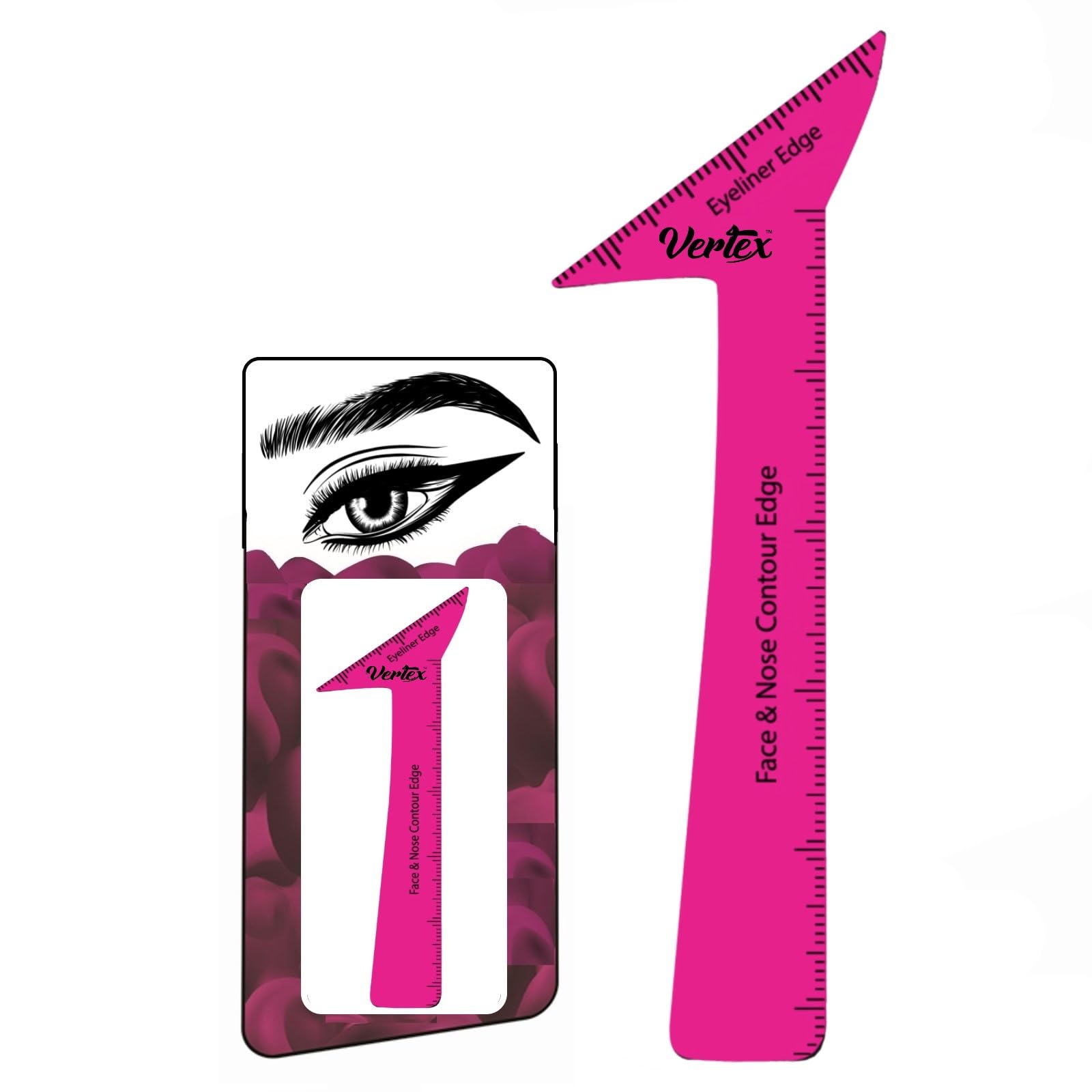
Winged eyeliner has a reputation problem. It looks simple on the people who have practiced it for years, and it looks impossible to everyone else. The product category represented here—eyeliner stencils paired with a pencil, liquid pen, or stamp tool, plus a small angled brush and sharpener—exists to close that gap. The idea is straightforward: give the hand a physical guide so the brain does not have to calculate angles freehand. Whether that works depends heavily on how the tools are used and what the user expects from them.
In real-world use, these stencils are typically held against the outer corner of the eye while the user traces along the cutout with a liner pencil or liquid pen. The angled brush is generally used to soften or extend the tail, and the sharpener keeps pencil tips precise enough to stay inside the stencil edges. Most kits include several stencil shapes—classic wing, thin flick, and a small angled tip—so the user can match the guide to their eye shape rather than forcing one wing style onto every face. The stamp-style tools work differently: instead of tracing, the user presses an inked stamp at the corner to lay down a wing shape in one motion, then fills in the gaps.
Functionally, the appeal is consistency. A stencil removes the guesswork of where the wing should start and how steep the angle should be, which matters most for people still learning. The thin, small angled tip is useful for tightlining and for reaching the inner corner, where a full-size brush is clumsy. A sharpener is a small inclusion but a relevant one, since dull pencils drag against the skin and produce uneven lines that no stencil can fix. Waterproof and smudge-resistant formulas are common in this category, and they generally hold up through a normal workday, though not always through heavy humidity or tears.
The limitations are worth stating plainly. Stencils are rigid, and eyelids are not. A guide that fits one eye shape can sit awkwardly on another, especially on hooded or deep-set eyes, where the wing needs to be drawn with the eye open rather than closed. Holding a stencil steady while tracing requires its own coordination, so some beginners find the first few attempts messier than freehand. Stamp tools trade flexibility for speed—the resulting wing is uniform, but it may not flatter every eye, and the stamped shape can look stamped until it is blended. Liquid formulas also demand a steady hand and quick correction, since they set fast and do not forgive smudges the way a soft pencil does.
Compared with freehand liner application, stencils offer structure at the cost of spontaneity. Compared with tape-based methods—where users apply surgical or masking tape along the lower lash line to create a guide—stencils are reusable and less wasteful, but tape conforms to the skin and can produce a sharper edge. Compared with pre-inked wing stamps sold as standalone products, a kit like this is more versatile because it includes a brush and sharpener for filling and refining, though the individual components are rarely premium quality. The brush in particular tends to be serviceable rather than excellent; it works for soft blending but may fray over time.
Performance expectations should stay realistic. This is a learning tool, not a shortcut to professional results. Most users see improvement after several sessions, not on the first try, and the quality of the final line still depends on the liner formula and the user’s hand. The stencils are best treated as training wheels: useful while building muscle memory, and increasingly unnecessary once the angle and placement become automatic.
Suitable for:
- Beginners who want a repeatable wing shape while learning placement and angle
- People who struggle specifically with symmetry between the two eyes
- Anyone who prefers a small angled brush for detail work near the lash line
Not suitable for:
- Experienced users who already draw consistent wings freehand
- People with heavily hooded or deeply creased lids, where rigid stencils fit poorly
- Anyone expecting one-press, salon-quality results from a stamp tool
Overall, this is a reasonable starter kit for someone who has decided to learn winged liner and wants a physical guide rather than another video tutorial. It is not a precision instrument, and the results will vary by eye shape and patience level. Bought with modest expectations, it does what it claims: it makes the first hundred attempts less frustrating.