
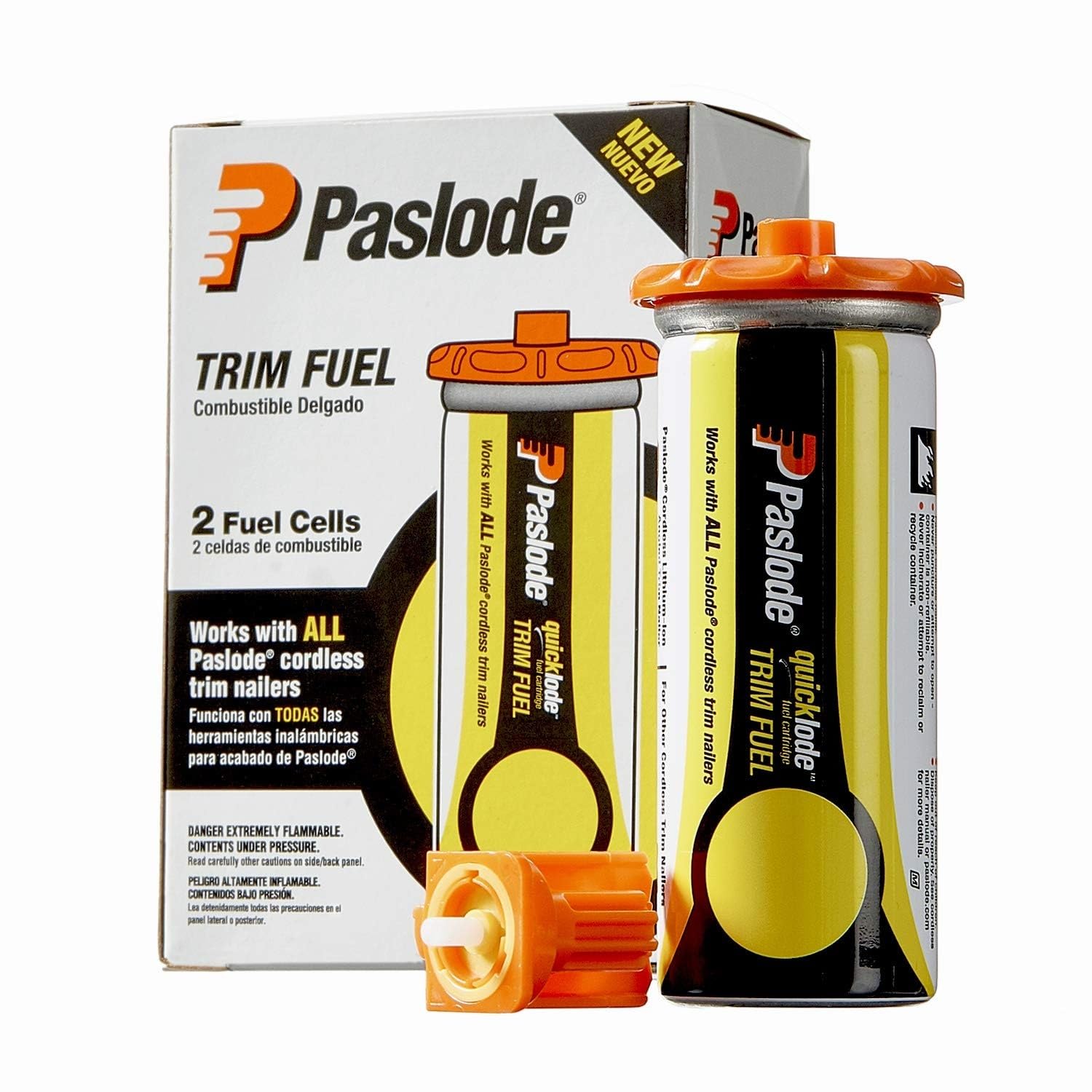
Fuel cells occupy an odd place in a tool review. Nobody buys a Paslode framing or trim nailer because of the fuel; they buy it for the cordless convenience, and the fuel is simply the cost of admission. The 816007 two-pack of universal short yellow trim fuel cells is a consumable, and it should be judged on availability, shelf life, and how well it matches the tools it claims to serve rather than on any performance spec sheet.
These cells are intended for Paslode’s trim and finishing nailers, the models that run on the short fuel cell paired with a battery. The pairing matters: the fuel cell supplies the combustion energy and the battery handles the spark and fan, so a stale or mismatched cell shows up immediately as misfires or weak drive. The yellow color coding is Paslode’s way of distinguishing this cell from the framing-oriented versions, and the “universal” in the name refers to compatibility across a range of short-cell trim tools rather than a single model. Anyone running an older Paslode trim gun should confirm the cell number against the manual before ordering, because the color coding is easier to misread than the part number.
In practice, a cell is good for a set number of shots, and the count varies with temperature, nail size, and how hard the tool is working. Paslode’s own guidance puts the short cell in the range of roughly a few thousand actuations, which sounds generous until you are installing crown molding on a cold morning and the count drops. Cold weather is the recurring complaint with any combustion fuel cell, and this one is no exception. Below freezing, drive consistency suffers and the cell depletes faster; keeping spares warm inside a jacket is standard practice on winter jobs. The two-pack format is genuinely useful here, because it means one cell can live in the tool while the other stays warm, and a swap does not end the workday.
What the two-pack does not solve is cost per shot. Fuel cells are the quiet expense of cordless combustion nailers, and buying them in pairs only softens the per-unit price slightly. A contractor running a trim crew will go through these steadily, and the recurring spend is worth factoring in before committing to a fuel-driven platform. This is the main trade-off against battery-only finish nailers, which have no fuel line item at all. The comparison is fair: a modern cordless finish nailer with a brushless motor and a large battery avoids consumable fuel entirely, at the cost of more weight and a higher upfront price. The Paslode approach is lighter and faster to cycle, but it rents you that convenience one cell at a time.
Storage is the other practical concern. Fuel cells have a shelf life, and a two-pack bought well ahead of a project can sit long enough to lose some punch. There is no reliable date stamp the average buyer will notice, so the sensible habit is to buy close to the job and rotate stock rather than stockpiling. Leftover cells from a finished job are worth keeping only if another project is on the horizon.
- Compatibility: Designed for Paslode short-cell trim and finishing nailers; verify against your tool’s manual, since color coding alone is not a reliable guide.
- Format: Two cells per pack, which suits users who want a spare on hand rather than a single-use purchase.
- Performance variables: Shot count and drive consistency depend heavily on ambient temperature and nail size; cold conditions reduce both.
- Ongoing cost: A recurring consumable expense that battery-only platforms do not carry.
- Shelf life: Cells degrade over time, so buying near the project date is more sensible than bulk stocking.
Who is this for? Primarily the owner of a Paslode trim nailer who already knows the tool and wants a spare cell without hunting down a single pack. It suits remodelers and finish carpenters doing intermittent trim work, where the lighter tool and fast cycling are worth the fuel cost. It is also a reasonable buy for a homeowner tackling a single large trim project, provided they check compatibility first. Who is it not for? Anyone without a compatible Paslode tool, obviously, and anyone weighing a first purchase between fuel-driven and battery-only systems. For a crew doing high-volume trim day in and day out, the consumable math may favor a battery platform, and a two-pack will not change that. Buyers who expect a fuel cell to be a one-time purchase or who leave tools in an unheated truck through winter should temper expectations; this is a maintenance item, not an upgrade.
As a consumable, the 816007 two-pack does what it should: it keeps a compatible trim nailer running and provides a sensible spare. The honest caveats are the ones that apply to the whole category, namely cold-weather performance, shelf life, and the running cost of fuel. It is a practical purchase for the right tool owner and a poor fit for anyone still deciding which cordless platform to commit to.