
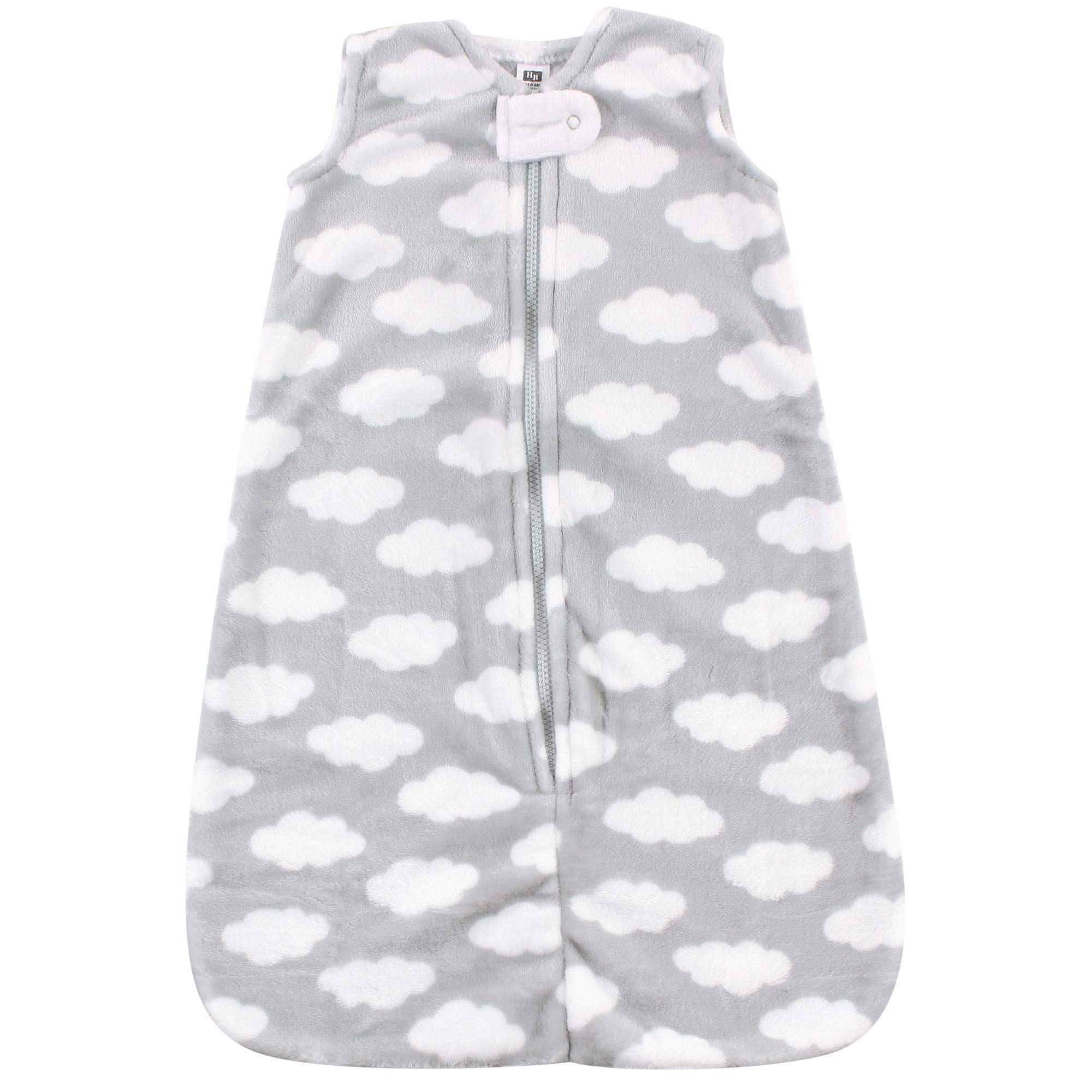
The Hudson Baby plush sleeping bag sits in a category that many parents discover only after a few sleepless nights: the wearable blanket. Unlike a loose quilt, it zips over a child’s body and stays put through the night, which is why it has become a common alternative to traditional blankets for toddlers who roll, kick, and rearrange themselves constantly. This particular version, sized for 18–24 months, is a sleeveless sack made from a plush gray fabric with a cloud print. It is a straightforward product with a clear purpose, and it works well for some families while missing the mark for others.
In practice, the sleeping bag is used much like a sleep sack for younger babies, just scaled up. A parent zips a toddler into it over pajamas at bedtime, and the child sleeps inside it rather than under a blanket. Because it is sleeveless, it layers easily over long-sleeve or short-sleeve sleepwear, which gives some flexibility for different room temperatures. The plush exterior is soft to the touch, and the cloud pattern is subdued enough that it does not look overly themed or babyish in a toddler bed. It is the kind of item that gets used nightly during colder months and then gets folded away in summer.
Functionally, the design is simple. There is a front zipper that runs from the neckline down toward the bottom, and the armholes are open, allowing for movement. The sack is roomy through the body, which is intentional, since tight-fitting sleepwear is not the goal here. The fabric is a synthetic plush, so it feels warm and fuzzy but is not breathable in the way cotton or muslin is. That matters for how it performs in real bedrooms, and it is worth being clear about: this is a cold-weather item. In a room kept around 68–72°F, a toddler in lightweight pajamas will likely be comfortable. In a warmer room, or with heavy pajamas underneath, it can run too hot.
There are a few practical trade-offs worth noting. The plush material, while cozy, is not the easiest to clean. It tends to pill and hold lint over time, and repeated washing can dull the surface. It is machine washable, but it is better treated as a once-a-week wash rather than something to toss in after every spill. The open armholes are useful for temperature regulation but mean the sack offers no coverage for arms and shoulders, so in a very cold room a child may still need a long-sleeve layer. Sizing is another consideration. The 18–24 month range is a broad window, and toddlers vary enormously in height and build during that period. A child at the smaller end may find it quite long and loose, while a taller 23-month-old may outgrow the length before the width becomes an issue.
Compared with a traditional sleep sack from brands that focus on cotton or muslin, this Hudson Baby version leans warmer and bulkier. Cotton sleep sacks are more breathable and better for year-round use, while a plush sack like this one is more of a seasonal item. It also differs from a toddler quilt or duvet, which offers more freedom of movement but can be kicked off and is not recommended for very young toddlers. The sleeping bag occupies a middle ground: more secure than a blanket, warmer than a lightweight sack, and less breathable than either. Parents who live in mild climates may find a cotton sack more versatile overall.
It is well suited to families in cooler regions or drafty bedrooms who want a warm, secure layer for a toddler who will not keep a blanket on. It is also a reasonable choice for travel, since it packs flat and replaces the need to bring a blanket. It is less suitable for warm climates, for toddlers who run hot, or for parents looking for a year-round single solution. Families who prefer natural fibers or who need something easy to wash frequently may want to look at cotton options instead. And because it is sleeveless, it is not a substitute for proper pajamas in a cold house.
Overall, the Hudson Baby plush sleeping bag is a functional, reasonably priced cold-weather sleep item. It does what it is designed to do, with the main caveats being warmth management, fabric longevity, and the broad fit of the size range. It is not a product that will suit every household, but for the right bedroom and the right toddler, it fills a genuine gap between a blanket and a sleep sack.