
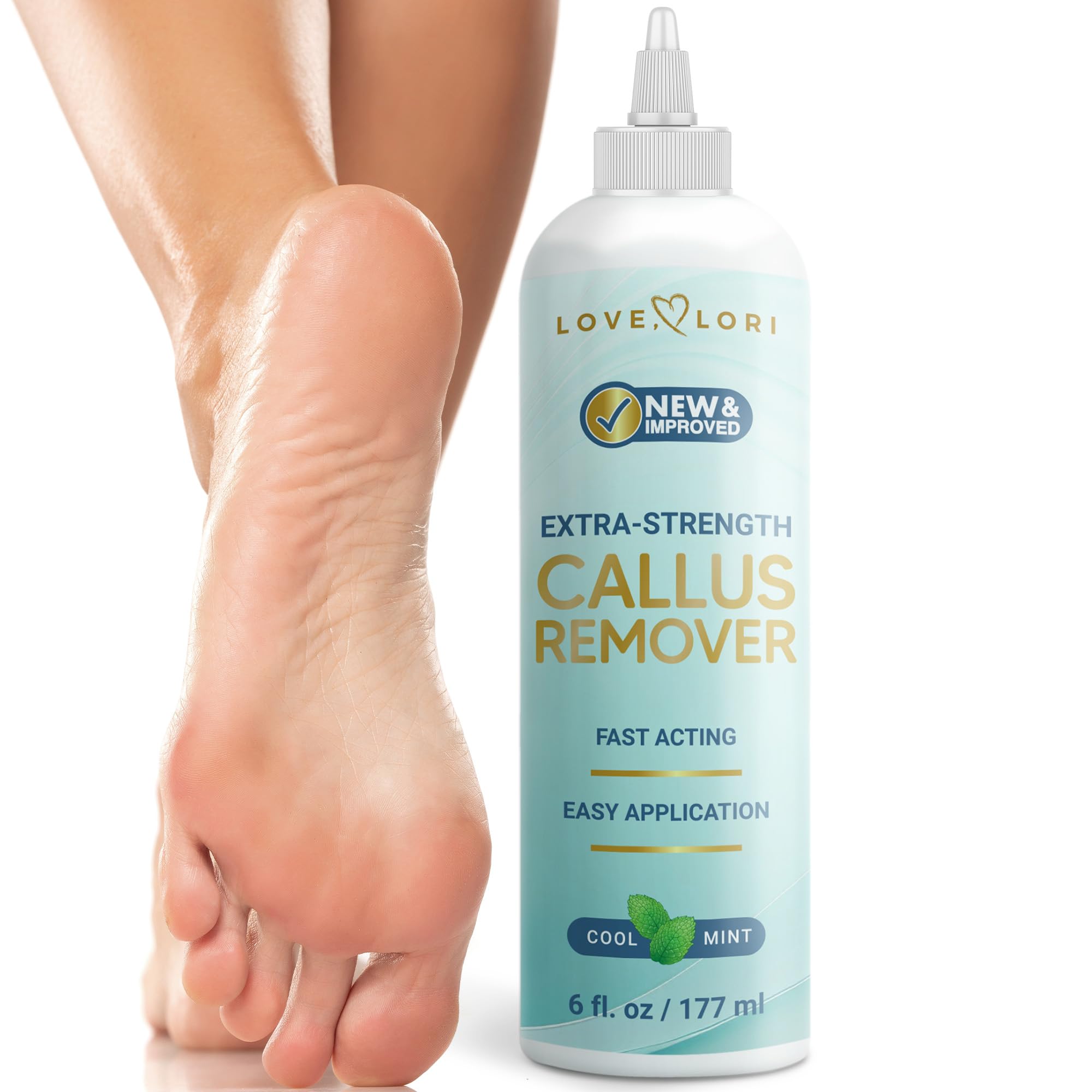
Love Lori’s Foot Callus Remover Gel is one of those products that sits in a crowded category—the at-home callus treatment—and tries to stand out by leaning on the “extra strength” label and its 6oz bottle. It’s a gel rather than a cream or a physical tool, and it’s meant to be used as part of a multi-step routine rather than on its own. Whether it earns a spot in your bathroom cabinet depends on how much effort you’re willing to put into a pedicure at home.
The product is a chemical exfoliant, not a mechanical one. That distinction matters. Unlike a pumice stone, callus rasp, or electric foot file, this gel doesn’t physically sand down thickened skin. Instead, it relies on an acidic formulation to soften and loosen dead skin over time. The 6oz tube is a reasonable size for a treatment used once or twice a week, and the gel texture is easier to spread across the heel and ball of the foot than a thick cream, which tends to sit on top of the skin.
How it’s actually used
In practice, the gel is applied to clean, dry feet, left on for a short period, and then rinsed or wiped away, usually followed by some kind of physical exfoliation to remove the softened skin. That follow-up step is where the product either works well or frustrates people. The gel is a prep step, not a finish. Reviewers and product descriptions alike tend to pair it with a foot file or pumice, and that’s the realistic use case: apply, wait, then work the loosened skin off with a tool. Used alone, without any mechanical follow-up, the results are modest and slow to appear.
The “extra strength” claim is worth reading carefully. Stronger exfoliating gels generally mean a higher concentration of active acids, which can translate to faster softening but also more sensitivity. For someone with thick, stubborn heel calluses, that trade-off may be worth it. For someone with sensitive skin, small cracks, or any open areas on the foot, a gentler formulation or a plain urea-based cream is the safer route. The gel should not be applied to broken skin, and it’s not a treatment for fissures or cracked heels that have gone deep.
What the formula does and doesn’t do
Functionally, the product softens the outer layer of dead skin so it can be removed. It does not hydrate in any lasting way, and it doesn’t prevent calluses from returning. Calluses form because of pressure and friction—ill-fitting shoes, long hours standing, going barefoot on hard floors—and no topical gel changes those conditions. So the realistic expectation is a temporary smoothing that needs to be maintained with regular use and, ideally, better footwear. Anyone expecting a one-time fix will be disappointed.
The 6oz size is generous relative to how little gel a single application requires, so a tube lasts a while. That’s a point in its favor. On the other hand, the product is a single-purpose item. It doesn’t double as a moisturizer or a general foot cream, so it adds a step to a routine rather than replacing one. If you already use a urea cream or a lactic acid lotion on your feet, this gel overlaps with that function and may be redundant.
How it compares to alternatives
The most direct comparison is to a dedicated callus remover tool—an electric file or a manual rasp. Those give immediate, visible results and require no waiting or rinsing, but they can be aggressive if used carelessly and need to be cleaned and replaced over time. A chemical gel like this one is gentler in the sense that it doesn’t remove skin by force, but it’s slower and depends on a follow-up step to be effective. A third option, a urea-based foot cream, is the least dramatic of the three: it softens gradually with daily use and is generally better tolerated, but it won’t produce the same quick smoothing that a gel-plus-file routine can.
There’s also the question of cost and convenience. A gel plus a file is a reasonable middle ground for people who want salon-style results without salon prices or appointments. It’s not faster than a professional pedicure, and it won’t match the results of one, but it’s a workable routine for maintenance between visits.
Who it suits and who should skip it
- Good fit: People with thickened, rough calluses on the heels or balls of the feet who are willing to follow a multi-step routine once or twice a week and who don’t have sensitive or broken skin.
- Good fit: Anyone who prefers chemical exfoliation over aggressive physical filing and wants a product they can pair with an existing foot tool.
- Poor fit: People with sensitive skin, eczema, diabetes-related foot concerns, or any cracks and open areas—these users should consult a professional before using an extra-strength acid gel.
- Poor fit: Anyone looking for a standalone, one-step solution. This gel is a prep product, and without a follow-up exfoliation step, results are limited.
Overall, the Love Lori gel is a functional, no-frills addition to an at-home pedicure routine. It does what a chemical callus softener is supposed to do, provided it’s used as intended and with realistic expectations. It isn’t a miracle in a tube, and it won’t replace consistent foot care, but as one part of a maintenance routine, it’s a sensible option—particularly for people who already have a file or pumice they like and just want to make the job easier.