
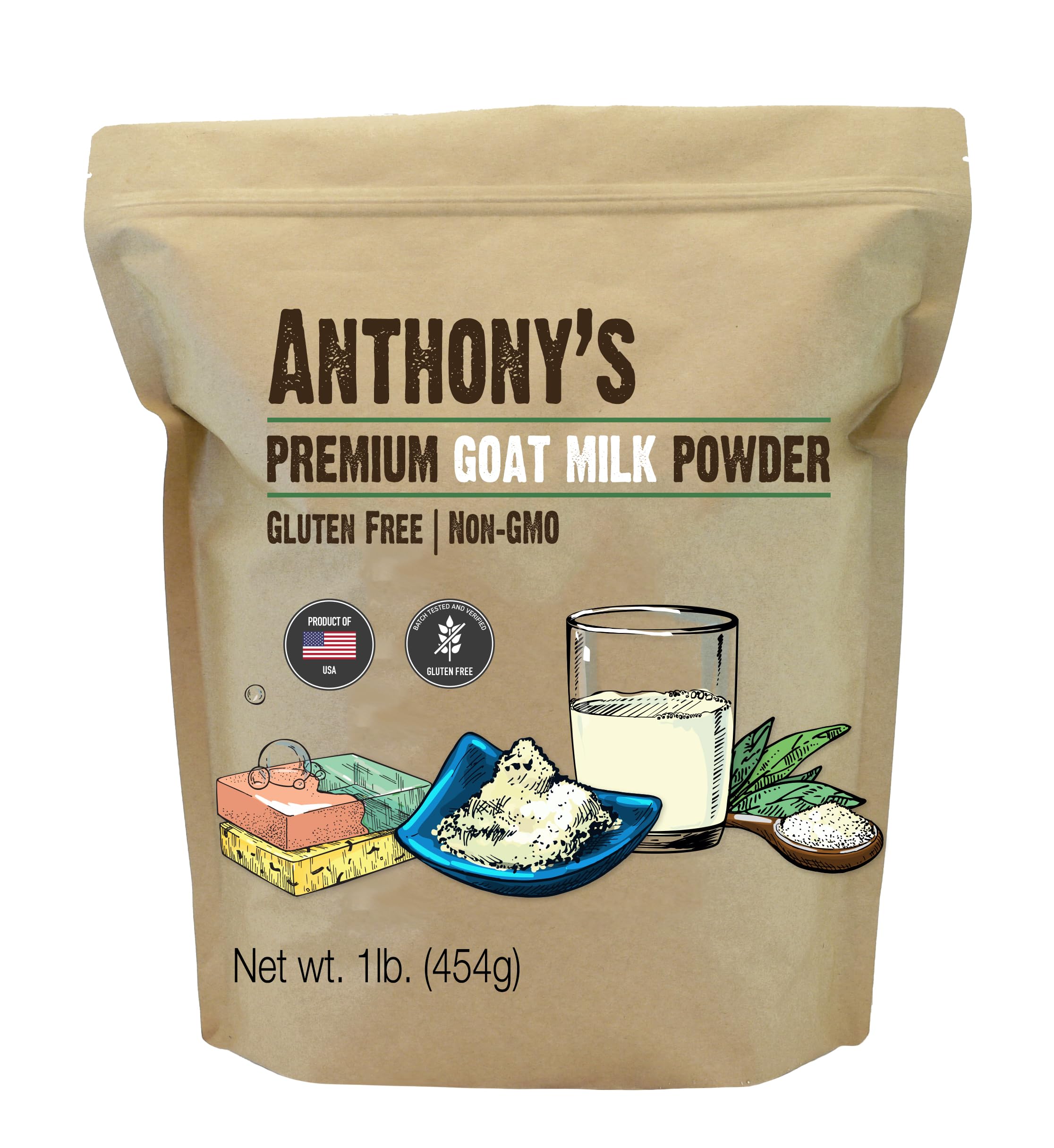
Goat milk powder occupies a narrow shelf in most grocery stores, and Anthony’s Premium Goat Milk Powder is a fairly representative example of the category: a single-ingredient, shelf-stable powder sold in a one-pound resealable bag. It is gluten free, non-GMO, and contains no additives, which matters to people who are using it as a straight substitute for fresh goat milk rather than as a flavored drink mix.
The product is best understood as an ingredient rather than a beverage. In practice, buyers use it in a few predictable ways: reconstituting it with water for drinking or for coffee and tea, adding it to smoothies and protein shakes, using it in baking where a mild dairy note is wanted, and giving it to pets, particularly puppies and older dogs that may tolerate goat milk more easily than cow milk. The one-pound bag yields roughly four quarts of reconstituted milk when mixed at the standard ratio, so it lasts a reasonable amount of time for occasional use.
Functionally, the powder dissolves without much fuss. Warm water works better than cold, and whisking or shaking in a jar produces a smoother result than stirring with a spoon. A fine film or slight grit can remain if the powder is dumped into cold liquid and left to sit, which is a common trait of milk powders generally. The flavor is distinctly goat: tangy, slightly grassy, and fuller than cow milk powder. People who already drink goat milk will recognize it; people expecting a neutral, sweet dairy flavor will not. That tang carries through into baked goods and sauces, so it is not a silent substitute in delicate recipes.
One limitation worth flagging is that reconstituted powder never quite matches fresh goat milk. The texture is a touch thinner, and the flavor reads as slightly flatter and more cooked, likely a byproduct of the drying process. It is fine for cooking, smoothies, and everyday drinking, but it will not fool anyone in a side-by-side tasting. The resealable bag is also prone to clumping if stored in a humid kitchen; transferring the powder to an airtight jar is a practical improvement. Finally, the powder is not instant in the sense that it will dissolve in a cold shaker bottle without some effort, so it is not the most convenient option for someone who wants to scoop and go.
Compared with other shelf-stable dairy options, the trade-offs are clear. Cow milk powder is cheaper, milder, and more widely available, but it is not a fit for people avoiding cow dairy or for pets with sensitivities. Evaporated or condensed goat milk offers a richer, more consistent texture for cooking but comes in small cans and carries a distinct cooked, sweetened profile. Fresh goat milk is the closest match in flavor and texture but has a short refrigerator life and is often expensive or hard to find. Anthony’s product sits in the middle: less convenient than fresh, more flexible than canned, and more expensive per ounce than cow milk powder.
The ingredient list is short, which is the main selling point for buyers who read labels carefully. There is no added sugar, no maltodextrin, and no anti-caking agents beyond what naturally occurs. That makes it a reasonable choice for people managing gluten intake, though anyone with a serious dairy allergy should note that goat milk is still dairy and is not a substitute for hypoallergenic formulas. It is also not a suitable infant formula on its own; parents should not treat it as one.
Who is this for? People who keep a backup dairy in the pantry, home bakers working with goat milk recipes, smoothie drinkers who want a tangier protein base, and pet owners who use goat milk as a gentle supplement. It also suits anyone who cannot reliably buy fresh goat milk locally. Who is it not for? Anyone expecting a neutral, sweet milk flavor, people who need a truly instant powder for cold drinks, and buyers who are price-sensitive, since the per-quart cost runs higher than cow milk powder or fresh cow milk. It is a competent, plain product that does what it says without much flair, and that is probably the right expectation to bring to it.