
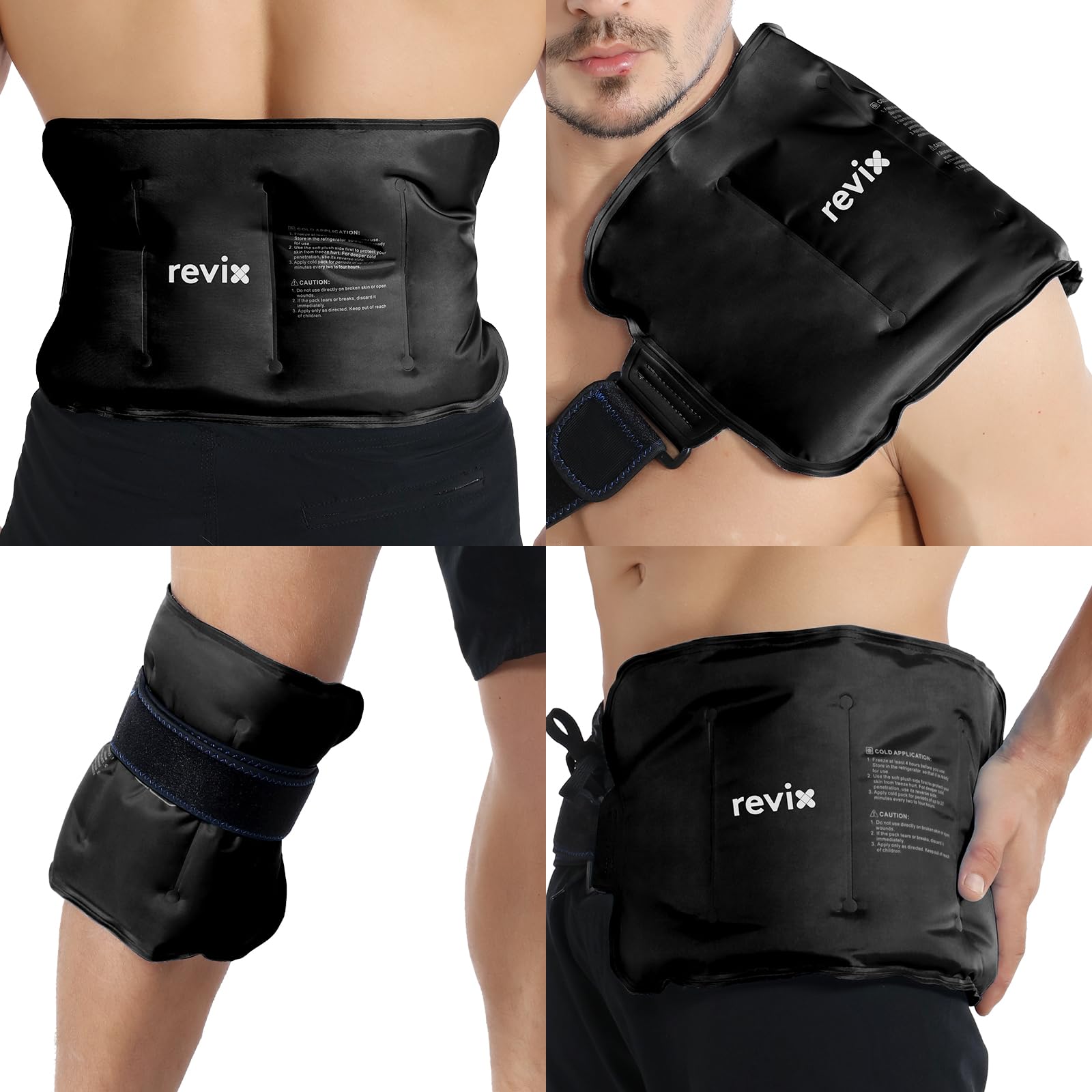
Reusable gel ice packs occupy an awkward spot in the injury-care market. They are cheap enough to be an impulse buy, yet the differences between a good one and a bad one only show up after a few weeks of use. The REVIX Ice Pack for Lower Back & Shoulder sits in the middle of that range, and whether it makes sense depends heavily on how you plan to use it.
The design is straightforward: a black fabric sleeve containing a gel insert, shaped to drape over the lower back or wrap around a shoulder. The fabric side is meant to sit against skin, while the gel side faces outward. In practice, this two-layer construction is the feature that matters most. Direct gel contact gets uncomfortably cold within a minute or two, and the cloth barrier makes the pack tolerable for the recommended 15-to-20-minute sessions without needing a towel underneath.
The wrap format is the other functional selling point. A shoulder pack that has to be held in place is nearly useless if you want to keep working at a desk or move around the house, and the adjustable strap here addresses that. For lower back use, the pack stays put reasonably well when seated or lying down, though it shifts if you are upright and active. That is a limitation shared by most soft wraps rather than a flaw specific to this one.
Cold retention is adequate but not exceptional. Expect meaningful cooling for roughly 15 to 20 minutes after a full freeze, which aligns with standard clinical guidance for cold therapy anyway. Thinner gel packs cool faster but lose their chill sooner; this one leans toward the middle. The flip side is that it also takes a couple of hours in the freezer to fully re-freeze, so a single pack is not ideal for back-to-back sessions. Buyers who need continuous cold through an evening should plan on two packs or accept downtime.
Dual hot and cold use is increasingly common in this category, and REVIX follows that pattern. The pack can be heated in a microwave or hot water, which broadens its usefulness for muscle stiffness as well as acute swelling. One caveat worth noting: gel packs heated unevenly can develop hot spots, so following the timing instructions closely matters more than it does with a simple hot water bottle.
- Fabric-backed design reduces the need for a barrier towel and makes longer sessions more comfortable
- Adjustable strap allows hands-free use on the shoulder and keeps the pack positioned on the lower back when seated
- Reusable gel insert can be frozen or heated, covering both cold and heat therapy
- Black outer fabric hides stains and looks less clinical than medical-blue packs
- Moderate cold retention of roughly 15 to 20 minutes per freeze
Compared with a traditional hard gel pack or a bag of frozen peas, the REVIX is more comfortable and more convenient to position, but it is less intense. Hard packs deliver a sharper, deeper cold that some people prefer for acute injuries; the fabric layer here deliberately softens that effect. Compared with electric heating pads or compression ice machines, it is far cheaper and more portable, though it cannot match the sustained, regulated temperature of powered devices. This is a manual tool, and it performs like one.
Construction quality is decent for the price bracket. The stitching on the strap and sleeve holds up to regular handling, and the gel insert has not shown obvious leaking in reports from longer-term users. The fabric does absorb sweat and body oils over time, and while the sleeve is generally washable, the care routine is not something most people will enjoy. Expect the pack to look worn after a few months of regular use; this is a consumable item, not an heirloom.
Who is this for? People dealing with recurring lower back tightness, post-workout shoulder soreness, or minor strains who want a low-cost, hands-free option for home use. It suits desk workers who want to ice a shoulder while continuing to type, and it suits anyone who finds bare gel packs too harsh against the skin.
Who is it not for? Anyone managing a serious acute injury should treat this as a comfort aid, not a treatment device, and should follow medical advice rather than product instructions. Athletes who need deep, prolonged cold between training sessions will likely find the cooling duration and re-freeze time limiting. And households that want a single pack to cover multiple body areas may find the back-and-shoulder shaping a compromise for knees, ankles, or smaller joints.
Overall, the REVIX pack is a sensible, unremarkable piece of home recovery gear. It does what a gel wrap should do, with a few practical conveniences and a few predictable trade-offs. The decision comes down to whether hands-free positioning and fabric comfort matter more to you than maximum cold intensity and fast reuse.