
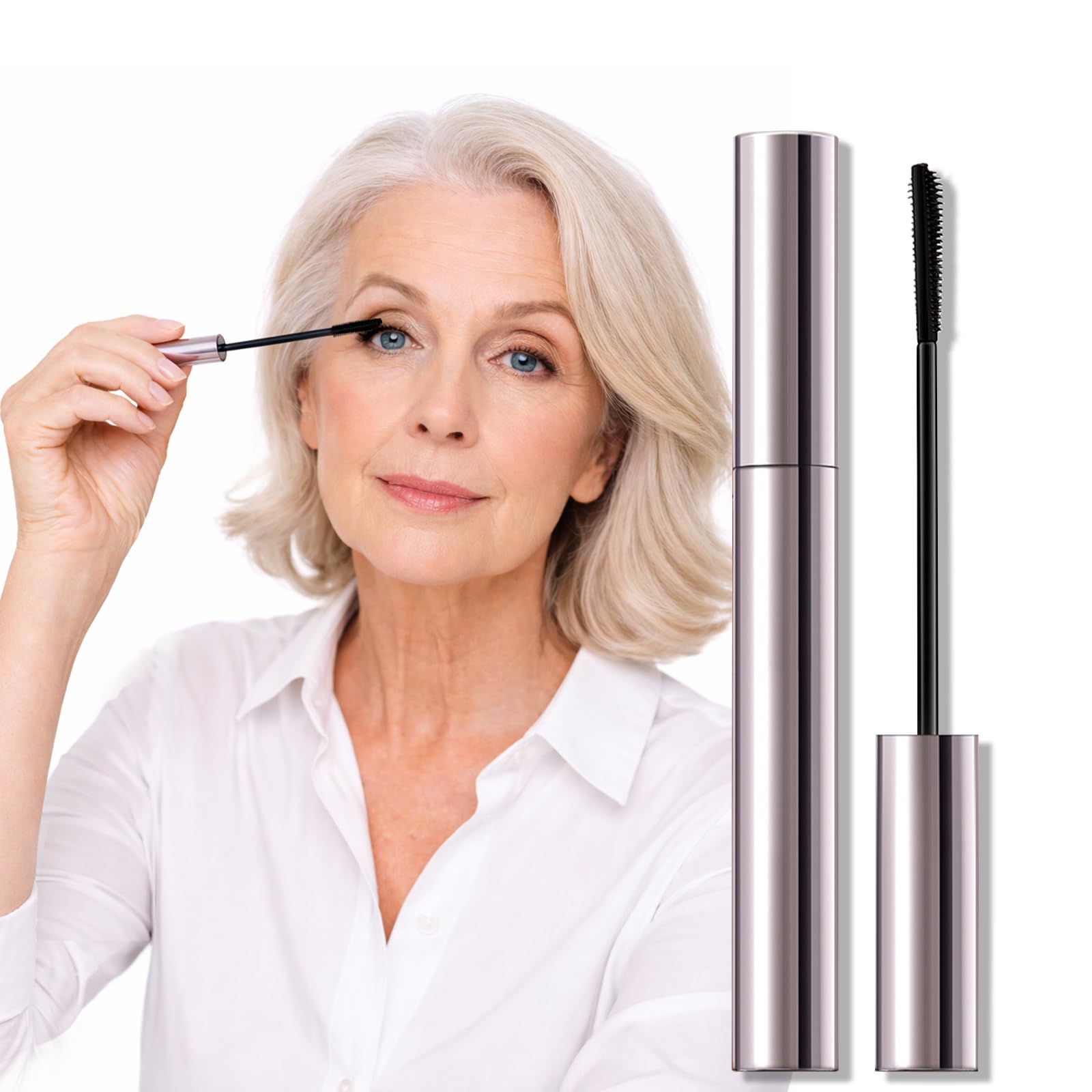
Tubing mascaras occupy a specific niche in the cosmetics world. Unlike traditional formulas that coat lashes in pigment and waxes, tubing mascaras form tiny polymers—essentially sleeves—around each lash. When you remove them, the tubes slide off with warm water and gentle pressure rather than dissolving into a smeary mess. For older women, particularly those over 60, this mechanism has practical appeal, and several brands now market formulas specifically to this demographic. The product in question, a black tubing mascara promising both volume and length, sits squarely in that category.
The everyday use case is straightforward. Most women applying mascara in their sixties are doing so at a bathroom mirror in the morning, often with presbyopia making close-up work more difficult, and often with lashes that have thinned or become more brittle over time. The appeal of a tubing formula here is twofold: it tends to be less drying than traditional mascaras, and removal doesn’t require rubbing or harsh eye makeup remover, which matters for delicate skin around the eyes. In practice, application follows the usual routine—wiggle the wand at the base, sweep upward—though tubing formulas generally reward a slightly drier application, building a second coat before the first has fully set.
Functionally, the product delivers on its core claims in a measured way. The polymer formula grips each lash and extends it, which produces visible length without the flaking that plagues some fiber-based lengthening mascaras. Volume is more modest. Tubing formulas are inherently lightweight, and while this one builds reasonably well over two coats, it won’t produce the dense, fanned-out look of a heavy volumizing mascara. Women expecting dramatic thickness may find it underwhelming. The black pigment is solid and doesn’t lean gray, which is worth noting since some tubing formulas can appear slightly ashy on sparse lashes.
Wear time is where tubing mascaras generally earn their reputation. This one holds up through a normal day—errands, reading, light activity—without smudging or transferring to the brow bone, a common frustration for women with hooded or mature eyelids. It is not, however, fully waterproof in the traditional sense. It resists tears and humidity reasonably well, but a long swim or a heavy cry will compromise it. The removal process is the standout feature: warm water, a few seconds of gentle pressure, and the tubes slide away. No cotton pads soaked in oil, no tugging at the lash line.
There are trade-offs worth naming. The first is learning curve. Women accustomed to traditional mascara sometimes apply tubing formulas too wet or too heavily, which causes clumping and spidering. The second is that tubing mascaras can feel slightly stiffer on the lash than a soft wax formula; some users notice the tubes on their lashes by the end of the day. The third is that the formula doesn’t layer well after it has fully dried—attempting a third coat hours later tends to flake rather than build. And while the product is marketed to women 60 plus, the brush is a standard tapered wand, not a specialized comb or curved applicator, so those with very short or sparse lashes may still need to work at the base to get coverage.
Compared with a conventional volumizing mascara, the difference is mostly in removal and wear rather than appearance. A traditional formula will generally deliver more immediate thickness and a softer, more flexible feel, but it requires proper eye makeup remover and often smudges by afternoon on mature eyelids. Compared with a lash serum or tinting service, tubing mascara is a temporary, low-commitment option—no salon appointments, no waiting weeks for results, but also no lasting change to lash condition. It’s best understood as a daily cosmetic tool rather than a treatment.
Who is this for? Women in their sixties and beyond who want defined, lengthened lashes with minimal fuss, who dislike the rubbing involved in removing traditional mascara, and who deal with smudging or flaking during the day. It suits contact lens wearers reasonably well, since the tubes don’t shed particles into the eye as readily as some fiber formulas. Who is it not for? Anyone wanting dramatic volume, anyone who needs genuinely waterproof performance for swimming or intense exercise, and anyone unwilling to adjust their application technique. Women with very sensitive eyes should patch test first, as with any polymer-based formula.
Realistic expectations matter here. This is a competent, purpose-built tubing mascara that does what tubing mascaras do well—clean wear, easy removal, decent length—without reinventing the category. The marketing toward older women is fair in spirit, since the removal method genuinely suits mature skin, but the formula itself isn’t radically different from standard tubing products. It’s a sensible choice for the right user, and an unremarkable one for anyone expecting more.