
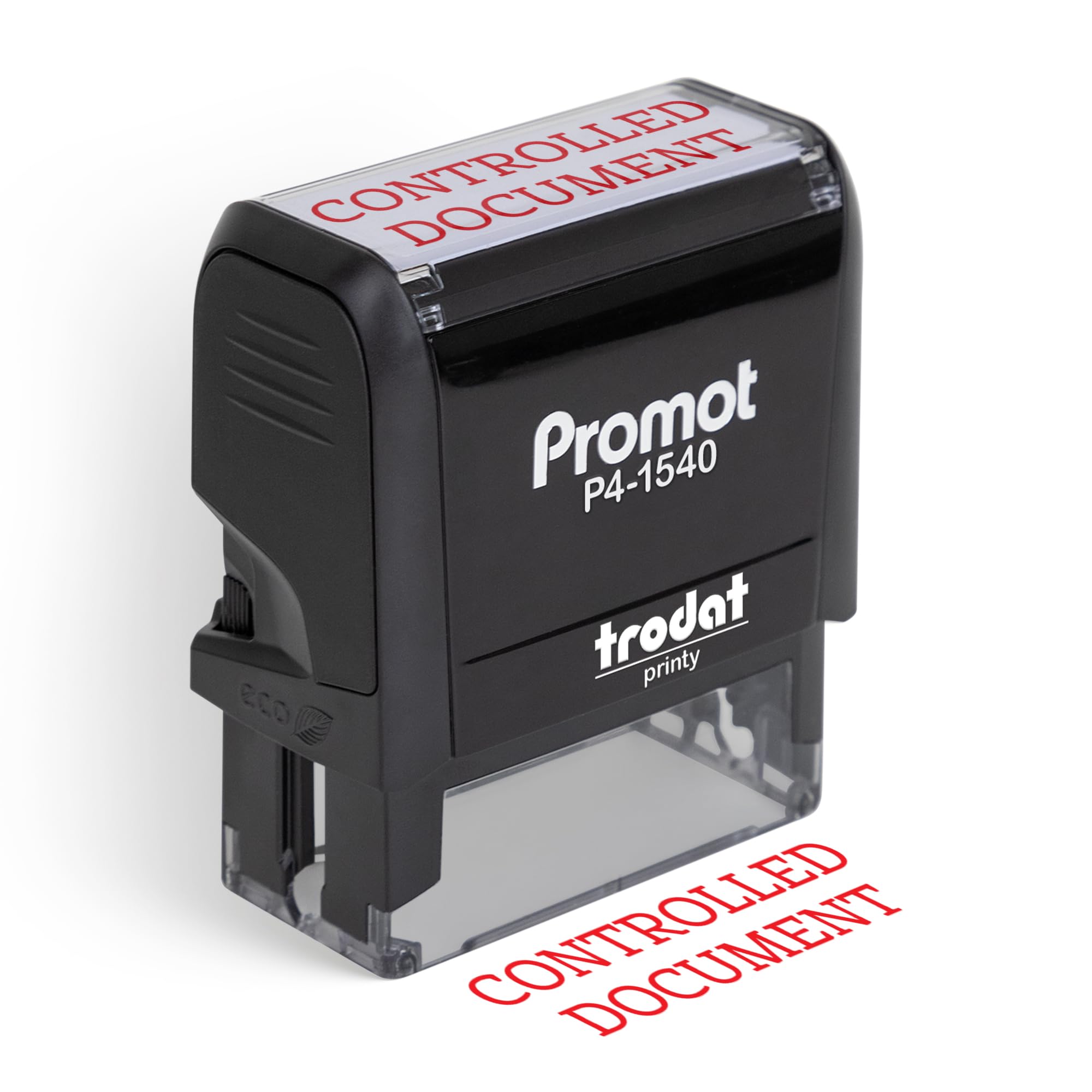
In offices where document control is a daily requirement, a stamp that clearly marks papers as controlled or uncontrolled can save time and reduce errors. The Promot Controlled Document Self-Inking Rubber Stamp is a straightforward tool designed for that purpose. It’s a self-inking stamp that produces a red impression reading “CONTROLLED DOCUMENT” (or similar, depending on the exact model). This review examines how it performs in real-world settings, its strengths, and where it might fall short.
What it is and how it’s used
This is a self-inking rubber stamp, meaning the stamp pad is built into the base. When you press down, the die flips to pick up ink and then stamps the paper. The Promot model is specifically for marking documents as controlled, which is common in quality management systems (ISO 9001, for example), engineering firms, and any organization that needs to track document revisions. In practice, you’d use it on drawings, procedures, work instructions, or any paper that needs to be identified as part of a controlled set. The red ink stands out against black text, making it easy to spot.
Key features
- Self-inking mechanism: No separate ink pad needed; the stamp re-inks itself with each press. This speeds up repetitive stamping and reduces mess.
- Red ink: The red color is highly visible and commonly used for “controlled” or “void” markings. The ink is typically water-based and dries reasonably quickly on standard paper.
- Impression size: The stamp area is usually around 1-2 inches wide, enough for the text to be legible without taking up too much space. The exact dimensions vary by model.
- Durability: The body is plastic, and the die is rubber. With moderate use, it should last for thousands of impressions before needing re-inking or replacement.
- Re-inkable: The pad can be re-inked with standard stamp ink, extending the life of the stamp.
Performance in real use
In a typical office, this stamp would be used several times a day, maybe more during document review cycles. The self-inking action is smooth, and the impression is generally clear, provided you press evenly. The red ink is bright and legible on white paper, though it may show through on thin paper if you press too hard. The stamp is lightweight and fits in a drawer or on a desk without taking up much space. One thing to note: the ink can smudge if you try to write over it immediately with a gel pen, so it’s best to let it dry for a few seconds.
Limitations and trade-offs
No stamp is perfect, and this one has a few drawbacks. First, the plastic construction feels a bit flimsy compared to metal stamps. If you’re stamping hundreds of pages a day, it might wear out faster than a heavy-duty model. Second, the red ink, while visible, is not archival or permanent. It can fade over time, especially if documents are exposed to sunlight. For long-term records, you might need a different ink or a stamp with pigment ink. Third, the text is fixed; you can’t change the wording. If your document control needs change, you’ll need a new stamp. Finally, the self-inking mechanism can get clogged if not used regularly, so it’s not ideal for occasional use.
Comparison to alternatives
If you’re considering this stamp, you might also look at traditional hand stamps that require a separate ink pad. Those are cheaper upfront but messier and slower for high-volume stamping. Another option is a pre-inked stamp, which uses a microporous pad that doesn’t require re-inking as often. Pre-inked stamps tend to give a crisper impression and last longer, but they cost more and can’t be re-inked. For a busy office, a pre-inked stamp might be worth the extra cost. For occasional use, the Promot self-inking stamp is a reasonable middle ground.
Who it’s for and who it’s not
This stamp is suitable for small to medium-sized offices that need to mark controlled documents regularly but not constantly. It’s also good for individuals who want a dedicated stamp for a specific purpose without spending a lot. It’s not suitable for high-volume industrial settings where stamps are used thousands of times a day; a metal stamp or a more robust model would be better. It’s also not for those who need variable text or dates; a date stamp or a custom stamp with changeable characters would be more appropriate.
Final thoughts
The Promot Controlled Document Self-Inking Rubber Stamp does its job without fuss. It’s not a premium tool, but it’s affordable and functional for light to moderate use. If you need a simple, no-nonsense way to mark documents as controlled, this stamp is worth considering. Just be aware of its limitations in durability and ink longevity. For many offices, it will be perfectly adequate.