
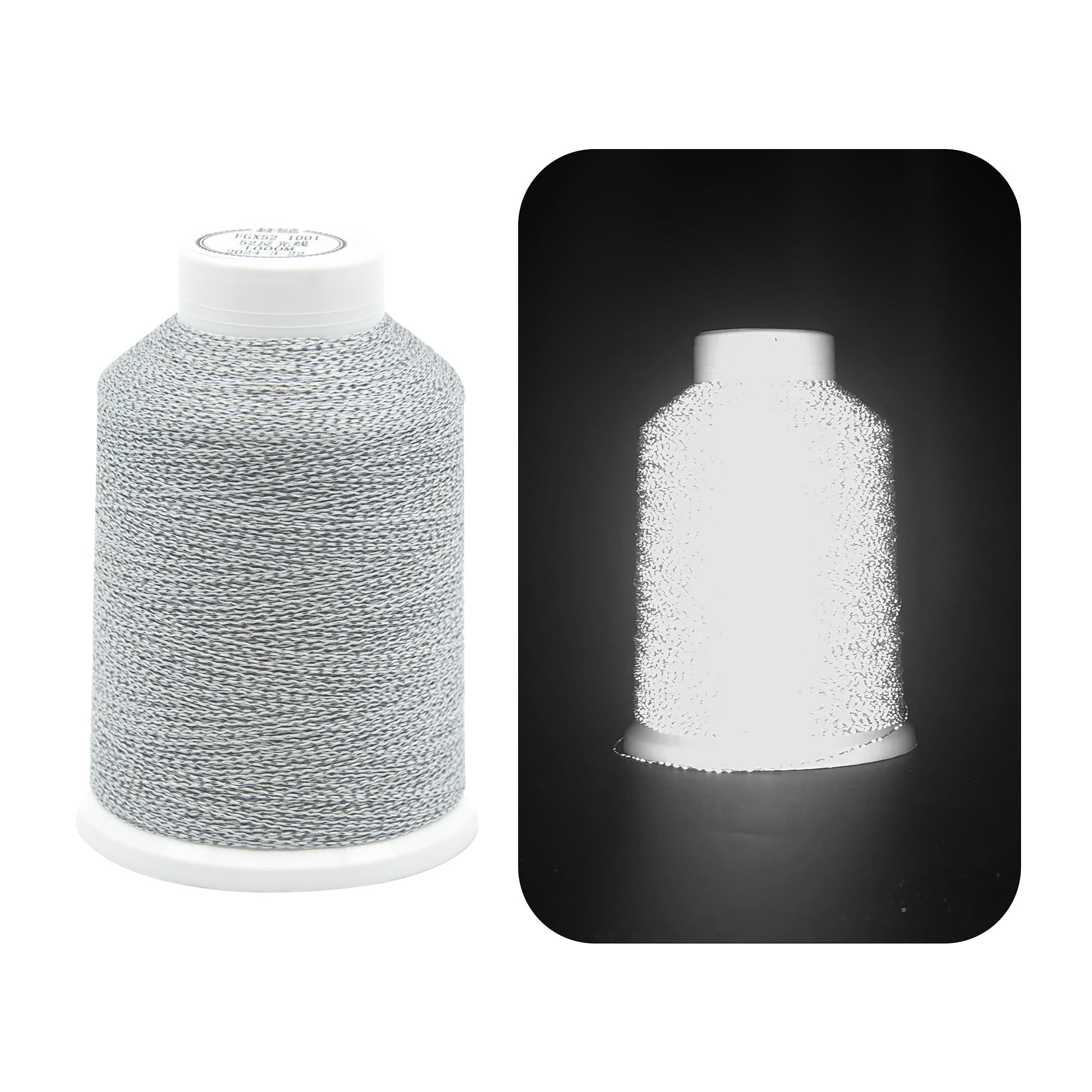
Reflective embroidery thread is a niche sewing supply that promises to make stitched designs visible in low-light conditions. This particular option comes on a 1,094-yard spool, which is a substantial amount for most home sewing and embroidery projects. The thread is designed to reflect direct light, such as from headlights or a flashlight, making it a practical choice for adding safety elements to clothing, bags, and other fabric items. In this review, we’ll examine how it performs in real-world use, its limitations, and who might benefit from keeping a spool on hand.
In practice, reflective thread is used much like any other embroidery thread, but with a few caveats. It can be used in machine embroidery, hand embroidery, and even for topstitching or quilting where a bit of reflectivity is desired. Common applications include adding decorative stitches to children’s backpacks, outlining safety vests, or creating visible designs on pet accessories for nighttime walks. The thread is typically made from a polyester base with embedded micro-glass beads that reflect light. This composition gives it a slightly stiffer hand than standard polyester thread, which can affect how it behaves in high-speed sewing machines.
One of the key functional features of this thread is its high brightness under direct light. When a light source hits the thread, it reflects back strongly, making the stitched area stand out. However, it’s important to note that the thread does not glow in the dark on its own; it requires an external light source to be visible. This is a common misconception, and it’s worth clarifying that the thread’s visibility is entirely dependent on direct illumination. The 1,094-yard spool offers a generous amount, especially considering that reflective thread is often used for accent work rather than large fills. For most crafters, this spool will last through many projects.
Another functional aspect is the thread’s thickness. It is typically a 40-weight thread, which is a standard size for embroidery. However, due to the reflective particles, it can be slightly thicker and more abrasive than regular embroidery thread. This means it may cause more wear on machine needles and tension mechanisms. Using a larger needle, such as a 90/14 or 100/16, can help, but sewers should be prepared to adjust tensions and possibly slow down their machines. The thread also has a tendency to fray or shred if not handled carefully, so a thread stand or net may be necessary to keep it feeding smoothly.
In terms of limitations, the reflective effect is not as pronounced as some might expect. Under normal indoor lighting, the thread looks like a light gray or silver, and it only becomes noticeably reflective when a light is shined directly on it at a certain angle. This means that for everyday wear, the thread may not appear much different from metallic or silver thread. Additionally, the reflectivity can diminish over time with repeated washing, as the glass beads can wear down or become coated with fabric softener or detergent residue. Hand washing or gentle machine washing is recommended to preserve the effect.
Compared to other specialty threads, such as glow-in-the-dark thread or metallic thread, reflective thread occupies a specific niche. Glow-in-the-dark thread emits its own light after being charged, but it is generally less bright and has a shorter duration. Metallic thread adds shine but does not reflect light in the same way. Reflective thread is unique in its ability to bounce back light from headlights or flashlights, making it superior for safety applications. However, it is not as versatile as standard polyester thread for general sewing, as it is more finicky to work with and less colorfast.
Who is this thread suitable for? It is ideal for sewists who want to add a functional safety element to items like dog collars, running gear, or children’s clothing. It is also a good choice for crafters making items that will be used in low-light conditions, such as Halloween costumes or evening bags. However, it is not suitable for those who expect a glow-in-the-dark effect or who need a thread that can withstand heavy washing without losing its reflective properties. It is also not the best choice for beginners, as it requires some patience and machine adjustments to work with successfully. Those who primarily sew with standard cotton or polyester threads may find reflective thread to be more trouble than it’s worth unless they have a specific need for visibility.
In summary, reflective embroidery thread is a specialized tool that delivers on its promise of high visibility under direct light, provided users understand its limitations. The large spool size offers good value for those who will use it regularly, but the thread’s stiffness and potential for wear on machines mean it’s not a direct replacement for everyday thread. It’s a worthwhile addition for safety-focused projects, but it requires realistic expectations and a bit of trial and error to get the best results.