
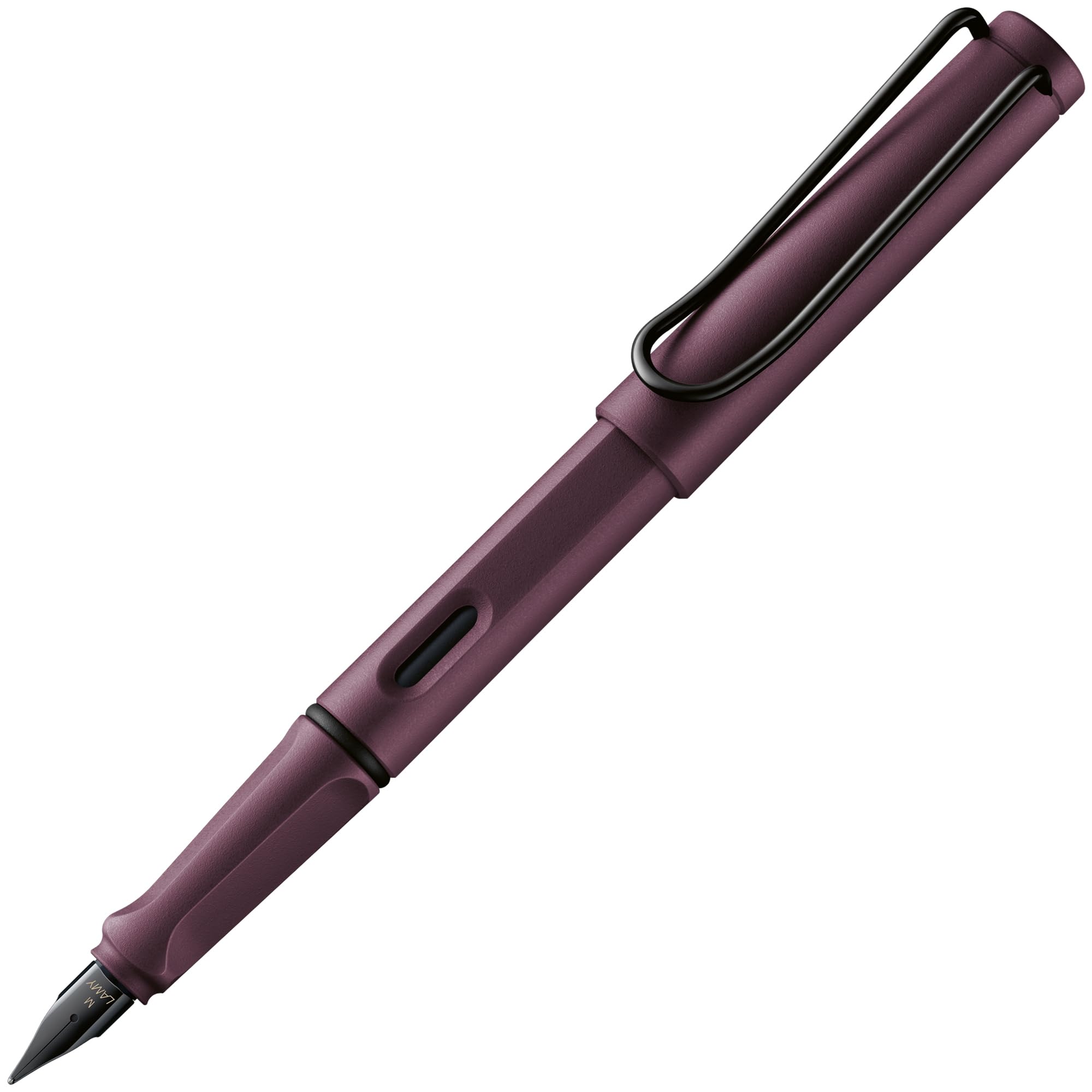
The LAMY safari has been a fixture in stationery shops for decades, and the scarlet version with an extra-fine steel nib is one of the more practical configurations in the lineup. It arrives with a T 10 blue cartridge and a right-handed ergonomic grip, which places it squarely in the beginner-to-intermediate segment of fountain pens. This review looks at how it actually behaves on paper, where it fits in daily use, and where it falls short.
The first thing most people notice is the molded grip section. It has two flattened facets that guide the thumb and index finger into a triangular hold, and a raised ridge near the front. For right-handed writers who tend to grip too tightly or rotate the pen, this does provide a useful physical cue. In practice, it works well for students taking notes, office workers signing documents, and anyone trying to build a consistent hand position. The trade-off is that the grip is not adjustable, and left-handed writers or those with an established non-standard grip may find it actively uncomfortable rather than helpful. LAMY does sell left-handed nibs separately, but the body geometry remains the same.
The EF nib is polished steel, and it behaves as expected for that specification. It runs on the finer side of European extra-fine, producing a line closer to a Japanese fine than a true needlepoint. On standard copy paper with the included blue cartridge, it writes with moderate feedback and a little tooth, especially on cheaper stock. On smoother paper such as Rhodia or Clairefontaine, it settles into a pleasant, controlled feel. Ink flow is consistent but not generous, which suits small handwriting, margin notes, and forms with tight boxes. Those expecting a wet, expressive line for calligraphy or broad italic work will be disappointed — this is a precision tool, not a brush.
One realistic expectation to set: the EF nib can feel scratchy if the tines are slightly misaligned out of the box, and quality control on steel nibs at this price point is not flawless. Most units write well, but a minority need a light adjustment or a flush with water before first use to remove manufacturing residue. The pen also does not come with a converter, so using bottled ink requires an extra purchase. The included T 10 cartridge is fine for getting started, but it is a proprietary format, and the pen only accepts LAMY cartridges or the branded converter. That limits ink choice compared with pens that take international standard cartridges.
In daily use, the safari is light — around 17 grams — and the ABS plastic body feels durable enough for a bag or desk drawer. The cap posts securely and the clip is springy without being flimsy. The triangular grip does make the pen longer and bulkier in the hand than a slim cylindrical pen, so writers with very small hands may find it less comfortable over long sessions. It is also not a pen for quick, casual jotting if you are not already used to the grip orientation; the facets force a specific hold, and that can slow down someone who writes with a dynamic finger movement.
Compared with a typical metal-bodied fountain pen in the same price range, the safari prioritizes ergonomics and durability over heft and finish. A metal pen might feel more substantial and accept standard cartridges, but it often lacks the molded grip that helps beginners. Compared with a disposable or entry-level cartridge pen, the safari offers a replaceable nib and a more refined writing experience, though it costs more upfront. It sits in a middle ground: more serious than a school pen, less fussy than a piston filler.
Who is it for? Right-handed students, office workers, and anyone who wants a reliable fine-line fountain pen for note-taking, annotation, and everyday writing. It suits people who appreciate a guided grip and do not mind a proprietary ink system. Who is it not for? Left-handed writers who need a specific nib and grip geometry, people who prefer a wet broad line, calligraphers needing flex or italic nibs, and anyone who wants to use international cartridges or bottled ink without buying a converter. It is also not the best choice for writers with an established grip that conflicts with the molded section.
The scarlet finish is bright and slightly glossy, which shows fingerprints and scuffs more than matte finishes. Over months of use, the plastic can develop a sheen on the grip facets, though this is cosmetic. The nib, being steel, will not flex, and pressing hard will damage it rather than produce line variation. Treat it as a firm, consistent writer and it will last.
Overall, the LAMY safari in scarlet with an EF nib is a sensible, functional pen with a clear design intent. It is not a luxury object, and it does not pretend to be. Its strengths are the guided grip, the reliable fine line, and the durable body. Its weaknesses are the proprietary ink system, the non-adjustable grip, and the occasional need for nib tuning out of the box. For the right user, it is a dependable daily writer; for others, the ergonomics will be the deciding factor.