
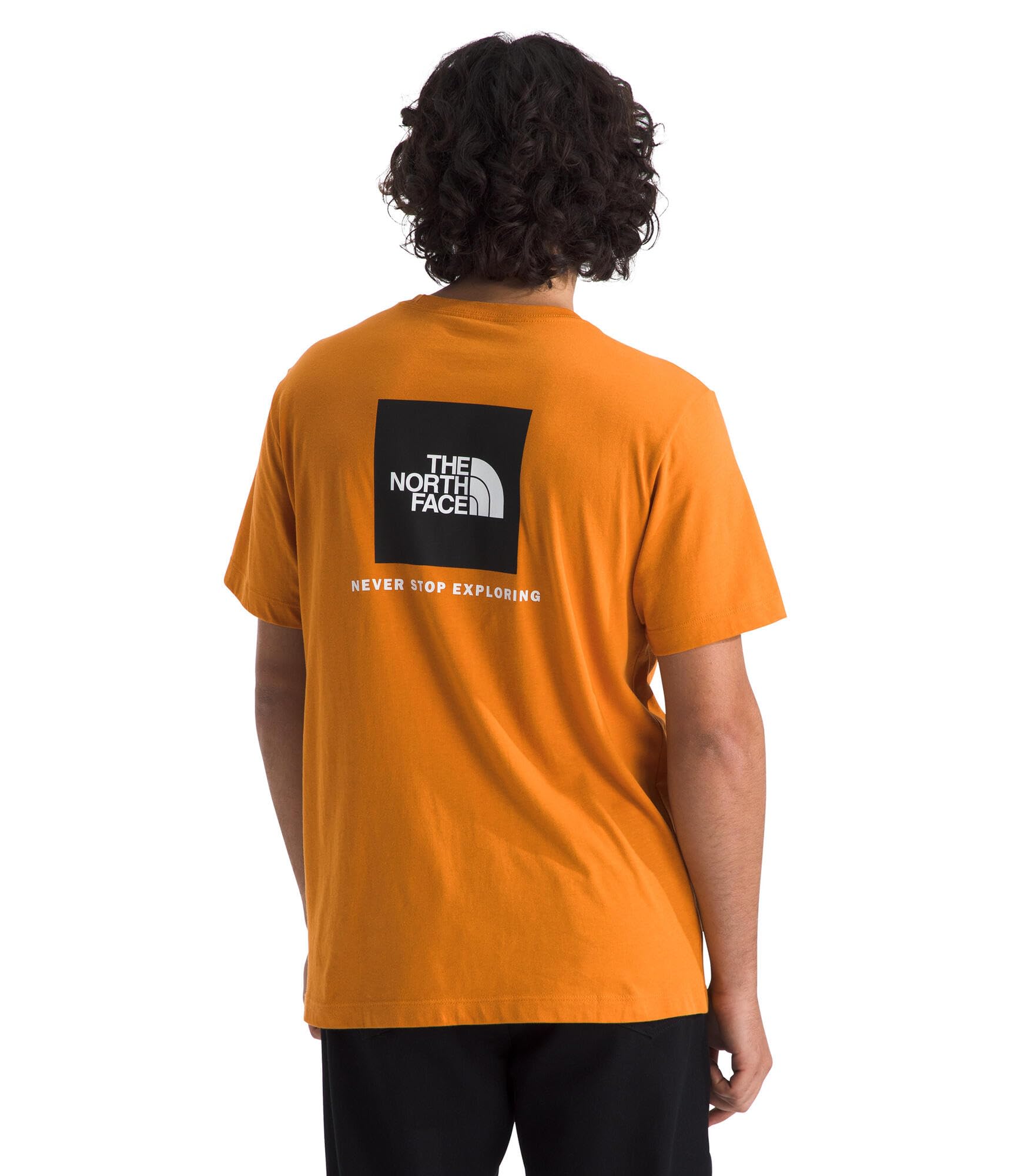
The North Face Core Box NSE Short Sleeve Tee sits in an odd spot in the market. It is, functionally, a cotton crew-neck T-shirt with a chest logo. The branding and the price point suggest something more considered than a plain undershirt, but the garment itself is fairly ordinary. Whether that trade-off makes sense depends heavily on what you want from a shirt like this.
The NSE (Never Stop Exploring) box logo is the defining visual element here. It is screen-printed across the chest on a standard cotton jersey body, and the dust orange colorway is a muted, earthy tone that reads closer to clay or faded terracotta than a bright safety orange. In person, that restraint is probably the shirt’s strongest asset. It pairs easily with denim, khaki, or darker shorts without demanding attention, and it avoids the high-visibility look that some outdoor-brand colorways drift toward.
Where this shirt actually gets used matters more than the spec sheet suggests. It is the kind of tee people reach for on a weekend errand run, a casual Friday at a lenient office, or as a base layer under a flannel or light jacket in shoulder seasons. It is not a hiking shirt in any technical sense. The cotton construction means it absorbs sweat and dries slowly compared with synthetic or merino blends, so wearing it on a long, hot trail day is a questionable call. The North Face sells actual performance tees for that purpose; this is not one of them.
Construction is competent but not remarkable. The fabric has a mid-weight hand that feels more substantial than a bargain-bin tee, and the collar holds its shape reasonably well through normal washing. Seams are clean, and the fit is a standard straight cut rather than the boxier or slimmer silhouettes some brands favor. For a small, expect a true-to-size fit that sits close to the body without being tight. That said, cotton tees like this do tend to shrink slightly after the first few hot washes, so buyers on the fence between sizes may want to size up if they prefer a relaxed drape.
The most obvious limitation is value. A screen-printed cotton tee from a major outdoor brand carries a markup that has little to do with fabric or construction quality. Comparable plain tees from workwear or basics labels cost noticeably less and will perform the same function for years. What you are paying for is the logo and the association with the brand, which is a legitimate reason for some buyers and an irrelevant one for others. It is worth being honest that the shirt does not offer technical performance, durability advantages, or a distinctive cut to justify the premium on its own merits.
Another trade-off is versatility in dressier contexts. The large chest graphic anchors it firmly in casual territory. It works with shorts and sneakers, less so with anything that requires a collared layer or a cleaner look. If you want a tee that can slide between a casual dinner and a weekend hike, this is not that shirt — it is explicitly a casual piece.
Compared with a generic heavyweight cotton tee from a basics brand, the Core Box NSE offers similar fabric performance but a more recognizable look. Compared with an actual technical hiking tee — a polyester or merino blend with moisture management and odor resistance — it falls short on every functional metric. The right comparison depends on the buyer’s intent. Someone who wants a soft, everyday cotton shirt with a bit of outdoor-brand character will find it serviceable. Someone who wants a shirt for actual activity should look elsewhere, and the brand itself would probably agree.
Durability is a mixed picture. The print is the usual screen-print suspect: it will likely crack or fade over repeated washing, particularly if dried on high heat. The fabric itself holds up fine for casual wear, but this is not a shirt built to survive years of hard use. Treat it as a rotation piece rather than a workhorse.
Who is it for? Buyers who like the NSE logo and want a muted, easy-to-wear cotton tee for everyday casual use, and who are comfortable paying a brand premium for that. It suits people who already own technical layers and want a lifestyle piece to wear around town. Who is it not for? Hikers and runners who need moisture-wicking performance, value-focused shoppers who want maximum fabric per dollar, and anyone expecting a distinctive fit or construction quality that sets it apart from a plain tee. It is a fine shirt. It is just not a special one, and the price asks you to believe otherwise.