
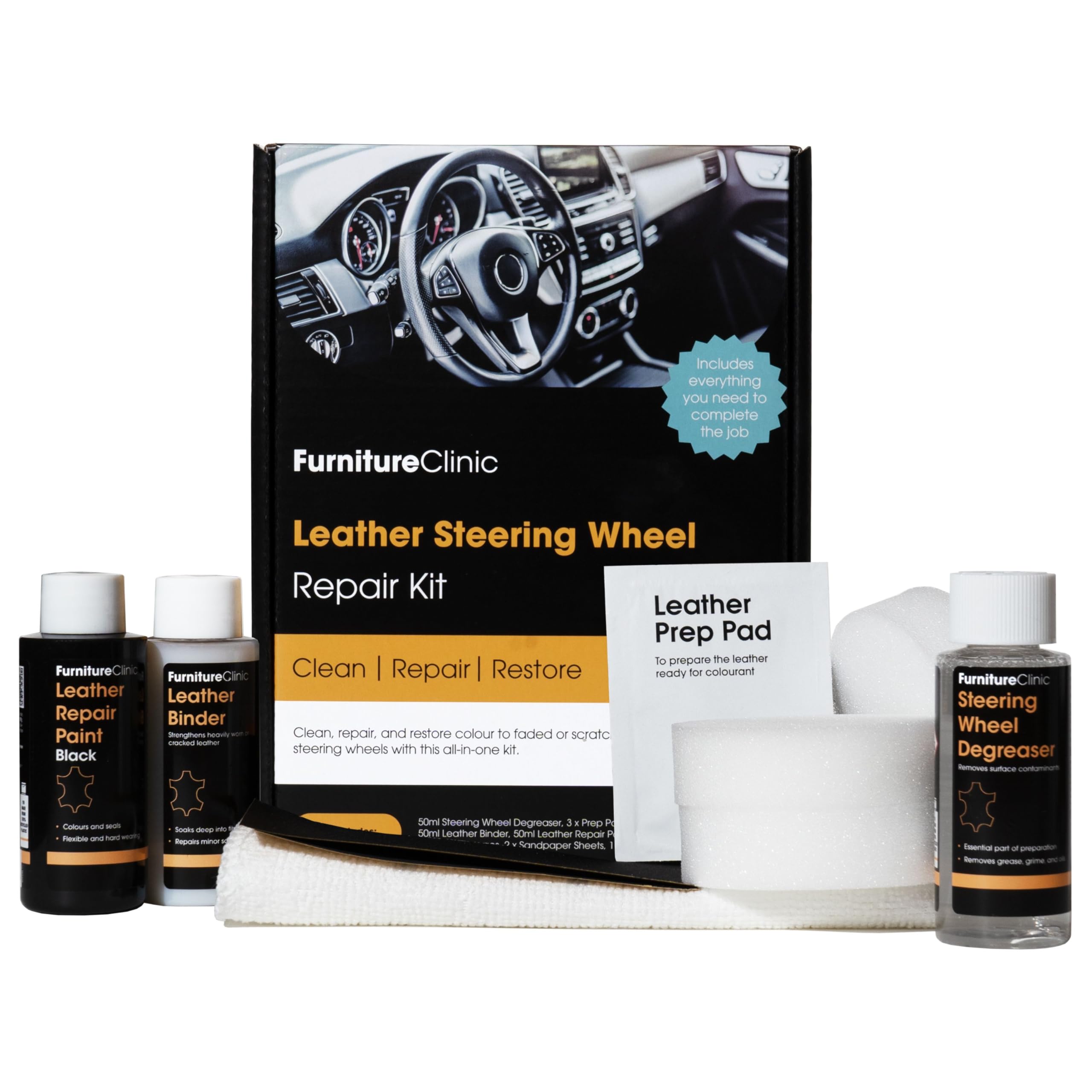
Leather steering wheels are one of the few touchpoints in a car that wear visibly and quickly. Oils from hands, sunlight, and constant friction gradually break down the finish, leaving a shiny, patchy, or worn surface that no amount of interior cleaner will fix. The Furniture Clinic Leather Steering Wheel Repair Kit is aimed squarely at that problem: it is a small, targeted kit designed to restore color and texture to a worn wheel rather than to clean or protect an entire interior. Understanding what it actually does—and what it does not—matters before buying.
The kit is built around a few core components. There is a leather prep or cleaning agent to strip away oils and old finish, a small abrasive pad or preparation tool, a colorant matched to a range of common automotive leather shades, and a sealant or finish coat to lock in the result. Some versions also include a filler for deeper scuffs. The process is straightforward in principle: clean and degrease the wheel, lightly abrade the surface to open the leather, apply the colorant in thin layers, then seal. In practice, it is a job that rewards patience more than speed. Thin coats, drying time between them, and careful masking of surrounding trim all affect the outcome.
Real-world use is where expectations need calibrating. This is not a reupholstery solution, and it will not rescue leather that is cracked through to the backing or missing chunks of material. It works best on wheels with finish wear—the common shiny, discolored ring where hands rest—and on light scuffing. For a wheel in that condition, a careful application can produce a genuinely improved result: more even color, a matte rather than greasy appearance, and a surface that feels closer to original. The colorant is designed to be worked in thin layers, and most users will need two or three passes to get an even tone, especially on darker leathers where patchiness shows.
There are trade-offs worth stating plainly. The kit is small, and the quantities are sized for a single steering wheel, not for seats or a full interior. If you have broader leather restoration in mind, this is the wrong product category—a general leather dye or a full re-coloring kit with larger volumes would be more appropriate, though those typically cost more and require more surface preparation. The color matching is also a limitation. While the kit covers common shades, leather fades and varies by vehicle, so an exact match is not guaranteed. On two-tone or unusually tinted wheels, the result may be close but not invisible. Durability is another consideration: a sealed repair can last many months with normal use, but it is a finish, not a permanent fix, and heavy-handed cleaning or abrasive contact will wear it again.
Application demands some care. Over-abrading the leather can leave a rougher texture than before, and applying colorant too thickly can create a tacky or uneven surface. The kit assumes a degree of DIY confidence; it is not a wipe-on-and-done product. Those who want a flawless, factory-looking result may be better served by a professional leather repair service, which costs considerably more but handles color matching and texture restoration with more precision.
Who is it for? It suits owners of older or well-used cars with leather wheels showing finish wear, particularly those comfortable with a multi-step DIY process and willing to accept a good-but-not-perfect outcome. It also makes sense for someone addressing a single worn area rather than a full retrim. Who is it not for? Owners of badly cracked or torn wheels, those expecting a one-step fix, and anyone needing to restore large leather surfaces. It is also less suitable for very light or unusual leather colors where an off-the-shelf shade is unlikely to match.
Overall, the Furniture Clinic kit is a focused, reasonably practical product for a specific and common problem. It does not perform miracles, and it asks for patience, but for a worn steering wheel that is otherwise sound, it offers a sensible middle path between living with the wear and paying for professional restoration.