
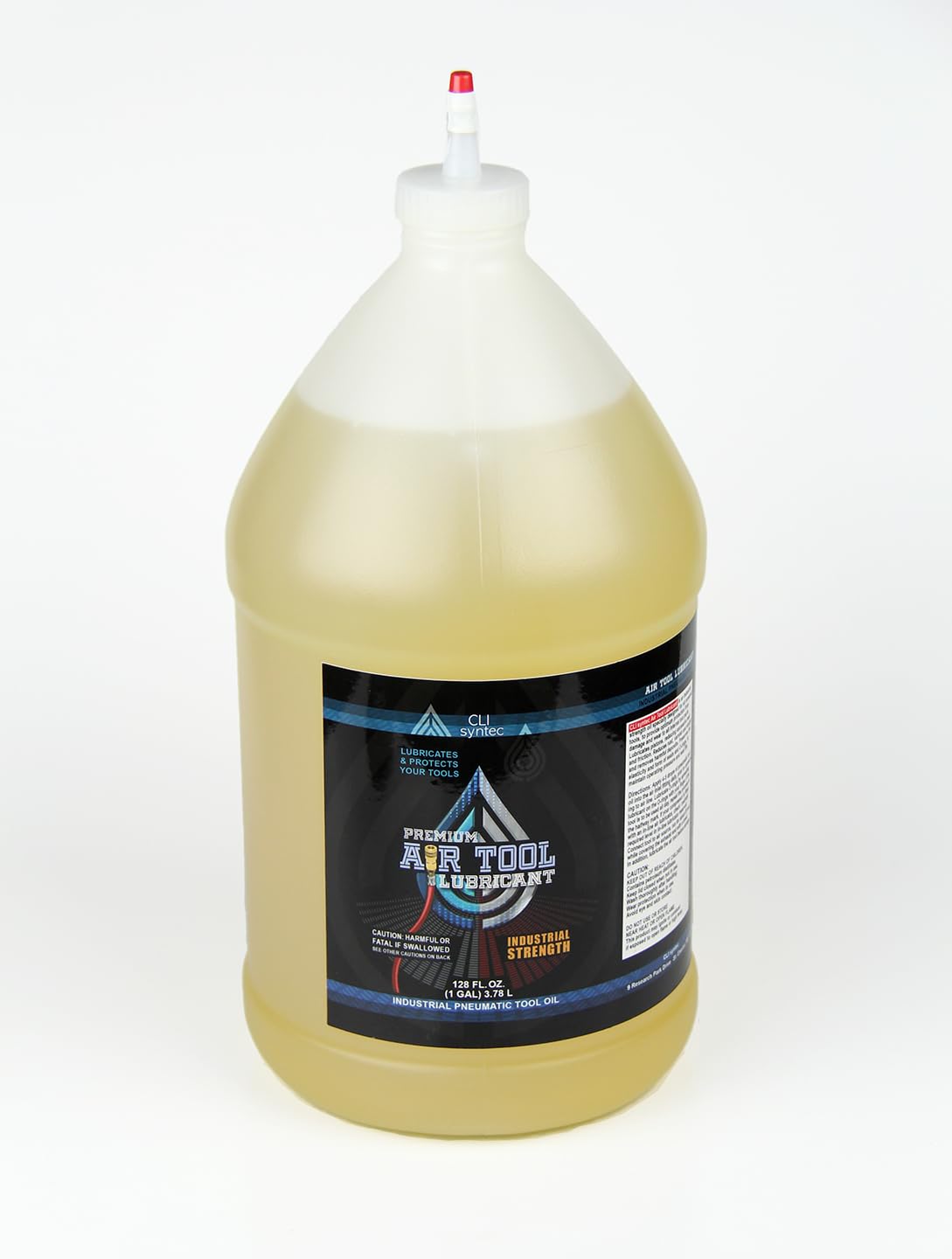
Air tools are durable, but they are not maintenance-free. Drop hammers, impact wrenches, die grinders, and ratchets all depend on a steady film of oil to keep their internal vanes, rotors, and bearings from grinding themselves down. CLIsyntec’s Air Tool Lubricant is a 128-ounce jug aimed at people who go through pneumatic oil quickly enough that the small 4- and 8-ounce bottles stop making sense. It is a conventional oil formulated for inline lubricators and manual oiling, sold in a quantity that suits a busy garage, a small shop, or a fleet maintenance bay.
The product is straightforward in what it is: a light-bodied pneumatic tool oil in a one-gallon container. The intended use is equally straightforward. You either add a few drops directly into the tool’s air inlet before a session, or you fill an inline lubricator that meters oil into the air stream as you work. In a shop with several tools running off a single compressor line, an inline lubricator is the more practical setup, and a gallon jug is the right size to keep that lubricator topped off without constant reordering.
Where this jug earns its place is in the economics and logistics of regular use. Buying oil by the gallon lowers the per-ounce cost compared with the small squeeze bottles sold at hardware stores, and it means fewer interruptions when a lubricator runs dry mid-job. The container is also large enough that refilling smaller applicator bottles or oil cans from it becomes a routine rather than a chore. For anyone running air tools several times a week, that is a meaningful convenience.
Functionally, the oil is designed to do what pneumatic lubricants generally do: reduce wear on internal moving parts, help displace moisture that condenses in air lines, and keep tool performance consistent over long sessions. It is not a miracle additive, and no oil is. What you should expect is normal, unremarkable reliability: tools that are oiled regularly run smoother and last longer than tools that are run dry. The gallon format supports that habit better than tiny bottles do.
There are trade-offs worth naming. The first is the container itself. A full gallon of oil is heavy and awkward to pour from, and unless you transfer it into a smaller bottle or a pump dispenser, you will likely make a mess trying to hit a small air inlet or a lubricator fill port. Buy a cheap oil bottle or a dispensing pump alongside it. The second is that this is a general-purpose pneumatic oil, not a specialized formulation. If your tools or your compressor manufacturer calls for a specific viscosity or a synthetic oil, a generic product may not meet that spec, and you should check the manual before committing to a gallon.
It is also worth comparing this to the alternatives people actually weigh. Small aerosol or squeeze-bottle air tool oils cost more per ounce but are easier to apply precisely and take up almost no shelf space, which suits someone who oils a single nailer a few times a year. Synthetic pneumatic oils cost more but may hold up better in extreme cold or high-duty cycles. A gallon of conventional oil like this one sits in the middle: cheaper per ounce than either, but without the precision packaging of small bottles or the performance claims of synthetics. For most home and light-commercial users, the conventional route is entirely adequate.
Who is this for? Primarily people with an ongoing air tool habit: home mechanics with a compressor and a handful of impact and grinding tools, small auto shops, fabrication benches, and anyone maintaining an inline lubricator. It also suits people who prefer to buy consumables in bulk and decant them. Who is it not for? The occasional user who pulls out a brad nailer twice a year will likely find a gallon excessive and hard to store, and the small bottle will serve them better. Someone whose equipment specifies a particular oil should follow that spec rather than defaulting to a generic product.
Realistic expectations matter here. This oil will not transform a worn-out tool or compensate for a compressor that is pushing wet, dirty air; a filter and regular draining still matter. What it will do is make routine lubrication cheap and convenient enough that you actually keep up with it, which is the part that protects your tools over time. That is a modest but genuine benefit, and it is the honest case for buying pneumatic oil by the gallon.