
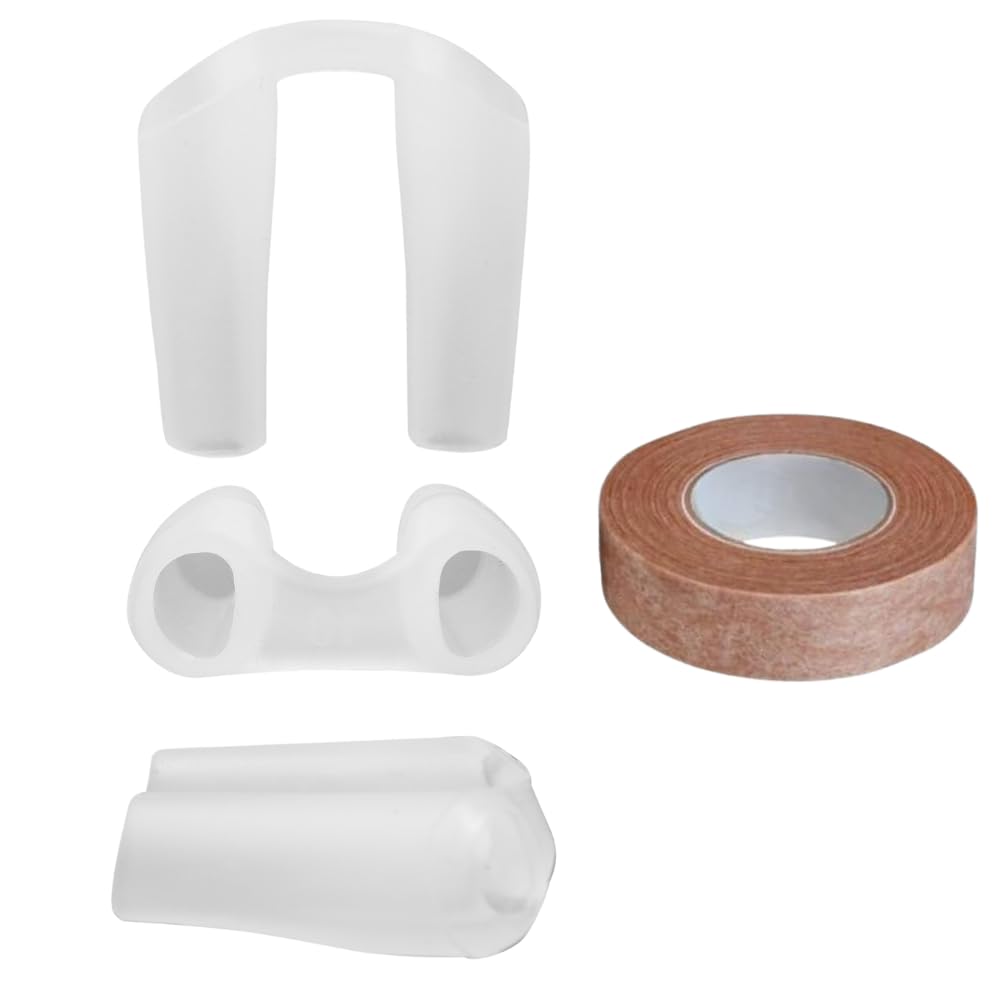
Recovery after rhinoplasty is rarely a straight line. While the splint and cast come off within the first week or two, the nose continues to swell and shift for months. That’s where nostril retainers and surgical tape enter the picture. This particular set bundles a soft silicone nostril retainer in size 9 with a roll of 0.5-inch micropore tape, aiming to cover both internal and external support during the healing phase.
The retainer itself is molded from a flexible, translucent silicone. It’s designed to sit inside the nostril, holding the internal airway open and maintaining the shape of the nasal passage as the tissue settles. The size 9 is on the smaller end of the spectrum, which makes it a reasonable starting point for many patients, especially those with narrower nostrils or early post-op swelling that limits how much you can comfortably insert. The silicone is pliable enough that you can gently bend it for insertion, but it does spring back to its intended shape once in place.
Using the retainer is straightforward but requires a bit of patience. You clean it with mild soap and water before each use, apply a thin layer of lubricant (like a water-based gel) to the outer surface, and then guide it into the nostril with a slight twisting motion. It sits flush against the inner rim, and most users find it barely noticeable after a few minutes. The included micropore tape is a separate piece of the puzzle. You cut a small strip and place it across the bridge or along the sides of the nose to help reduce swelling and keep the skin from shifting. The tape is breathable and gentle on sensitive skin, which matters when you’re reapplying it daily for weeks.
One of the strengths of this kit is its simplicity. There’s no complicated sizing chart or multiple pieces to manage—just the retainer and tape. For someone who has already discussed their post-op protocol with their surgeon, this is a convenient way to have the essentials in one package. The silicone material is also noticeably softer than some harder acrylic retainers on the market, which can feel less intrusive during overnight wear.
However, there are a few trade-offs worth noting. The size 9 retainer is not a one-size-fits-all solution. If your nostrils are on the wider side, or if you’ve had significant swelling that makes the passage feel tighter, this size might feel either too loose or too snug. It’s hard to know without trying, and since the retainer is not adjustable, you may end up needing a different size. Also, while the silicone is soft, it still requires regular cleaning to avoid odor or buildup, and the tape—while functional—is not the same as the more rigid nasal splints that some surgeons recommend for the first few weeks. This kit is more suited for the later stages of recovery, when you’re weaning off the splint and moving toward lighter support.
Compared to a full post-op care kit that includes multiple sizes of retainers, a nasal splint, and separate tape rolls, this set is more minimal. That’s not necessarily a drawback—it’s cheaper and less overwhelming—but it does mean you’re getting a single size and a basic tape roll. If you’re unsure about sizing, you might be better off purchasing a multi-pack of retainers in different sizes to see which fits best before committing to a single option.
Who is this for? It’s a practical choice for someone who has already been cleared by their surgeon to use a retainer, knows their size, and wants a simple, budget-friendly option. It’s also a decent backup to have on hand if you’re traveling or need a replacement. On the other hand, it’s not ideal for someone in the immediate days after surgery, when you may still be wearing a rigid splint and have significant swelling. And if you have a history of skin sensitivity to adhesives, the micropore tape might cause irritation, though it’s generally well-tolerated.
In terms of performance, don’t expect miracles. A nostril retainer is a passive tool—it helps maintain shape but won’t correct major asymmetry or prevent all swelling. The tape can help with mild edema, but it’s not a substitute for proper medical follow-up. Used as directed, this set does what it claims: provides a soft, flexible retainer and a reliable tape for external support. Just be realistic about what it can and cannot do.
Overall, this is a functional, no-frills option for post-rhinoplasty care. It’s not flashy, and it won’t replace your surgeon’s advice, but for the right user at the right stage of recovery, it’s a useful addition to the healing toolkit.