
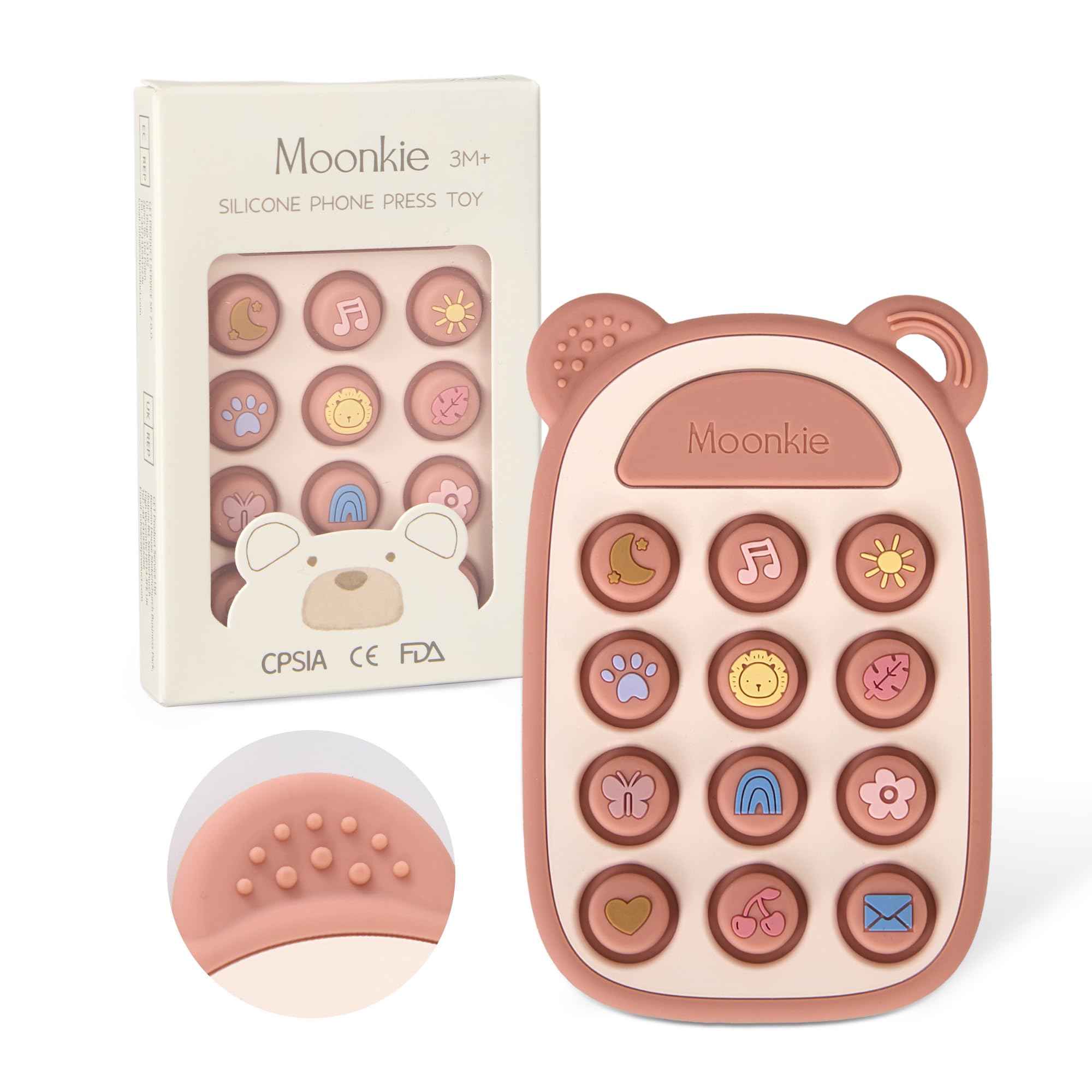
Teething toys come in all shapes and sizes, but the Moonkie Silicone Press Phone Teething Toy stands out by mimicking a familiar object: a smartphone. Designed for babies from 3 months old, it combines a soft silicone teether with pop bubbles featuring icons and numbers. The idea is to offer a safe, sensory alternative to the real thing, but how does it hold up in everyday use?
In real-world scenarios, this toy often ends up in diaper bags, car seats, and stroller trays. Parents report that the phone-like shape appeals to babies who are already curious about their parents’ devices. The pop bubbles provide a tactile distraction, and the silicone surface offers a firm but yielding texture for sore gums. It’s particularly useful during outings when a quick distraction is needed, or during teething bouts when a baby wants to chew on something cool and soft.
Functionally, the Moonkie teether is made from food-grade silicone, which is BPA-free and free of phthalates and other harmful chemicals. The pop bubbles are integrated into the design, with each bubble featuring a raised icon or number. Pressing them produces a soft pop, though the sound is subtle—not as loud as some dedicated pop toys. The silicone has a slightly matte finish that resists slipping when grabbed by small hands. The toy is also lightweight, making it easy for a baby to hold and manipulate. It’s dishwasher-safe on the top rack, which is a practical touch for sanitizing.
However, there are limitations. The pop bubbles require a fair amount of pressure to pop, which might be difficult for younger babies (around 3-4 months) to activate independently. They may enjoy chewing on the silicone but need help with the popping action. Additionally, the phone shape, while novel, may not appeal to all babies—some might prefer more traditional teether shapes like rings or animals. The size is also on the larger side for tiny hands; it’s manageable but not as ergonomic as a simple ring teether. Another trade-off is that the silicone, while soft, can attract lint and dust, so it needs frequent rinsing.
Compared to other teething toys, such as classic water-filled teethers or wooden rings, the Moonkie offers a more interactive experience. It’s similar to other silicone pop-it teethers on the market, but the phone design adds a layer of pretend play. However, it doesn’t provide the cooling relief of a refrigerated teether, which many parents find essential during peak teething discomfort. So, while it’s a fun distraction, it may not replace a dedicated cooling teether for soothing inflamed gums.
Who is this suitable for? It’s best for babies around 6 months and older who have developed enough hand strength to press the bubbles and who show interest in imitating adult behaviors. It’s also a good choice for parents looking for a screen-free alternative to a real phone. However, it’s not ideal for very young infants (3-4 months) who may struggle with the popping mechanism, or for babies who prefer simpler, lighter teethers. It’s also not a substitute for a cooling teether during intense teething periods.
In terms of realistic performance, the Moonkie teether does what it claims: it provides a safe, soft surface for chewing and a simple cause-and-effect activity. The pop bubbles are engaging but not overly stimulating, which is good for calm play. The build quality seems durable; the silicone doesn’t tear easily, and the bubbles hold up to repeated pressing. However, like any silicone toy, it can become sticky over time if not cleaned properly, and the small crevices around the bubbles may trap dirt.
Overall, the Moonkie Silicone Press Phone Teething Toy is a clever hybrid of a teether and a sensory toy. It’s well-made and safe, but its effectiveness depends on the baby’s age and preferences. It’s not a must-have, but it’s a nice addition to a teething toy rotation, especially for babies who are fascinated by phones. Parents should manage expectations: it’s not a miracle solution for teething pain, but it’s a decent distraction and a safe chew toy.