
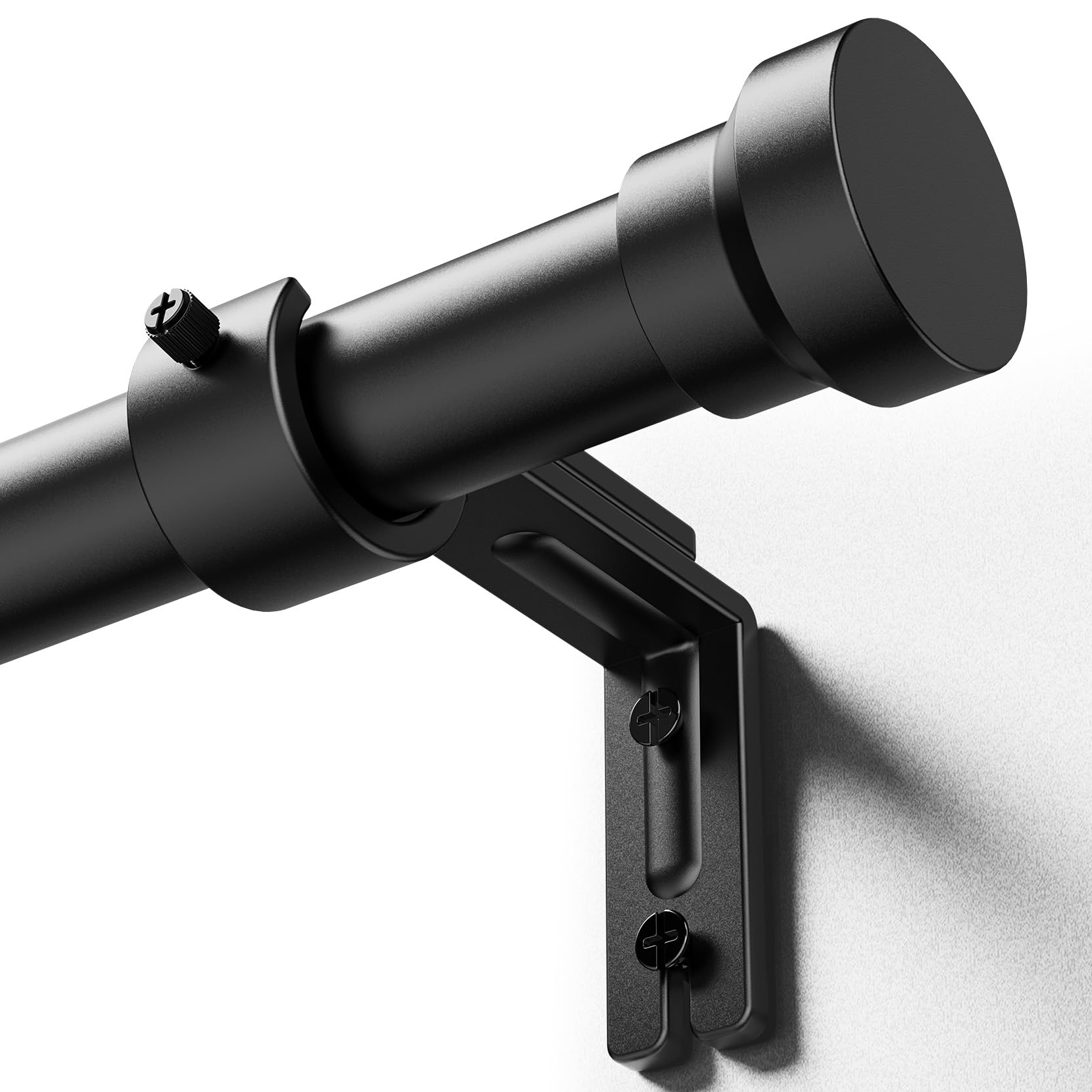
Curtain rods are one of those purchases most people make once and then forget about, which makes getting the details right more important than the category suggests. The YaFex Curtain Rods 32-114 Inch is a telescoping rod aimed at wide window spans, sold in a 1-inch diameter with a black finish. It sits in a crowded field of adjustable rods, and whether it makes sense depends heavily on the size of the opening you are covering and how much weight you plan to hang.
The core appeal here is the adjustment range. A single rod extends from roughly 32 inches up to 114 inches, which covers everything from a standard bedroom window to a large living room or patio slider. That span matters because most rods are sold in fixed lengths or narrow adjustment bands, forcing buyers to measure carefully and sometimes buy two rods for one wide opening. A rod that stretches to 114 inches removes much of that guesswork. In practice, this is the kind of rod people use over sliding glass doors, across wide picture windows, or on a long wall where curtains are meant to run past the window edges for a fuller look.
Construction is where the 1-inch diameter earns its keep. Thicker rods resist bowing better than the common 5/8-inch rods sold at similar price points, and that difference becomes visible once you hang heavier fabric. Blackout curtains, lined drapes, and layered setups with sheers add real weight, and a thin rod will sag in the middle over a long span even with a center bracket. The YaFex rod includes mounting hardware and is designed with a center support for longer installations, which is the detail that most affects how a wide rod performs. Buyers should expect to use that center bracket on anything approaching the upper end of the range; skipping it invites the sag that gives adjustable rods a bad reputation.
Finials and brackets are included, and the black finish is a straightforward matte-to-satin look that suits most interior styles without drawing attention. The telescoping design means the rod is two overlapping sections, so there is a visible seam where the smaller section slides into the larger one. On a long span, that seam is noticeable if you look for it, particularly with a glossy finish, though it is less obvious with matte black and heavier curtains. This is a normal trade-off for adjustable rods rather than a defect, but it is worth knowing if a seamless look matters to you.
One limitation worth flagging is the relationship between length and stiffness. A telescoping rod is strongest when extended only partway and weakest near its maximum. At 114 inches, the rod is doing a lot of work with a relatively thin wall of metal, and even with a center bracket, very heavy drapes may produce a slight dip or flex. Buyers planning to hang floor-length lined velvet or multiple layers over a very wide opening should consider a fixed-length rod or a thicker commercial-style rod instead. The YaFex is a reasonable middle ground, not a substitute for a structural rod.
Installation is typical for the category: brackets screw into the wall or window trim, the rod slides through, and the telescoping sections lock at the desired length. The hardware included is functional but basic, and on drywall without studs, buyers will want their own anchors, since the supplied ones are modest for a rod that may carry substantial weight. Measuring the bracket spacing before drilling is the step that separates a clean install from a wobbly one, and the center bracket placement should be planned rather than improvised.
Compared with a simple spring-tension rod, the YaFex is a different tool entirely. Tension rods are cheap and tool-free but top out at much shorter spans and cannot handle heavy curtains. Compared with a fixed-length decorative rod, the YaFex offers flexibility at the cost of a seam and slightly less rigidity at full extension. It also compares to curtain track systems, which handle heavy drapes better over wide openings but cost more and look more utilitarian. For a typical home project, the adjustable rod is the practical compromise.
This rod suits renters and homeowners covering wide windows, sliders, or open wall spans who want a single purchase that adapts to the space and can handle medium-weight curtains. It is a sensible choice for blackout curtains in a bedroom or living room where the span is under about 100 inches and a center bracket is used. It is less suitable for very heavy layered treatments at maximum extension, for anyone who wants a seamless one-piece look, or for installations where the wall cannot take a center anchor. Buyers with those needs should look at fixed-length or track systems instead. Treated as a flexible, mid-weight rod rather than a heavy-duty one in every configuration, it does its job without much fuss.